



By Tunji Olaopa
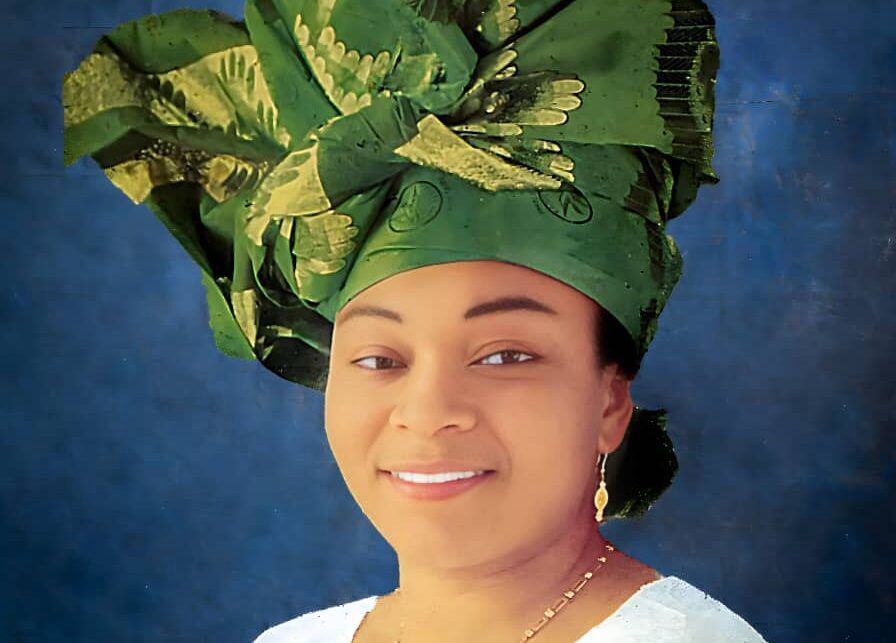
On December 6, 2000, Madam Mojisola Ajoke Adelakun left the world in a fatal accident. She was a dedicated, God-fearing and hard-working woman. She left abruptly behind four children who loved and needed their loving mother. She left so many people devastated by her untimely exit. On December 6 2025, it was already twenty-five years since she departed. On December 18 2025, we all gathered for a memorial service in her memory. Present were all her children who had gone on, through the solid valuational framework she left behind, to make her proud with what they have become. Adeola, Abimbola, Oladipupo and Afolabi—four children who had borne and still bear the brute emotion of losing a mother that was the world to them. And there were other well-wishers around to celebrate memories—including those who belong with Abimbola Adelakun in the trade of penning the woes and progress of the Nigerian State: Professors Niyi Osundare and Toyin Falola, Mr Joseph Adeyeye (editor-in-chief of the Punch newspapers), Dr Lasisi Olagunju and Dr Festus Adedayo.
Professor Abimbola Adelakun, the renowned columnist, had penned a most moving memorial tribute in honor of her mother. She raised fundamental points of lamentation that resonates with me at a deeply philosophical and administrative levels. I am a Christian like her. And like her, I have been engaging with the Nigerian state and its multiple morbid symptoms for many years. She has been writing about the Nigerian state and her developmental and governance malaise; I have been in the trenches of that very dysfunctional public service whose capability deficit and near inaction directly or indirectly caused the death of her mother, and has taken countless citizens lives through terrible infrastructural dysfunctions manifesting in bad roads and highway networks, bad education that graduate terrible doctors and engineers, bad healthcare system that has turned hospitals and clinics into death-dispensing centers, terrible power supply that has halted many aspirations, and many more.
I cannot know how the children of Madam Mojisola Ajoke Adelakun feel, even twenty-five years after her demise. But Abimbola’s tribute moved me beyond shedding tears and stared the reform passion in me. It brutally forces on me existential and philosophical questions that bother on why good people need to die, and why a good nation keeps misusing its resources—its intellectual, diversity, social and generational capitals—in ways that generate bad politics and even worse governance, institutional and developmental consequences. Why must Madam Mojisola Ajoke Adelakun die at such a prime age in spite of her immense promise? That is both an existential and theological question for me. She was, to all intents and purposes a good mother. She loved her four children and was only too joyous in taking care of them in a country called Nigeria with all its postcolonial predicaments. She had to traverse the terrible highways regularly to ensure they had good lives, and to facilitate her own aspirations. And she was a Christian! She was devoted to God, dedicated her life to Him, and dedicated herself to dedicating her children to the Almighty. Definitely, such a woman does not deserve death; she deserves life filled with strength and all the wherewithal to nurture her dreams, and that one dream of raising good and godly children. Imagine that fatal journey that day, twenty-five years ago, had been delayed by maybe an hour. Imagine one of her girls or boys had taken ill. Imagine.
My patriotic mind also sees that family as a framework for a model citizenship. This is to the extent that anyone that loves the Lord the way Madam Adelakun did would also be a good citizen. A good and godly citizen prays and desires that Nigeria would conform to God’s will through godly leaders who would understand what God wants for Nigeria and her people. There are millions like Madam Adelakun, and they deserve a good nation that would make things work because they take Nigeria seriously enough not only to keep praying for God’s intervention but to also keep being patriotic. It is even more wasteful because she was a veritable part of the intellectual and generational capitals Nigeria requires for transformation. And yet she died. And the lamentation derives from the fact that her death was needless and a waste. No children deserved to be thrown into meaninglessness and existential despair at such an age that Madam Adelakun was forced out of the world.
I know we can dialogue with God. We just might not get any answer; or get the answers we desire. But we can dialogue with each other more, and most especially we can dialogue with the Nigerian leadership. We live in an absurd world. It is simply absurd—and entirely meaningless—for a woman, in her prime, and with a stewardship of both her life and those of four teenagers, to be pressed into oblivion. Why be born in the first place. Martin Heidegger was an existentialist, and yet his existential wisdom does not calm me. He says, “As soon as we are born, we are ready to die.” That is an existential axiom and it is so absurd! Why must we be born, struggle through life, mop up the tangible joys and happy moments we can, capacitate ourselves and be ready to make our dreams come alive, and then we die? And it is absurd to live an absurd life in a space called Nigeria.
Albert Camus, the French philosopher, is an existentialist philosopher of the absurd. According to him, “Basically, at the very bottom of life, which seduces us all, there is only absurdity, and more absurdity. And maybe that’s what gives us our joy for living, because the only thing that can defeat absurdity is lucidity.” And so, what lucidity does this moment of lamentation—this moment of memory—affords us? How does our effort to memorialize her memory help us to speak to faith and institutions in the now? How does the memory of needless death help us to prevent such needless gambit we play with people’s lives? How do we make Nigeria a safe space where we can meaningfully and institutionally undermine life’s absurdity and meaninglessness? All these existential and philosophical questions connect with my anxiety as an institutional reformer.
Christianity serves a spiritual and existential purpose. I am glad Madam Mojisola Ajoke Adelakun was a Christian. I am sure she died with the assurance that she infused the love of Christ and the strong Christian morality in her children. Professor Adelakun said so in her tribute. And yet, there is more to do. My framework of institutional reform draws in faith-based organizations and institutions too in the collective need to compel good governance and good institutions. And this commences, for me, from two critical perspectives. On the one hand, the ministry in the Christian and Islamic faiths, is a calling that demands that the pastors and the imam speak peace and hope to the hearts of millions who are struggling and suffering. It is sinful to capitalize on people’s anxiety in living out their lives in an absurd world, to deceive them into abjection. And yet, we see especially Christian churches building mighty edifices and taxing their congregation without let. We see the explosion of prosperity gospel that numb the sensibility of the people to their environment. I wonder what Karl Marx would say about religion and the Nigerian clerics and citizens. On the other hand, faith-based institutions owe those who have entrusted their souls into their care the imperative of speaking truth to power. Churches and mosques now constitute a significant political bloc in Nigeria’s political community and civil society. The political class toast the religious class in terms of their enormous political and moral capitals. There is therefore no reason why these institutions would not complement their responsibility to speaking to the souls of their congregation with that of giving these souls good governance by speaking forcefully to those who bear political and economic rule over them.
For more than sixty decades now, successive Nigerian governments have been playing bad politics with the lives of Nigerians. This is not to say that individual governments have not made concerted and even sincere efforts in making Nigeria work. It is just not showing. And one index is the countless lives, like that of the late Mojisola Ajoke Adelakun, that Nigeria’s infrastructure deficit has wasted and keeps wasting tragically. Bad politics leads to anxiety, despair and death for millions of Nigerians. Bad politics leads to bad decision-making quotient that undermine the policy intelligence that ought to guide good decisions and a grand policy architecture that animates democratic governance and its dividends. Madam Mojisola Adelakun lived through such a bad governance. Only God knows what happened on that fateful day, twenty-five years ago. Only God knows what driving or safety regulation had been breached. Only God knows the state of the car she must have been forced to take because she had to make ends meet.
Even for the sakes of countless children, like Abimbola and her siblings, Nigeria needs to be taken seriously. Indeed, a state must go overboard for the sake of her children who constitute the infrastructure of the future. That alone is sufficient to motivate a deep commitment to institutional reform that will throw in safety nets and social security as one of the many policies to safeguard lives and limbs. We hope the many who read Professor Adelakun’s tribute to her loving mother would feel her pain and take her lamentation beyond this moment. No one knows how the four children survived the untimely demise of their mother. However, no other children ought to be left in such a state by a state that thinks it has a future.
- Prof. Tunji Olaopa is the Chairman, Federal Civil Service Commission, Abuja
















Leave a comment