



By Ugochukwu Ibezim
Nigeria is on the verge of reversing the huge sum of $850 million spent by local enterprises on foreign cloud infrastructure, which constitutes their most expensive annual capital outflow.
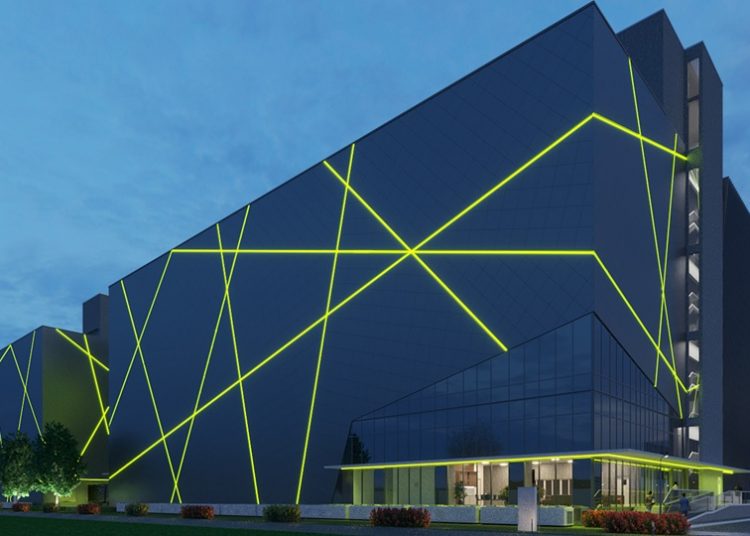
That was the dominant business message when Kasi Cloud Hyperscale AI-Ready Data Centre LOS1 was officially commissioned in Lekki, marking what industry leaders described as a strategic move toward sovereign digital infrastructure and a major boost for Nigeria’s emerging artificial intelligence economy.
For years, Nigerian banks, fintechs, telecom firms, government agencies, and multinationals have relied heavily on cloud infrastructure hosted abroad—primarily in Europe and North America—paying in foreign currency while exposing sensitive data to foreign legal jurisdictions.
However, with Kasi Cloud’s world-class AI facility, Nigeria is set to take a seat at the table.
“Nigerian enterprises currently spend an estimated $850 million annually on foreign cloud infrastructure—capital that flows out of the economy and sits under foreign legal jurisdiction,” the company said in a statement.
By offering an institutional-grade, AI-ready cloud alternative on Nigerian soil, aligned with the country’s National Cloud Policy 2025, the facility could significantly reduce that outflow while strengthening local digital capacity.
For founder and CEO Johnson Agbogbua, the economic case is as important as the technological one.
“For too long, Africa’s data has powered someone else’s economy. Today, that changes,” Agbogbua said at the commissioning.
“This flag-off marks the transition from development into commissioning and operational readiness—as we deliver world-class sovereign cloud and AI infrastructure, built in Lagos, for Africa’s digital future.”
His remarks go to the heart of a growing debate around digital value creation in Africa: while the continent generates vast amounts of data through banking, telecoms, healthcare, and e-commerce, much of the value derived from processing that data has historically accrued offshore.
Kasi’s model aims to reverse that by localising both data and compute power—two increasingly valuable economic assets in the AI era.
“We live in a moment when artificial intelligence rewrites the rules of economic competition,” Agbogbua said.
“The question is not whether AI will come to Africa—it is already here. The question is: who will write Africa’s story in the age of AI?”
Globally, AI infrastructure is increasingly viewed as foundational economic infrastructure—alongside roads, ports, and power plants—because it determines where innovation happens and where future industries are built.
Speaking at the ribbon-cutting ceremony, Nigeria’s Finance Minister Taiwo Oyedele sees Kasi Cloud from this same perspective.
According to him, the Kasi project “represents far more than a physical facility. It is strategic. It is national infrastructure.”
“It strengthens the foundation for innovation, expands opportunities for enterprise, enhances productivity across sectors, and positions Nigeria as a competitive player in an increasingly AI-driven world,” he added.
The economic implications span multiple sectors.
For fintech firms, local hosting means faster deployment and lower foreign exchange exposure. For hospitals, it enables AI-driven diagnostics trained on local patient data. For agriculture, it opens new possibilities in climate intelligence and precision farming. For universities and startups, it offers access to previously inaccessible high-performance computing.
“These are not distant possibilities anymore,” Oyedele said. “They are near-term realities enabled by the infrastructure we are commissioning today.”
The facility also carries direct employment implications.
In his speech, Governor Babajide Sanwo-Olu said hundreds of engineers, technicians, contractors, and support staff had already benefited during construction.
“Beyond technology, this project is also about jobs and skills,” he said.
Sanwo-Olu added that the facility supports Lagos’ ambition to become a global engineering and innovation hub.
“When you think of 1,000 engineers, think of Lagos.”
Dean Nelson, founder and chairman of iMasons, said the project has created “a home for artificial intelligence” and positioned Lagos as “the new home for sovereign AI.”
That matters because digital infrastructure increasingly attracts more digital infrastructure—venture capital, hyperscalers, software firms, and global technology partnerships often follow where compute capacity already exists.
For Nigeria, the business case is becoming clearer: every terabyte hosted locally means less capital exported, more jobs created, stronger data sovereignty, and deeper technological independence.
In that sense, Kasi Cloud is not just another data centre launch; it is an economic strategy.













Leave a comment