



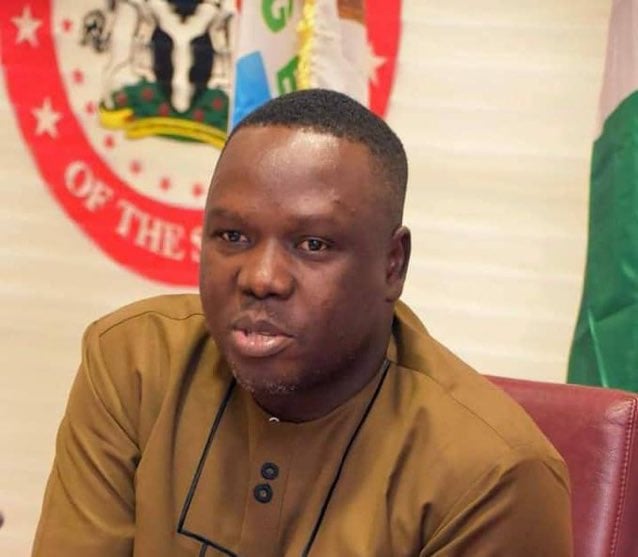

President Bola Tinubu’s Special Adviser on Policy Communication, Daniel Bwala, has defended his principal’s previous demand that ex-President Goodluck Jonathan step down after the 2014 abduction of the Chibok schoolgirls.
Tinubu, who was then a leader of the opposition, had accused Jonathan of failing to secure the country, insisting that the mass kidnapping was enough reason for him to resign.
The Chibok schoolgirls’ abduction, the first major mass school kidnapping in Nigeria, drew global outrage and became a symbol of the country’s worsening insecurity at the time.
With mass abductions of schoolchildren recurring under the current administration, critics have revisited Tinubu’s earlier stance.
Appearing on Channels Television’s The Morning Brief on Wednesday, Bwala said Tinubu’s call was “legitimate” given the circumstances.
“In the days of Jonathan, they didn’t have an idea of the solution. Why did I say that? They were in denial about the Chibok girls’ kidnapping.
“When President Tinubu, then Asiwaju Bola Ahmed Tinubu, called for Jonathan’s resignation, it was a legitimate call,” Bwala said.
Bwala argued that unlike now, terrorists under Jonathan established control over some communities and collected taxes.
Defending the government’s current stance on dealing with terrorists, Bwala said Tinubu had adopted a zero-tolerance approach to negotiation with kidnappers.
Bwala stated, “There was a time the federal government was negotiating (with terrorists), and I think that el-Rufai (the former Kaduna governor) once talked about a national policy at that time, when they said both states and the federal government can be in a situation where they will have to negotiate.
“Because if your duty is to preserve the life of people, and citizens of Nigeria are in danger, and negotiation is the only way to save them, and you have to save them, then you have to do all that you need to do to save them at that time.”
According to him, ransom payments indirectly strengthen criminal groups by providing funds for weapons and operations.
“But President Tinubu came with this zero tolerance on negotiation because it didn’t fit into the terrorism financing. You see, you are constructively financing terrorism without knowing it.
“So instead of elements that are sponsoring them by giving them the money as ransom to collect the people, they also use the ransom money to buy more weapons.
“So the federal government does not tolerate the idea of negotiation,” he said.
While acknowledging that previous governments sometimes entered talks to save lives, he maintained that Tinubu’s administration is avoiding actions that could bankroll terrorists.
In recent months, Nigeria has witnessed a surge in school kidnappings and other security breaches across several states, raising concerns about the safety of students and the effectiveness of government responses.
The spate of abductions has drawn national and international attention, with critics questioning the federal government’s strategies to tackle terrorism and insurgency.














Leave a comment