



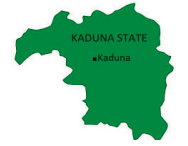
Kaduna State is transforming the education landscape through global partnerships, argues UMARU SARKI JATAU
In a country grappling with one of the world’s highest numbers of out-of-school children, Kaduna State Governor, Senator Uba Sani, has emerged as a relentless advocate for educational reforms and inclusivity. The recent high-level engagement in Kuwait City with the Kuwait Fund for Arab Economic Development (KFAED) bears ample testament to this commitment. A commitment which goes beyond rhetoric but far into ensuring that every child in Kaduna has access to quality education and that none is left behind.
The meeting, detailed in a post by the governor himself on his verified social media handle, builds directly on a foundational partnership announced in early August, specifically August 5th, 2025, by the Federal Ministry of Finance. That prior announcement lend huge credence to the governor’s updates, highlighting the Reaching Out-of-School Children (ROOSC) Programme as a beacon of hope amid Nigeria’s near educational crisis.
A thorough and dispassionate examination of both announcements by the two tiers of government reveals how Governor Uba Sani’s leadership is driving tangible progress, fostering international collaborations, and addressing broader developmental needs in Kaduna State.
The ROOSC Programme, a multi-partner initiative valued at $62.8 million, represents a strategic results oriented intervention in educational exclusion in Kaduna State. As Governor Sani put it in the recent December 3 post: “This transformative initiative, jointly supported by the Kuwait Fund, the Islamic Development Bank (IsDB), the Global Partnership for Education (GPE), Education Above All (EAA), and Save the Children International, represents a combined investment of $62.8 million.” And, to say the least, that is huge.
This re-echoes the Federal Ministry of Finance’s August announcement, which described the program as “a significant step towards improving access to quality education in Nigeria” through a “US$62.8 million blended package with international partners that will expand access to quality, inclusive education and improve learning outcomes for some of Nigeria’s most vulnerable children.”
Through the ministry of finance, the federal government provided the genesis of this partnership, as it acknowledged the signing of a “US$25.35 million concessionary loan agreement” between the Federal Government, on behalf of Kaduna State, and the KFAED. This loan forms the cornerstone of the funding structure, supplemented by contributions from other entities. According to the federal ministry of finance, “The financing partners and indicative contributions include Kuwait Fund for Arab Economic Development with a US$25.35 million concessionary loan, Islamic Development Bank with US$10.5 million, Global Partnership for Education with a US$15.45 million grant, Education Above All Foundation with a US$10 million grant, Save the Children International with a US$0.5 million technical assistance grant, and Kaduna State Government with a US$1 million counterpart funding.”
This breakdown not only illustrates the program’s financial robustness but also Kaduna’s own skin in the game, with the state committing $1 million in counterpart funding—a point the governor proudly reaffirmed in his post: “Kaduna has provided its counterpart contribution in full”.
Governor Uba Sani’s meeting in Kuwait City served as a progress review and also a pitch for accelerated support. During the meeting, Governor Sani revealed key milestones already covered to KFAED’s Director General, Dr. Waleed Al-Bahar, which he listed to include: “Identification and mapping of 79,275 out-of-school children across 14 LGAs; Enrollment of 13,756 learners — surpassing our Year One target of 10,000; Training of 1,300 teachers and distribution of more than 35,000 learning kits; Ongoing civil works to rehabilitate 170 schools and construct 102 new ones.”
These achievements demonstrate the program’s momentum since the August signing. The ministry’s earlier announcement had set ambitious goals, including “the construction of new, climate-resilient schools and rehabilitation of existing facilities across hard-to-reach communities; re-enrolment of out-of-school children into safe, inclusive and quality learning environments; teacher development to strengthen pedagogy and improve learning outcomes, and community-based solutions that lower barriers to attendance and completion, particularly for girls and children with disabilities.”
The updates provided by Uba Sani confirmed beyond doubts that these objectives are being met, with enrollment exceeding targets and infrastructure projects underway.
This collaboration between the federal ministry of finance and the Kaduna State government highlights a rare synergy between federal oversight and state-level execution. The ministry emphasized fiduciary responsibility when it declared that: “The Federal Ministry of Finance will oversee fiduciary assurance and results reporting in close collaboration with Kaduna State and participating partners. Regular joint reviews will track enrolment, teacher training and learning gains to ensure measurable impact.”
However, Uba Sani’s appeal for “continued support in fast-tracking the next phase of disbursements” aligns with this, but more importantly, it stresses the need for urgency. “Every week gained brings us closer to ensuring that more of our children have timely access to safe, modern, and quality learning environments,” he emphasized.
Remarkably, the display of transparency and accountability earned praises from KFAED’s Director General, who declared that such level of transparency and accountability “reaffirmed that Kaduna State remains the first Nigerian state to receive support from the Kuwait Fund.” He further commended Uba Sani’s transparency, reform-minded leadership, and commitment to inclusive development.
But beyond mere progress reporting, Governor Sani also laid bare a holistic vision for Kaduna’s development at the meeting. While education remains the centerpiece, he presented new priorities that also qualify for collaboration. He listed such areas as: “upgrading and solarising between 255 and 500 Primary Healthcare Centres; expanding rural infrastructure –including roads, electrification, water supply, and sanitation systems; and advancing agricultural modernisation through mechanisation, irrigation, climate-resilient inputs, processing centres, and youth and women agribusiness programmes.”
This expansion signals Uba Sani’s intent to leverage the ROOSC success into broader sectors to address interconnected challenges like health and economic empowerment.
There is also an important point to note. The federal ministry of finance’s publication focused on education as part of Nigeria’s “commitment to transparency, accountability and results in social investment,” as stated by the minister of finance, Mr. Wale Edun, who was represented by the minister of state for finance, Dr. Doris Uzoka-Anite at the signing back in August. It simply underscored the human element – “this partnership is about compassion, equity and the power of education. With millions of children still out of school, especially in the North, every dollar must translate into real change for the children and communities we serve,” the ministry stated.
Governor Uba Sani re-echoed this sentiment when he declared at the high level engagement that “Education is the cornerstone of our transformation agenda. In 2025, we increased the education share of our budget to 26 percent. Under this programme, we will construct 102 new climate-resilient schools and rehabilitate or upgrade 170 existing schools and learning centres, with a focus on girls, children with disabilities and internally displaced children. This is about restoring dignity and opportunity for every child.”
The program’s target of over 100,000 out-of-school children, as mentioned in both reports is particularly poignant in Kaduna. Governor Uba Sani’s post notes that the initiative “targets more than 100,000 out-of-school children and directly benefits over 1.2 million learners across all 23 LGAs,” while the ministry adds that it aims at “enrolling over 100,000 children, building or upgrading more than 200 schools, and empowering thousands of teachers.” Without a doubt, this scale is ambitious, yet the early wins—such as surpassing enrollment targets—suggest that it is doable and actually achievable.
While the federal ministry calls it “an investment in hope,” Governor Uba Sani presented a narrative of “restoring hope, expanding opportunity, and laying the foundations for a more prosperous future for our young people.”
The involvement of multiple partners—KFAED, IsDB, GPE, EAA, and Save the Children—ensures diverse expertise but also coordination complexities. Kaduna’s status as the first Nigerian state to receive KFAED support, positions it as a pilot for national replication, which the ministry had earlier noted thus: “Kaduna State’s leadership and the strong engagement of our development partners give us confidence that this initiative will become a model for other states.”
Governor Uba Sani’s personal involvement, from signing ceremonies to international meetings, exemplifies hands-on leadership. He has exhibited shared commitment to accelerate all ongoing projects and broaden cooperation in health, agriculture, and infrastructure to improve the lives of millions of Kaduna residents.
This perfectly aligns with the federal government’s vision of revolutionizing education to create a brighter future for its next generation.
All things considered, one can say that Uba Sani is indeed staking all in a bid to ensure the transformation of Kaduna’s education landscape through global partnerships. The ROOSC Programme has transitioned from blueprint to action, enrolling thousands and building schools. Yet, the true measure will be long-term impact: reduced out-of-school rates, empowered communities, and a more equitable Nigeria. As the governor and his partners press forward, Kaduna’s children stand to gain the most, proving that strategic investments can indeed transform lives.
Jatau, a legal practitioner and Good Governance Advocate, writes from Kaduna, Kaduna State











Leave a comment