



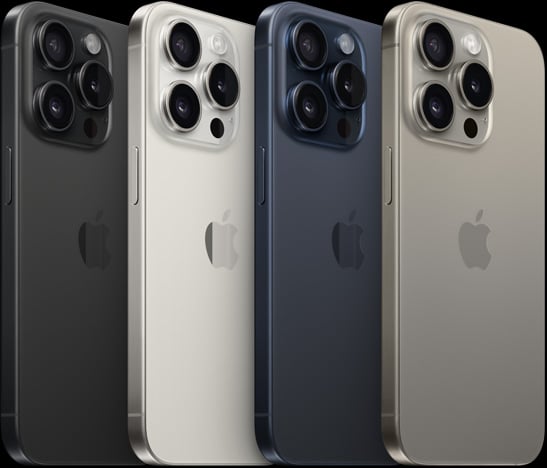

The price of an iPhone has long sparked debate among technology enthusiasts, industry analysts, and everyday smartphone users. While some argue that Apple’s flagship device commands a premium due to brand value and marketing, others point to technical refinements, ecosystem advantages, and design philosophy as factors justifying its cost.
Technology expert Becca Royal-Gordon said that iPhones are optimised for performance despite having specifications that may seem modest compared with Android rivals.
She explained that while iPhones have fewer CPU cores and less RAM, the cores themselves are powerful, and the operating system uses memory more efficiently through reference counting rather than traditional garbage collection. This allows the device to run smoothly even with smaller hardware resources.
Royal-Gordon also highlighted the camera, saying that although iPhones may have lower-resolution sensors than some competitors, advanced image processing, custom hardware, and carefully designed software produce photos of higher quality.
Battery efficiency is another area of optimisation. “Every aspect of the iPhone, from silicon to software, has been measured and profiled for the specific hardware it will run on,” she noted.
The result, she explained, is a device that sips from its smaller battery rather than guzzling power like other smartphones. According to Royal-Gordon, these refinements rarely appear on spec sheets or benchmarks but become evident in real-world use, in users’ hands and pockets.
Computer scientist Sanand Thapar attributed iPhone pricing largely to brand loyalty and market perception. He argued that many buyers are willing to pay premium prices simply for the Apple logo, rather than for unique technical advantages.
Thapar cited historical examples, including the iPhone 5c, which launched in 2013 at $550 despite featuring a one-year-old processor, a plastic build, and only 8GB of storage, yet became one of the best-selling phones of that year.
Similarly, he noted that the iPhone 14, which is nearly identical to the iPhone 13, sells for $100 more and continues to attract high demand.
Thapar criticised the narrative that Apple products are inherently superior in usability, saying that modern Android devices and Windows laptops offer comparable fluidity, reliability, and ease of use.
“The excuses for Apple’s pricing are mostly about justifying brand loyalty,” he added, suggesting that consumer perception often drives demand as much as technical innovation.
Engineer Gavin Nicholas emphasised the role of the Apple ecosystem in maintaining high prices. He explained that while iPhones are not necessarily ahead of competitors in hardware, the seamless integration of iOS with Apple services creates a cohesive experience that is difficult to replicate elsewhere.
Nicholas noted that the combination of camera quality, consistent performance, and long-term software support reinforces the premium pricing.
Other users also stress the premium positioning of Apple products. Smartphone user Lawrence said that iPhones should not be considered expensive when viewed as complete, integrated products.
He pointed out that while components themselves may cost less than $300, Apple charges a premium for research and development, marketing, brand value, and the overall experience. Lawrence added that consumers pay for a device as a cohesive gadget, rather than merely a collection of parts.
Brand perception also plays a crucial role in iPhone pricing. Brand analyst Fred Davis said that Apple has deliberately positioned itself as a luxury goods company, commanding significant profit margins for each iPhone sold.
He compared the iPhone X with the Google Pixel 2 XL, noting that while the latter offers more features at a lower price, it cannot match the premium brand perception and profitability of Apple devices. According to Davis, this approach has been key to Apple becoming the first trillion-dollar company.
Director at Indian company Sista, Apu Sista, reported that the iPhone constitutes nearly 60% of Apple’s revenue, with per-unit profits ranging from $800 to $1,000.
He explained that Apple can continue raising prices without deterring buyers, as there have not been major hardware upgrades recently, yet the devices continue to sell strongly. Sista concluded that profitability for Apple is not just about technological innovation but also pricing strategy and brand loyalty.
Finally, the design philosophy behind the iPhone is often cited as a reason for its premium. Designer Vaibhav Singh observed that Apple’s founders, Steve Jobs and Jonathan Ive, focused on creating a user-friendly device that delivers a consistent and enjoyable experience.
Singh explained that Apple aimed to avoid overloading the device with features the average user could not navigate, instead concentrating on crafting an environment where hardware, software, and services work seamlessly together.
Singh added that while other companies have since adopted this philosophy, Apple moved on to focus on the overall experience rather than solely producing hardware. Features like iCloud, Handoff, Siri, and Passbook create a tightly integrated ecosystem that encourages users to stay within Apple’s services, further justifying the higher price point. “Apple doesn’t manufacture hardware; it creates an environment users fall in love with,” Singh said.
They agree that iPhones are expensive for a combination of reasons: meticulous engineering, ecosystem integration, brand perception, and the deliberate crafting of a premium user experience. While critics point out that some pricing may be inflated, the market demand for Apple devices demonstrates that consumers value reliability, seamless performance, and a cohesive ecosystem.
Ultimately, the high cost of an iPhone is not simply a reflection of its components but of the overall design, optimisation, and brand strategy that make it desirable to millions of users worldwide. Whether for its software efficiency, integrated ecosystem, or perceived status, Apple has successfully positioned the iPhone as a premium product that justifies its price for many customers.














Leave a comment