



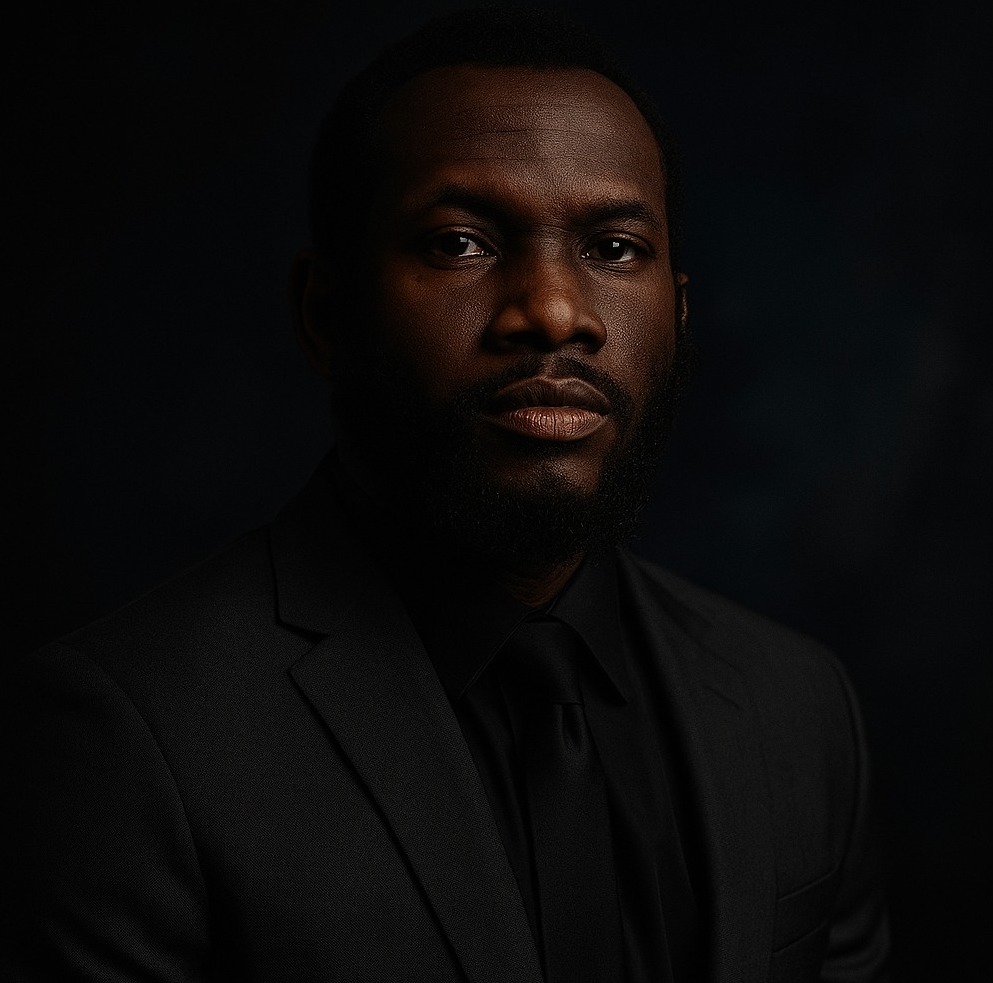
I have followed the work of Mohammed Babajide Mohammed for some time now, and with Balaqh’ees and Other Stories I am convinced that what we are witnessing is not the emergence of a writer finding his footing, but the arrival of an already fully realized artistic voice. Mohammed writes with the assurance of someone who has listened carefully to the silences between things, the tremors beneath memory, the quiet footfall of spirits that never left us. His fiction draws from African cosmology, from inherited knowledge, from the moral weight of the unseen world — but what gives it force is the depth of his psychological insight. He understands that the supernatural is not frightening in itself; it is frightening for what it reveals about the human beings who encounter it.
The title story, Balaqh’ees, announces this gift with a boldness that is difficult to ignore. From its very first lines, the narration trembles between prophecy and psychological fracture. Mohammed writes the voice of someone who has seen too much, felt too much, and now teeters between revelation and the slow, unbearable unraveling of the mind. There is an ancient quality to the language, a cadence that feels both spiritual and fevered. This is where Mohammed’s work stands out: he can hold the sacred and the unstable in the very same breath. His apocalyptic imagination feels neither imported nor imitative; it rises from a cultural consciousness deeply rooted in African metaphysical thought, yet shaped by a modern understanding of human fragility.
That same sense of existential weight appears again in The Endless, one of the finest demonstrations of Mohammed’s philosophical subtlety. The story contemplates eternity not as a dramatic spectacle, but as something quietly suffocating — a burden rather than a blessing. The Endless beings in this story do not function as fantasy ornaments but as living embodiments of emotional states, metaphysical questions, and the relentless ache of time. Mohammed handles this with incredible restraint. There is beauty here, and sorrow, and the kind of slow, burning introspection that marks a writer who thinks deeply about what it means to exist. This story alone would have been enough to convince me that he is building an oeuvre, not simply writing tales.
And then there is Blue, a story I have watched gather quiet admiration for good reason. It is one of the most delicate things Mohammed has written. Unlike the cosmic scale of The Endless or the fevered voice of Balaqh’ees, Blue is intimate, hushed, and devastating in its simplicity. The supernatural, here, is almost imperceptible — a faint shimmer beneath the surface of grief. But the emotional truth of the story is undeniable. Mohammed does not rely on spectacle; he relies on honesty. Blue shows a writer who can turn down the volume of the fantastic and still produce something piercing, tender, and unforgettable.
Where Blue whispers, Unhallowed Grounds strikes with deliberate, unsettling force. Set in the stillness of Atan Cemetery, the story follows two boys searching for quick wealth in the most dangerous ways possible. Mohammed handles the supernatural elements with cultural accuracy and atmospheric precision — the graveyard air thickening, the earth refusing, the dead responding with a cruel patience. Yet what gives the story its lasting sting is not the Alijanu they summon, but the way their fear exposes the fault lines already running through them. The moment the jewels begin to “laugh,” when sanity itself becomes porous, we see what Mohammed excels at: he uses horror not for shock, but for truth. The boys’ downfall feels inevitable because the story is not about spirits alone; it is about the recklessness of desire and the catastrophic cost of spiritual irresponsibility.
The spiritual depth that shapes this story is equally present in Igi Osogbo, which draws directly from Yoruba cosmology in a way that is respectful, nuanced, and narratively compelling. The sacred tree becomes a symbol of destiny and ancestral judgement, and Mohammed writes it with the weight of someone who understands the cultural significance of Osogbo’s spiritual history. There is a quiet tension to the story — a sense that something old, watchful, and uncompromising is present. Mohammed does not sensationalise tradition; he treats it with the gravity and complexity it deserves. This, for me, is one of the clearest marks of his maturity as a writer.
These stories, taken together, reveal a writer whose imagination is vast but grounded, whose themes are ambitious but precise. Mohammed understands atmosphere, he understands psychological tension, and he understands the metaphysical architecture that shapes African spiritual thought. Few emerging writers show this level of coherence — this sense that each story is another doorway into a larger, fully conceived literary world.
It is no surprise to me that his work has already received recognition from the FAB Prize, Iridescence Award, African Diaspora Award, JayLit Festival, and others. Mohammed is not simply promising; he is already producing work that feels assured, original, and necessary. He writes with a discipline and seriousness of purpose that is rare. His stories linger long after they end — not because they shock, but because they illuminate.
I have watched many writers grow over the years, but Mohammed stands out for the clarity of his voice, the strength of his craft, and the depth of his cultural imagination. He is one of the most compelling new voices in African speculative fiction, a writer whose work carries the emotional richness of grief, the philosophical weight of metaphysics, and the unsettling pulse of the otherworldly. What he is building is not merely a career, but a body of work — one that adds something meaningful and enduring to our literary landscape.
Written by By Ibrahim Babatunde Ibrahim














Leave a comment