



David Adeoye
Public leadership is often judged by power, influence, and visibility. Yet the most enduring leadership is shaped by something quieter: humanity.
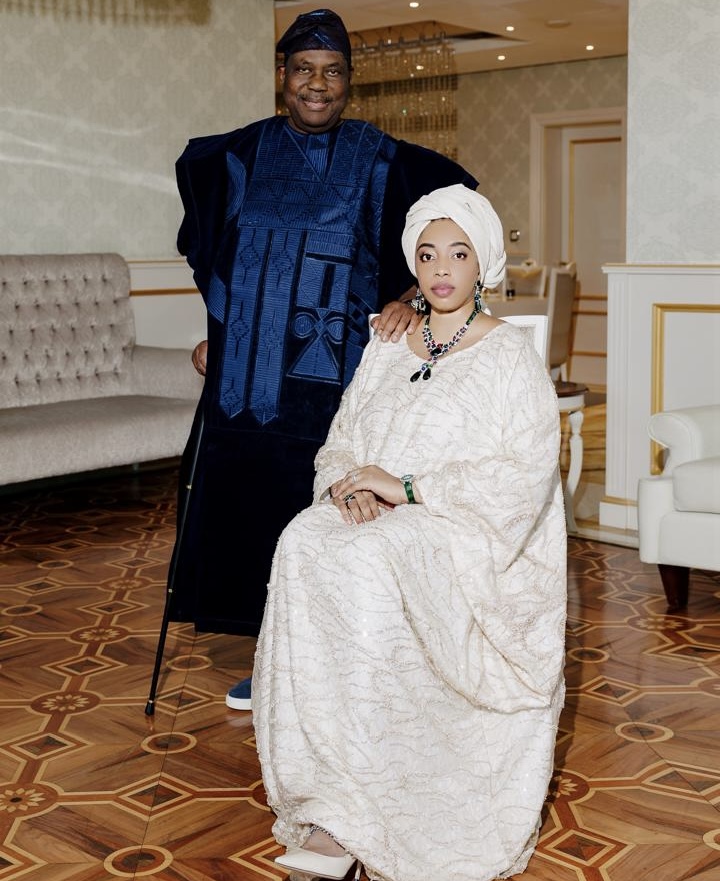
This understanding lies at the heart of the partnership between Senator George Akume and Queen Zaynab Otiti Obanor. Both bring to public life an appreciation that governance and humanitarianism are not separate spheres, but complementary obligations.

It is a partnership shaped by maturity, shared purpose, and an understanding that personal stability strengthens public duty.
Especially in an era when public life is often reduced to spectacle, the union of Senator George Akume, Secretary to the Government of the Federation, and Queen Zaynab Otiti Obanor offers a different narrative—one grounded not in optics, but in service.
As Secretary to the Government of the Federation, Senator Akume occupies a role that demands institutional memory, coordination, and balance. His approach has been defined less by confrontation and more by continuity ensuring that government functions with coherence and purpose.
For Senator Akume, whose career has traversed multiple layers of Nigeria’s political landscape, leadership has always been about institutions rather than individuals. For Queen Zaynab, service has meant creating impact that is measured not by applause, but by lives improved and futures secured.
Senator Akume’s public record spans decades of national responsibility, institutional stewardship, and political restraint. His career has been marked by a consistent focus on governance, national cohesion, and the quiet work of statecraft that rarely makes headlines but sustains the machinery of government.
Queen Zaynab Otiti Obanor, on the other hand, has built her life around humanitarian engagement, diplomacy, and initiatives aimed at water access, education, and leadership development. Her work often conducted away from public glare has focused on building systems, partnerships, and platforms that endure beyond individual personalities.
Their partnership represents the meeting of two lives already devoted to public purpose. It is not a reinvention of either individual, but a reinforcement of shared values: humility, discipline, empathy, and responsibility.
Queen Zaynab’s work, has focused on people rather than positions. Through charitable initiatives and international dialogue, she has championed access to clean water, youth development, and cross-cultural understanding areas increasingly recognized as foundational to long-term national stability.
At a time when Nigerians increasingly demand integrity and humanity from those in leadership, this union sends a subtle but powerful signal that service is strongest when anchored in personal stability, shared values, and a long view of legacy.
Together, they embody a leadership model that values empathy alongside authority, and service alongside structure. Their partnership underscores a simple truth: leaders who understand humanity govern better, and societies thrive when service is treated as a calling rather than a platform.
Nation-building is rarely dramatic. It is sustained by steady hands, clear minds, and leaders whose personal lives support rather than distract from their public responsibilities.
Their shared journey is rooted in a belief that leadership must be humane, deliberate, and forward-looking. It is a reminder that the most meaningful contributions to society often come from those who work quietly, guided by values rather than validation.
As Nigeria continues to navigate complex challenges, such examples of grounded leadership offer reassurance that public service when practiced with dignity and empathy remains a powerful force for good.















Leave a comment