



By Mohamed Ibn Chambas
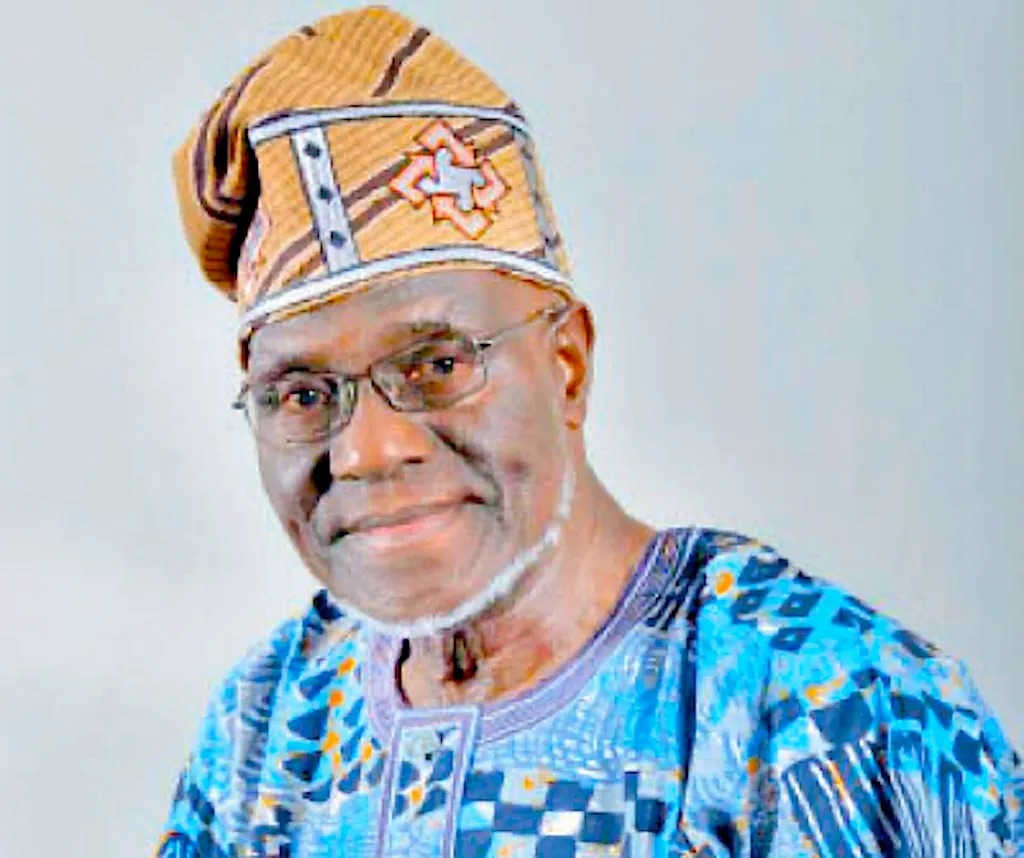
Today, we celebrate not merely the 85th birthday of Comrade Hassan Adebayo Sunmonu, but the enduring relevance of a life devoted to organisation, principle and purpose. His journey mirrors the modern history of African labour itself: from colonial transition, through military authoritarianism, to democratic struggle; from shop-floor agitation to continental institution-building; from national wage battles to global debates on development, justice and sovereignty.
Comrade Sunmonu belongs to that rare generation of labour leaders whose influence transcended protest to shape institutions, policy frameworks and ideas that continue to define workers’ struggles in Nigeria and across Africa. Comrade Sunmonu’s early life offers a powerful lesson about the social roots of leadership. Born on 7 January 1941 in Akim-Eshiem in the then Gold Coast (now Ghana) to Nigerian parents, and raised between Ghana and Osogbo, his upbringing was Pan-African even before the term became fashionable. This early exposure to multiple political and cultural environments planted in him an instinctive continental consciousness.
His technical education at Yaba College of Technology, culminating in a diploma in civil engineering, gave him something many labour leaders of the epoch lacked: professional credibility among skilled workers and technical officers. More importantly, his student union activism introduced him to the arts of persuasion, coalition-building and disciplined negotiation. His, is a sustainable labour leadership forged at the intersection of competence and consciousness indicating that organising succeeds when leaders understand both the technical realities of work and the social realities of power.
Looking through the prism of his work experience at the Federal Ministry of Works and Surveys in 1961, Pa Sunmonu’s rise through union ranks was organic, not accidental. He became General Secretary of the Association of Technical Officers and later President of the Public Works and Aerodrome Technical and General Workers’ Union. This phase of his life grounded him firmly in shop-floor realities. He understood the language of workers not as rhetoric but as lived experience. It was this grounding that later enabled him to command trust during moments of national confrontation. This further indicates that labour movements lose legitimacy when leaders are detached from the daily struggles of workers. His authority flowed upward from the shop floor, not downward from political patronage.
Comrade Sunmonu’s election as the pioneer President of the Nigeria Labour Congress in 1978 marked a decisive moment in Nigerian labour history. The NLC itself was born out of forced consolidation under military rule, a context that demanded extraordinary political skill. Building the NLC as a bargaining centre, he presided over the NLC during its formative years, helping it survived political suppression and emerge as the recognised umbrella body for unions.
Rather than preside over a fragile coalition, Comrade Sunmonu transformed the NLC into a coherent bargaining institution. Under his leadership, labour articulated the Workers’ Charter of Demands, elevating issues such as: A national minimum wage, Pension reform and retirement security and Workers’ participation in national development planning.
The landmark 1981 general strike demonstrated his strategic balance: militant enough to force negotiations, disciplined enough to preserve institutional survival. This comes with the understanding that militancy without structure dissipates energy; structure without militancy breeds irrelevance. Pa Sunmonu’s genius was holding both in productive tension. In 1984, Comrade Sunmonu assumed office as Secretary-General of the Organisation of African Trade Union Unity (OATUU), ushering in what many describe as a golden age of African labour organisation. His OATUU role amplified Nigeria’s labour voice regionally and embedded Comrade Sunmonu in pan-African labour networks.
It is noteworthy that his tenure coincided with two defining continental challenges. The first, Democratisation and Resistance to Military Rule. Comrade Sunmonu mobilised African workers to resist authoritarianism and actively participate in democratic transitions, particularly across West Africa. Labour was repositioned not merely as an economic actor but as a democratic force. The second, Structural Adjustment and Economic Recolonisation. Under his leadership, OATUU mounted principled opposition to IMF-World Bank Structural Adjustment Programmes, exposing their anti-worker and anti-development logic. Crucially, Pa Sunmonu did not stop at resistance; he championed alternative development strategies rooted in productivity, social justice and African self-reliance. He also resisted attempts to subordinate African unions to external interests, preserving organisational autonomy and ideological independence. What is learnt here is that African labour must continue to think beyond wages to development models and that economic sovereignty and workers’ rights remain inseparable.
Described by many as measured, principled, intellectually engaged and deeply committed to worker welfare and Pan-Africanism, what set him aside at the time was his determination to achieve desired results for the workers while operating under military regimes and hostile economic orthodoxy. Comrade Sunmonu inevitably faced constraints. Some critics desired more radical confrontation; others feared excessive compromise. History, however, vindicates his approach.
The survival of the NLC, the endurance of OATUU and the institutionalisation of labour as a policy actor are evidence that strategic realism, not rhetorical purity, secures lasting gains. As a matter of fact, Pa Hassan Sunmonu’s engagement in his later years has continued to speak on federalism, governance and labour issues and has been recognized by prestigious institutions.
Additionally, Comrade Sunmonu developed partnerships and strategic alliances with a wide range of financial and technical partners, including the African Union, the ECA, ILO, UNDP, Enterprise Africa, the University of Cape Coast, the University of Dar es Salaam and the Institute of Social Studies (ISS) at the Hague as well as national trade union confederations of China, The Netherlands, France and Japan, with the view to building the capacity of trade unions and workers to effectively contribute to the development of African countries.
Through these partnerships, Comrade Sunmonu initiated several regional programmes and projects, including the OATUU Human Resource Development and Capacity Building Programme, the African Workers Participation Development Programme (APADEP), the OATUU Enterprise Promotion Programme, the Project on Entrepreneurship and Small Business Development within African Trade Unions, the project on Strengthening Trade Unions for Productivity Improvement, the pan-African Workers Education Programme (PANAF), and the Occupational safety and Health project, with a component on Mitigating the Impact of HIV/AIDS.
The objectives of these programmes and projects were variously to build the institutional capacity and human capital of African trade unions, strengthen the financial foundations of trade unions, create jobs, create wealth, alleviate poverty, advance social justice and to create an enabling environment for trade unions to thrive, consolidate their independence and contribute to social, political and economic development in African countries.
Comrade Sunmonu’s long reach — from shop-floor organiser to continental officer and elder statesman — is unusual. His legacy is less about one dramatic victory than about shaping institutional expectations (that workers and unions are legitimate policy actors) and providing durable organisational practices (charters, coordinated strikes, negotiation). That institutional foundation sustained later labour activism in Nigeria.
One of Comrade Sunmonu’s most enduring contributions lies in his resilience at institution-building: He established a permanent OATUU headquarters in Accra, initiated the Kwame Nkrumah Africa Labour College, a continental centre for workers’ education and launched pan-African programmes on productivity, entrepreneurship, occupational safety, HIV/AIDS mitigation and workers’ participation in development.
We should note that as unions matured, tensions developed between more radical rank-and-file elements and a leadership that pursued structured negotiation — a dynamic still visible in later labour politics. However, Comrade Sunmonu’s pragmatic stance attracted both praise and occasional critique from purists. These caveats didn’t negate his achievements; rather they show the political limits within which he operated. Pragmatism may look cautious in hindsight, but it was also often the only viable path to concrete gains under repressive or transitional regimes.
These initiatives reflected a profound insight: that the future of labour depends on knowledge, capacity and economic relevance—not protest alone. This teaches that the strongest unions are learning institutions and that education remains the most radical form of empowerment.
Pa Sunmonu exemplified principled pragmatism. He was neither reckless nor compliant. His leadership was marked by Strategic patience, Moral clarity, Deep pan-African conviction and Unshakeable integrity. Even in retirement, he remained a respected public intellectual, intervening thoughtfully on federalism, governance and workers’ welfare. The lesson here is that credibility is a union leader’s most valuable asset. Once lost, no mobilisation can recover it.
Throughout his working life as a trade unionist, Comrade Sunmonu demonstrated a high spirit of Pan-Africanism, patriotism, integrity, devotion to the upliftment of the African worker and commitment to the total political and economic independence of the African Continent. He gave the African trade union movement a strong voice in global political and economic discourse. His retirement from OATUU in 2012 left a void that has yet to be filled.
From Comrade Sunmonu’s life emerge urgent lessons for contemporary Nigerian and African unions:
- Rebuild ideological clarity in an era of economic confusion
- Invest in youth education and leadership renewal
- Link labour struggles to national development agendas
- Defend organisational independence in a globalised economy
- Reclaim pan-African solidarity in confronting multinational capital
Pa Hassan Adebayo Sunmonu’s life reminds us that labour history is not written by anger alone, but by organisation, discipline and vision. He showed that workers can be both a moral force and a governing idea; both a pressure group and a policy partner.
Pa Hassan Sunmonu’s life is best read as the arc of a practical organiser who built institutions. Beginning as a technical officer and student activist, he channelled organisational experience into the formation and consolidation of the NLC, producing programmatic demands that shifted Nigeria’s political economy conversations (minimum wage, pension, social protection). His balanced approach — readiness to strike combined with negotiation and institutional work — helped the labour movement survive political suppression and become an enduring actor in public life.
At the continental level, his OATUU service embedded Nigerian labour in African coordination, reflecting a Pan-Africanism that linked workers’ rights to broader development goals. As an elder statesman he continues to influence public debates on governance and federalism, and his career offers a case study in how labour leadership can be both militant and institution-building — a model useful to trade-unionists facing repressive or transitional political orders. As we honour him today, the greatest tribute is not applause, but continuity — the courage to adapt his principles to new struggles, and the wisdom to build institutions that will outlive us all.
Happy 85th Birthday, Comrade Pa Sunmonu. We celebrate you. Your struggle endures.
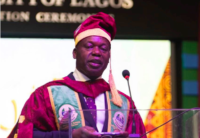
*Keynote address by the former ECOWAS President and current African Union High Representative for ‘Silencing the Guns’, Dr Ibn Chmabas, at Comrade Sunmonu’s birthday ceremony in Abuja on Wednesday, 7th January 2026. The session was chaired by former President Olusegun Obasanjo










Leave a comment