



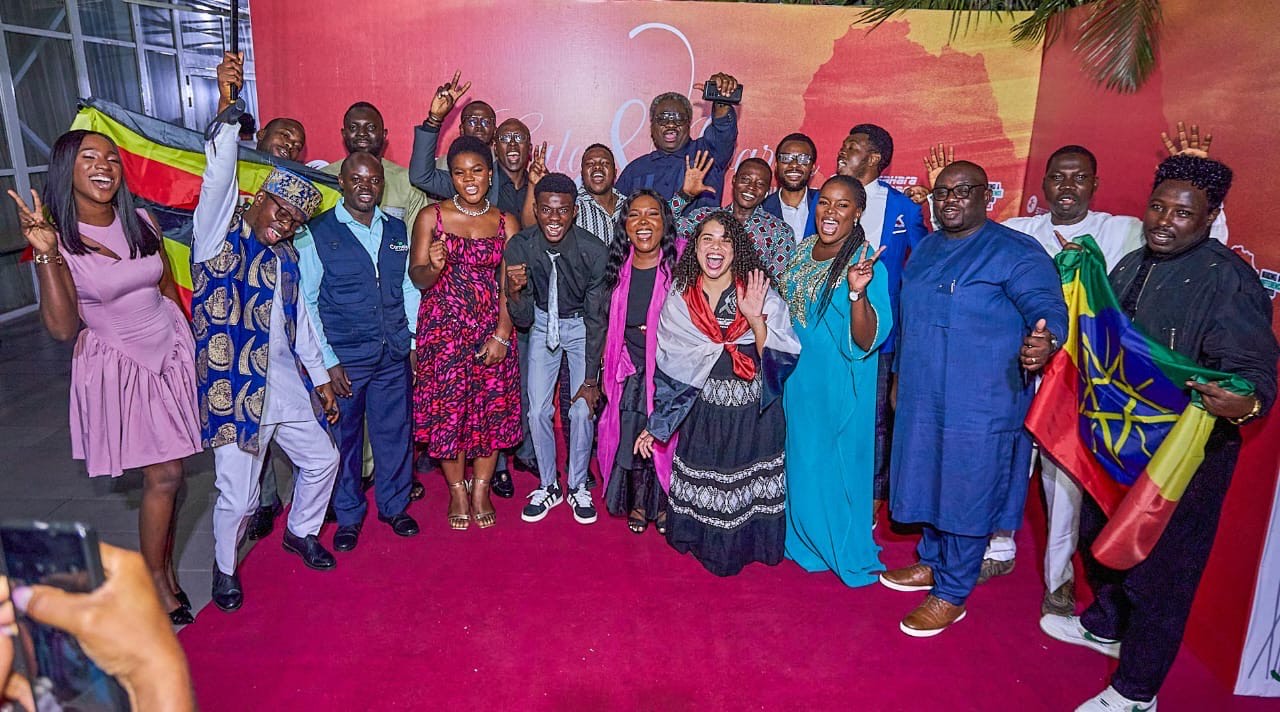
Entrepreneurship in Africa is increasingly less about profit and more about purpose. Across the continent, young innovators are stepping forward to solve real, everyday problems in their communities, often with limited resources but limitless resolve. Through its EXTRApreneur ecosystem, the Sahara Group Foundation is helping to turn this determination into durable impact, backing ideas that are rooted in local realities and driven by the ambition to transform lives, not just markets. Uzoma Mba reports
Entrepreneurship, across Africa today, is more than an economic engine. It is more of a quiet revolution reshaping communities, households, and futures.
According to the African Development Bank, small and medium enterprises account for over 80% of jobs created across the continent, yet only a fraction ever receive the capital, training or market access needed to survive their first three years. For millions of young Africans bursting with ideas but constrained by structural barriers, the gap between innovation and opportunity has become one of the continent’s most persistent development challenges.
For Sahara Group, a leading international energy and infrastructure conglomerate, entrepreneurship holds the bedrock for sustainable development in Africa. This drive to harness entrepreneurial opportunities and capacity in Africa is propelling Sahara Group Foundation’s EXTRApreneur ecosystem. The Sahara Group Foundation is the social responsibility arm of Sahara Group that is committes to building sustainable communities in Africa through extraprenuership.
The Sahara Group Foundation EXTRApreneur drive is a movement powered by grit, creativity, and the belief that when African entrepreneurs are supported with the right tools, they do more than build businesses, they facilitate change.
“What we are seeing is a new wave of Africans who are not waiting for permission to create impact,” said Kola Adesina, Executive Director, Sahara Group. “Our role is to widen the runway so they can take off.”
For the past four years, the Sahara Impact Fund programme and subsequently, the MADAA programme have quietly become one of the continent’s most compelling incubators of community-rooted innovation. These programmes function as a continental proving ground where resilience meets opportunity, and where early-stage founders learn to turn ideas into enterprises capable of shifting realities on the ground.
In this year’s cycle, more than 2,000 young innovators from across 15 African countries applied, each carrying a story shaped by local problems and powered by ambition. Their ideas ranged from waste-to-energy solutions in Lagos to science-education labs in Nairobi, organic skincare lines in Accra, circular-economy models in Kampala, and wheelchair engineering in Johannesburg. What united them was not industry, but impact.
“We come from communities that expect solutions, not excuses,” said Tracey Shiundu, one of the awardees from Kenya. “This support gives us the chance to meet those expectations.”
For many of these founders, the obstacles they face are as real as their dreams. They usually range from limited financing, fragmented policy environments, supply-chain gaps, to skill shortages, and intense market pressures. This is where Sahara’s EXTRApreneur framework becomes catalytic. Beyond grants, the programme equips participants with governance training, commercial modelling, business advisory support, communications strategy, and the discipline required to convert passion into long-term structure.
To reinforce the human-centred purpose behind this model, Bethel Obioma, Head of Corporate Communications at Sahara Group, captures the heartbeat of the movement: “Across Africa, entrepreneurship is increasingly a lifeline for communities. What we see in the EXTRApreneur ecosystem is proof that when young people are given structure, guidance, and the right kind of support, they build solutions that uplift more than themselves.”
“African entrepreneurs are not short on ingenuity,” noted Ade Odunsi, Executive Director, Sahara Group. “What they need is structure, clarity, and the right kind of strategic push. That is what EXTRApreneurship provides.”
What emerges is a new generation of “EXTRA”preneurs who do not merely “hustle,” but build with intention. Founders who understand their markets, measure their impact, and embrace the responsibility that comes with growth.
Take the environmental innovators who are turning agricultural waste into smokeless briquettes to fight deforestation in rural Nigeria. Or the health-tech pioneer in Ethiopia building medical distribution systems for underserved communities. Or the Ugandan chemist who created organic mosquito-repellent products now used by families living in malaria-endemic zones. Their success is not theoretical; it is measurable, tangible, human.
“In Uganda, breaking past survival mode is a battle,” said Joan Rukundo Nalubega. “This grant helps us move from surviving to scaling.” And when these small wins multiply across borders, what begins as a grant programme becomes an engine of continental transformation.
“These are not small interventions,” said Chidilim Menakaya, Director, Sahara Group Foundation. “Each entrepreneur carries a ripple effect that touches homes, markets, and futures.” And this is what makes the EXTRApreneur Revolution distinct. Entrepreneurship is not celebrated for its glamour, but for its grounding in community problems that demand solutions. Businesses are valued not only for revenue, but for relevance.
“Our products come from African soil and serve African needs,” added Violet Amoabeng, an awardee from Ghana. “This support proves that local solutions deserve global confidence.”
Growth is measured not just by scale, but by the number of lives made easier, safer, healthier, or more hopeful. “Mobility is a lifeline,” shared Ernest Majenge from South Africa.
“This grant strengthens our ability to return dignity to people who rely on wheelchairs every day.”
Sahara Group’s role in this story is not to stand at the centre, but to widen the path. By deliberately aligning the Sahara Impact Fund with MADAA, the Sahara Group Foundation has built a streamlined innovation pipeline; one that doesn’t just reward ideas but strengthens the people behind them. Governance becomes as important as creativity. Sustainability becomes inseparable from profitability. Execution becomes a discipline, not an aspiration.
And yet, the most compelling part of this movement is the human thread running through it. Every founder who receives support becomes an ambassador of possibility in their community. They employ neighbours. They mentor younger dreamers.
“What this grant gives Ethiopia is not just expansion,” said Dr. Sisay Abebe, “but the chance to get essential health products to people who need them.”
They demonstrate, simply by existing, that African problems can be solved by African solutions. One entrepreneur at a time.
Africa’s future will not be built solely by policies. It will be built by people who are resilient, imaginative, and unafraid to try. And as long as EXTRApreneurs continue to rise across the continent, Sahara Group’s investment in them becomes more than a programme. It becomes a legacy.















Leave a comment