




The Federal Government has proposed spending N3.23tn on the construction and rehabilitation of federal roads in the 2026 budget, marking a sharp increase in capital allocation to the transport sector as it intensifies efforts to complete long-delayed highways and repair critical corridors nationwide.
The proposed spending represents an increase of about 489 per cent in two years compared to N548.56bn allocated to road projects in the 2024 budget, highlighting a significant shift in fiscal priority towards road infrastructure.
Budgetary documents further show that the Ministry of Works received N1.013tn for the construction and rehabilitation of 468 federal roads in the 2025 budget, up from the 2024 allocation.
The proposed 2026 figure more than triples the 2025 provision, underscoring the government’s renewed commitment to accelerate the delivery of inherited projects and flagship highway developments nationwide.
The government has repeatedly said improved road infrastructure is critical to lowering transport costs, boosting trade, and supporting economic growth, amid rising concerns over the state of key federal highways.
A review of the proposed 2026 budget estimates presented to the National Assembly by President Bola Tinubu and released by the Budget Office revealed that the government has proposed to spend N1.39tn on the construction and provision of roads and N285.62bn on rehabilitation and repair works in the 2026 fiscal year, according to details of the Ministry of Works’ capital budget proposal.
In addition, N1.56tn has been earmarked for the construction and provision of infrastructure. The ministry also has a total capital budget envelope spending of N3.24tn.
Recall that the current administration has intensified efforts to complete 2,604 road projects inherited from previous governments.
Under road construction and reconstruction in the proposed 2026 budget, the government allocated N7.7bn for the reconstruction of the Abuja–Lokoja Road (Sections I and II: Zuba–Abaji), while N4.9bn was allocated for the completion of outstanding dualised sections of the same corridor, covering a remaining length of 86.6 kilometres.
Also on the Abuja–Lokoja axis, N4.2bn was proposed for the reconstruction of the Koton-Karfi–Abaji Road, Abuja-bound, in Kogi State.
Major funding was also proposed for the Kano–Maiduguri Road, with N13.3bn allocated for Section I (Kano–Wudil–Shuarin), N4.2bn for Section IV (Potiskum–Damaturu, including rehabilitation of failed portions), and N7bn for Section V (Damaturu–Maiduguri). In addition, N7.01bn was proposed for the reconstruction of Section III of the Mubi–Maiduguri Road, covering Madagali to Bama through Pulka and Gwoza.
The budget further earmarked N52.5bn for Phase II of the Kano–Katsina Road dualisation, stretching from KM 74+100 to KM 152+655, while N23.8bn was allocated for Phase I, running from Dawanau Roundabout in Kano to the Katsina State border.
Another N6.31bn was proposed for the dualisation and reconstruction of the Kano–Kwanar–Danja–Hadejia Road (Section II). On the Lokoja–Benin Road, the proposal includes N14m each for Phase I sections covering Obajana–Okene, Okene–Auchi, Auchi–Ehor, and Ehor–Benin City, while N14m was also allocated to rehabilitation works along the same corridor.
In the South-East and South-South, N11.9bn was proposed for the rehabilitation of Section III of the Enugu–Port Harcourt Road (Enugu–Lokpanta), while N7.7bn was allocated for Section IV (Aba–Port Harcourt).
An additional N6.3bn was earmarked for the rehabilitation and reconstruction of Section II of the Enugu–Port Harcourt dual carriageway, covering Umuahia Tower to Aba Township Rail/Road Bridge.
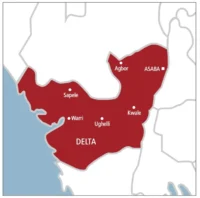
The budget also provides N14m for the reconstruction of Section II of the Benin–Sapele–Warri Road, N12.6bn for the reconstruction of the Ikorodu–Itoikin Road in Lagos, and N5.6bn for the rehabilitation of the Asaba–Agbor dual carriageway in Delta State. Emergency repair works on the Eko Bridge in Lagos were allocated N7bn, while N70m was set aside for the completion of Phase II of the Utor Bridge project in Delta State.
Rehabilitation works feature prominently across states, including N700m each for the Potiskum–Fika–Bajoga–Gombe Road, New Bussa–Kaima Road, Jega–Kwanar Sanagi–Kebbe–Gummi Road, Share–Pategi Road, Ibadan–Oyo Dual Carriageway, Ohan and Moro bridges on Ilorin–Igbeti Road, Kabba–Ayere–Isua–Ipele Road, Uturu–Isuikwuato–Akara Road, and multiple federal roads in Anambra, Jigawa, Ogun, Oyo, Ekiti, Yobe, and Cross River states.
Other notable allocations include N14bn for the construction and rehabilitation of the Wusasa–Jos–Turunku–Mararaban Jos Road in Kaduna, N4.21bn for the Agaie–Katcha–Barro Road in Niger State, N10.5bn for the rehabilitation of the Katsina Ala–Takum Road, and N7.7bn each for the construction of Oju–Adum–Okuku Road in Benue State and the reconstruction of the Ijebu-Igbo–Ita Egba–Owonowen Road linking Ogun and Oyo states.
Beyond individual contracts, the ministry proposed N120bn as additional funding for ongoing projects in the South-South, N160bn for the South-West, N100bn each for the South-East, North-East, and North-Central, and N120bn for the North-West.
A further N600bn was earmarked for new road projects across the six geopolitical zones, while N100bn was set aside as a contingency fund.
The proposal also reflects significant external financing commitments, with N367.9bn allocated for multilateral and bilateral tied loans for the Lafia Bypass and the dualisation of the 9th Mile–Otukpo–Makurdi Road, alongside N157bn in counterpart funding for the China Harbour Markurdi–9th Mile project.
Smaller allocations include N3.5m for Servicom and hypersensitivity programmes and N2.1m for coding and engraving of ministry equipment.
Altogether, the 2026 Works budget outlines one of the most expansive road investment programmes in recent years, spanning reconstruction, rehabilitation, dualisation, emergency repairs, and new projects nationwide, even as execution capacity and funding releases remain critical to delivery.
The proposed road spending represents one of the largest single-sector allocations in the capital budget, reflecting the government’s emphasis on road infrastructure as a driver of economic growth, trade facilitation, and national integration.
However, effective project execution, timely releases, and contractor performance will be crucial if the ambitious road budget is to translate into completed highways rather than an expanding stock of abandoned projects.
The 2026 budget proposal is expected to undergo legislative scrutiny in the coming weeks, with lawmakers likely to interrogate project prioritisation, regional balance, and the capacity of the ministry to deliver on its expanded road works programme.











Leave a comment