




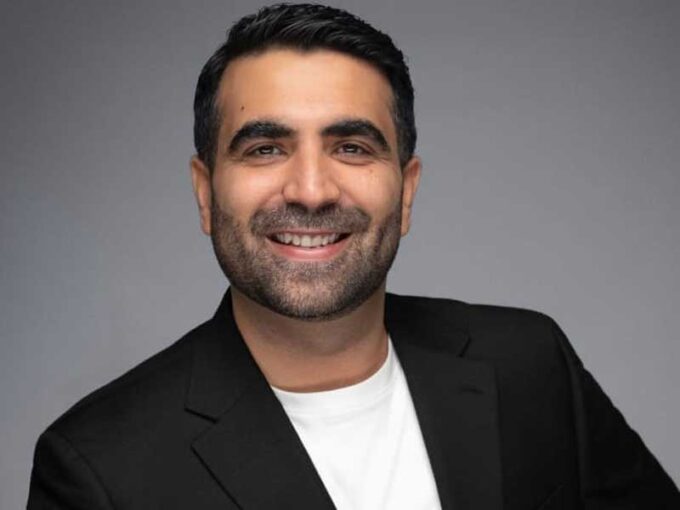
Managing Director/Chief Executive Officer of Afrocultour Limited, Chuks Akamadu, in this conversation predicted that a new National Tourism Policy will be launched this year. He also rejected the call for a standalone Tourism Ministry, describing it as a wrong-headed advocacy that promotes waste of public funds, among other salient issues. Charles Ajunwa brings excerpts
Last year, your organisation, Afrocultour partnered with the Ministry of Arts, Culture, Tourism and Creative Economy to host the maiden edition of Africa Tourism and Creative Expo. Were your expectations met?
I’d say “significantly”, on account of a number of factors, which include impressive participation drawn from all the regions of Africa, the quality of the discourse and the robust debate it elicited. Rather more importantly, I’m quite impressed with the shared resolve of African nations to work towards the attainment of the central objective of the Expo which is to raise our continent’s contribution to global trade from 2.7 per cent to 10 per cent by the year 2030 and increase Africa’s share of global tourism revenue from 5 per cent to 20 per cent by same year 2030.
Some resolutions were reached at the end of the day. What is the level of implementation so far?
What I have just stated is the principal resolution of the Expo. But suffice it to say that it’s work-in-progress that will require Africa to work with the right sense of purpose, sharp focus and a great deal of intentionality. For that reason, we have on our part shared the report of the Expo with African nations, African Union, African Continental Free Trade Area (AfCFTA), World Trade Organisation and other relevant development partners, so that we can all be on the same page. Shortly, we shall be embarking on advocacy outreaches to African Union member states, with a view to encouraging their governments to prioritise culture, tourism and the creative sector, for purposes of economic diversification and favourable balance of trade and balance of payment.
Some stakeholders are calling for a standalone Tourism Ministry. What is your take on this?
On the contrary, I think the federal government should be applauded for boldly merging Tourism with Art, Culture and Creative Economy, which I personally consider to be a masterstroke. With due respect, I consider it to be a wrong-headed advocacy that promotes waste of public funds. What should worry stakeholders is the fact that the Art, Culture, Tourism and Creative Economy ecosystem is yet to be recognised by the government as a pathway to economic diversification and prioritised as such. With less than N80 billion allocated to the sectors in the 2026 federal government budget, it is, as lawyers would say, “res ipsa loquitur” – a Latin maxim, when translated that means: “the facts speak for themselves”.
How would you assess tourism in Nigeria, and globally?
Tourism in Nigeria remains potentially big. I think that is the nicest way to put it. A lot needs to be done to grow the sector, to enable it attain its full economic potential. On the global stage, however, things are looking up. Global tourism revenue is valued at 11 trillion dollars. Regrettably, the entire Africa takes home $550b. And you can be sure that Morocco and Egypt pick the lion share, with Tunisia, South Africa, Kenya and Tanzania scrambling for what is left. Where then is Nigeria, with our comparative advantage and competitive edge, in the regional tourism mix? Food for thought.
In terms of tourism activities, what are your projections this year?
On the home front, I expect that the long-awaited launch of a new National Tourism Policy will happen, and I’m optimistic that its implementation would present fresh prospects for stakeholders to reposition the sector for mutual benefit and shared prosperity. Interestingly, this is one of the items on the menu for this year’s edition of Nigeria Entertainment and Economic Roundtable scheduled for April.









Leave a comment