




With artificial intelligence dominating global tech conversations, the CEO of CarbonAI, Debola Ibiyode, is pushing beyond the hype, with a focus on productivity and building a sustainable AI industry in Nigeria, Vanessa Obioha writes
The hype around artificial intelligence (AI) has grown steadily since OpenAI launched ChatGPT in 2022, quickly becoming the new watchword in global tech circles as companies pivoted from once-celebrated futures, such as the metaverse, to AI-driven solutions. In Nigeria, the pace of adoption has been slower, shaped by structural and infrastructural challenges, yet the excitement around AI has remained loud. What concerns Debola Ibiyode, CEO of CarbonAI, is what comes after the buzz: how the technology can translate into real productivity and a sustainable AI industry on the continent.
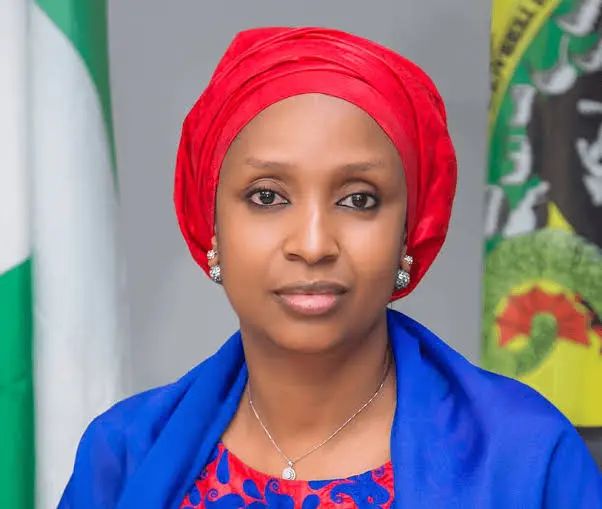
One of the few female engineers driving practical AI adoption in Nigeria and the UK, Ibiyode is taking that conversation to the public through AI in Action, a conference scheduled for Thursday, January 22, 2026, at the Oriental Hotel, Victoria Island, Lagos. The event is an attempt to move artificial intelligence in Nigeria beyond hype and into practical use, bringing together investors, data scientists, founders, students and policy leaders to discuss how to build, deploy and scale AI in real-world situations. About 16 speakers will be tackling the theme ‘Driving Productivity, Innovation, and Sustainability— Building the Future in AI Together.’
At first meeting, Ibiyode does not quite fit the stereotype of the hard-edged tech executive. A software engineer with a disarming sense of humour, she speaks easily about her career journey and personal evolution, her playfulness often softening conversations around complex systems and data. But beneath that ease is a clear-eyed focus on impact. That focus on impact is evident in the range of roles she has played across the tech ecosystem, including at her own companies. For instance, through Optisource Technology Solutions, which she co-founded with her husband, Ibiyode helped connect Nigerian engineers to global companies. She was also part of the team that spearheaded the online checking of JAMB results.
With AI in Action, she hopes to do more, including launching the AI Foundry Africa, an initiative designed to train and mentor young founders while giving them access to investors who can fund and scale their ideas.
Ibiyode’s foray into science and engineering was inspired early on by an uncle who gifted her a Pascal Book of Programming, a gesture she says opened her eyes to a new world of possibilities
“Pascal was my first love for coding,” she told me at a recent meeting. “I can never not like Pascal, because it made me see that I could do something.”
This was at a time when many parents hoped their children would become doctors or pursue a handful of prestigious careers, while the idea of building a future in computer science was often dismissed. As Ibiyode recalled, her late father— who was the head of town planning and worked on Lagos’ development during Lateef Jakande’s tenure—initially imagined she would end up working in a cybercafé. She eventually convinced her parents otherwise after earning a Microsoft certification and going on to study Computer Science at Ladoke Akintola University of Technology (LAUTECH). Her academic journey has since expanded to include a certificate in Artificial Intelligence from the University of Oxford and a master’s degree in Computer Engineering from Syracuse University’s College of Engineering and Computer Science.
Keen on breaking stereotypes around AI, Ibiyode launched a YouTube channel where she focuses on demystifying and democratising the technology. The channel now has over 21,000 subscribers from across the continent.
“I realised that with every technology that has come in the last 100 years, other races have a leg up, and that’s because they push and empower themselves to be at the forefront, and then our race is always playing catch-up. I’m in a unique advantage that at the start of the technology, I’m a leader in it. It is my duty, I felt, and still feel, to ensure that I’m doing the same thing I’m seeing them do to empower my type of people.”
One of the gaps she identified early on was how cultural nuances embedded in AI models often hinder understanding and adoption.
“Those nuances are what separate us and so demystifying artificial intelligence is to let us understand it from our own perspective, how best we should be consuming it, and what it actually means for us.”
Debunking some of the misperceptions about AI in Nigeria, including the fear that it will replace humans in workplaces, Ibiyode pointed out that AI is not omniscient.
“AI, in itself, is just a science. ChatGPT is not AI,” she emphasised. “But it is running artificial intelligence functions in it. If you take that function out of ChatGPT, it’s just a tool. So the misunderstanding is people don’t see AI as a tool.”
She added that AI is far from a solution to every problem. “And it doesn’t solve all our problems. I always tell people, there are things AI cannot do. What God cannot do does not exist but what AI cannot do exist. Just find out what it can do and what it can’t do, and see where you can use it to your benefit. If people see it that way, the adoption will be better. The hype would be more productive. And that’s what the conference is about: having a productive hype about what artificial intelligence is. It’s not going to replace anybody, because AI cannot think for itself.”
For Ibiyode, Nigeria does not yet have an AI industry, largely because consumption of the technology has been shaped by foreign narratives. “As a country, we let the rest of the world think for us,” she said. “We are used to taking other people’s thoughts rather than developing our own. Because of that, we are still viewing AI through the lens of the rest of the world.”
To scale, she believes Nigerian developers must collaborate, empower one another and start building solutions around AI despite existing limitations. “If from this conference, four founders come together and build four unicorn AI products, the job is done. That’s how industries are built.”
“And when we can show that anti-fragility of things, then we get enough investment to then build the infrastructure that we actually need. If we’re waiting for the infrastructure, we will be behind,” she added.
Ibiyode is also advocating for the introduction of artificial intelligence into educational curricula, arguing that early exposure is critical. She hopes the government will take a more active role in regulating AI use and protecting young people.
“I do hope the government will start to look into securing the youths or the users of AI, and protecting us from the big farms taking advantage of our data, our own labour, by putting regulations on how people use AI,” she said.
If all of these happen, the buzz around artificial intelligence may finally give way to something more enduring.–















Leave a comment