



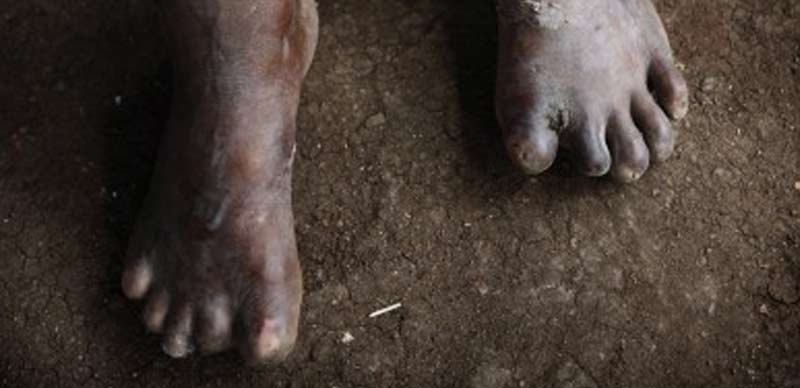

The Nigerian Association of Dermatologists has raised the alarm over a critical two-year shortage of multidrug therapy for leprosy patients across the country, warning that the absence of treatment is making a cure impossible for affected individuals.
The association disclosed that regulatory and administrative delays have prevented the clearance and distribution of essential medications, despite their procurement and donation through official World Health Organisation-approved channels.
It noted that the prolonged unavailability of the life-saving drugs has left patients in multiple states without access to treatment, leading to progressive nerve damage, disability, deformities, and continued community transmission.
According to the WHO, leprosy, also known as Hansen disease, is a chronic bacterial infectious disease that affects the skin, peripheral nerves, the upper respiratory tract, and the eyes, leading to physical deformity.
The global health agency notes that it is a neglected tropical disease that still occurs in more than 120 countries, with around 200,000 new cases reported every year.
PUNCH Healthwise earlier reported that although Nigeria met the World Health Organisation’s elimination target of one case per 10,000 population in 2000, leprosy remains a public health concern in the country, with more than 3,500 new cases recorded annually and many patients living with disability, stigma and discrimination.
Findings reveal that the country ran out of stock of the multi-drug therapy in early 2024 due to a bureaucratic delay in supplies and new domestic testing regulations.
But in early 2025, the WHO announced the shipment of the drugs to Nigeria after a yearlong holdup.
But in a statement sent to PUNCH Healthwise on Sunday to commemorate World Leprosy Day 2026, signed by the NAD President, Prof Dasetima Altraide, and the Secretary General, Dr Hauwa’u Makarfi, the association expressed deep concern over the situation.
The statement read, “As Nigeria joins the global community in commemorating World Leprosy Day 2026, with the theme ‘Leprosy is curable, but the real challenge is stigma,’ the Nigerian Association of Dermatologists expresses deep concern over the prolonged unavailability of multidrug therapy for leprosy patients across the country. Leprosy is a fully curable disease when treated with the WHO-recommended multi-drug therapy. However, for over two years, Nigeria has experienced a critical shortage of these essential medications, despite their procurement and donation through official WHO-approved channels.”
The dermatologists revealed that regulatory and administrative delays had prevented the clearance and distribution of the donated drugs, leaving vulnerable patients without access to life-saving treatment.
They stated, “Regulatory and administrative delays have prevented clearance and distribution, leaving patients in multiple states without access to life-saving treatment. It is reported that the Clean Report of Inspection and Analysis certificate, required by NAFDAC to ensure and certify quality before clearance into Nigeria, has not been provided by the drug manufacturers.”
The association warned that the consequences of the treatment interruption were severe, emphasising that a cure was impossible without access to medication.
The statement noted, “The consequences of this interruption are severe. Where treatment is unavailable, cure is impossible. Untreated leprosy leads to progressive nerve damage, disability, deformities, preventable complications, and continued community transmission. These outcomes directly reinforce stigma, exclusion, and long-term socioeconomic harm to affected individuals and families and increase the risk of community transmission.”
The dermatologists emphasised that stigma associated with leprosy could not be eliminated without ensuring access to effective medical treatment.
They argued, “NAD emphasises that stigma does not exist in isolation. It is sustained by systemic failures in access to care. Without timely treatment, disease progression leads to visible disability, which fuels discrimination and social marginalisation. Ending stigma, therefore, requires not only social change, but guaranteed access to effective medical treatment.”
The association referenced recent Nigerian research highlighting the persistent burden of leprosy in the country.
The statement said, “Recent Nigerian research, including a 17-year retrospective study published in the Clinical and Experimental Dermatology Journal titled ‘Demographic and clinical profile of patients with leprosy in Lagos, Nigeria,’ highlights the persistent burden of leprosy, patterns of disability, and the urgent need for strengthened treatment access and disease control systems.”
The Nigerian Association of Dermatologists called for urgent regulatory intervention to facilitate the clearance and release of WHO-donated multidrug therapy.
They demanded, “Urgent regulatory intervention to facilitate clearance and release of WHO-donated MDT, high-level inter-agency collaboration to resolve administrative bottlenecks, immediate restoration of treatment access for patients nationwide, and sustained systems to prevent future supply disruptions.”
The association stressed that leprosy elimination could not be achieved without treatment, and stigma could not end without treatment and cure.
The statement concluded, “Leprosy elimination cannot be achieved without treatment. Stigma cannot end without treatment and cure. Cure cannot occur without drugs. Access to essential medicines is a public health obligation, a human rights issue, and a national responsibility.”
Efforts to obtain the reaction of NAFDAC through its Resident Media Consultant, Sayo Akintola, were unsuccessful as of press time, as he had yet to respond to messages and questions sent to him on WhatsApp..















Leave a comment