



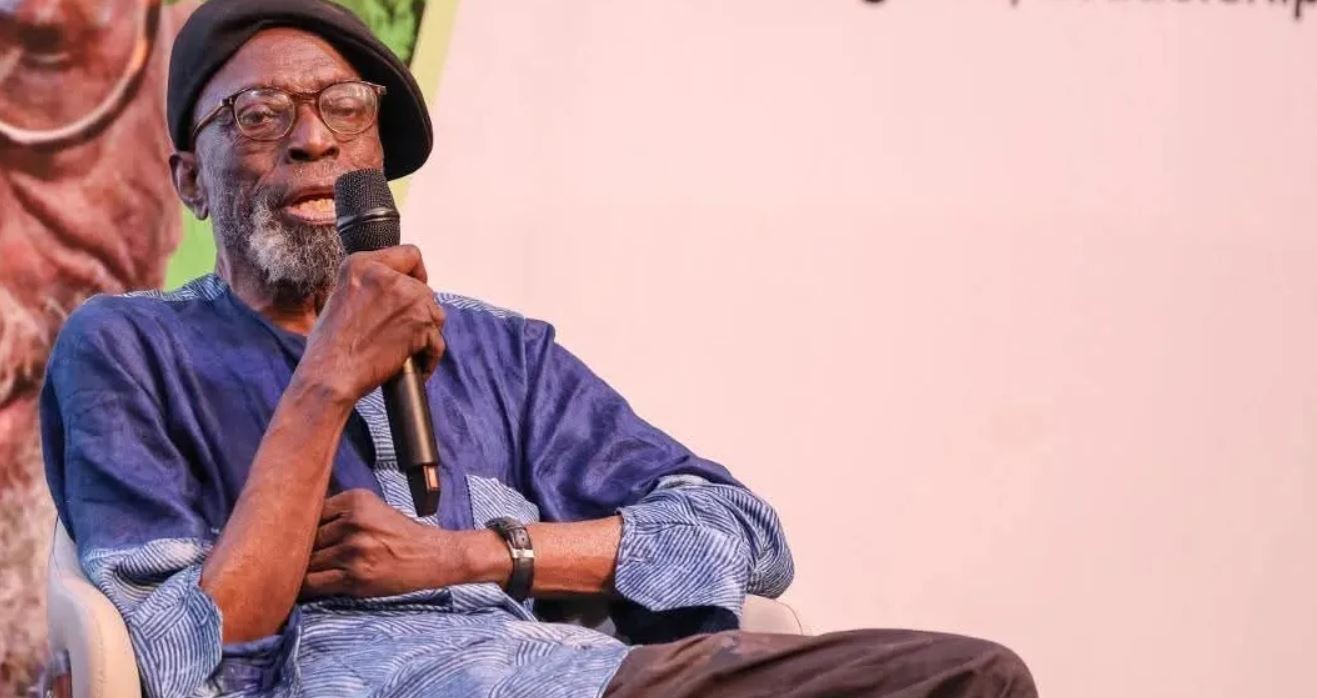
NIYI EGBE pays tribute to the academic and public intellectual who passed at 80
I first met Professor Biodun Jeyifo who passed on February 11, 2026 in his office in the Faculty of Arts, of the then University of Ife, in 1979. A student-big brother guide had taken me to him, explaining that I was from Igarra, Edo State, Jeyifo’s actual roots, though he was more associated with Ibadan where he grew up. He was warm, studied and wished me well. Being a student of Agriculture, our paths didn’t cross much beyond occasional visits. Anytime I saw and reminded him about the circumstances of our first contact, he readily recalled. We lost touch after I graduated in 1984.
Popularly referred to as BJ, Prof Jeyifo was among the great philosophers who catalyzed the activists’ disposition of Ife students. Their philosophies and teachings impacted them. Other popular and loved lecturers were his mentor ”Kongi” Prof Wole Soyinka, Professors G.G. Darah, Itse Sagay, Dipo Fasina, Sam Aluko, and numerous others. The corruption and other vices they saw in the nation, deeply troubled, irritated and had them continually canvassing ideals for national healing. They were thoroughbred academics who had their world views shaped by deep learning and global exposure.
BJ had sterling attainments. As far back as 1970, he had obtained a first class honours degree in English from the University of Ibadan. Thereafter, he bagged a Doctorate degree in Dramatic Literature from New York University, United States in 1975. He took to lecturing at the then University of Ife and gradually committed to writing. He wrote dramas, on politics and culture. He also devoted much to promoting socialist and revolutionary ideals. Jeyifo was also a renowned voice in Marxist literary criticism and post-colonial studies.
He actively participated in social mobilization which availed opportunities to ventilate his thoughts and put actions to words. He became a National President of the Academic Staff Union of Universities.(ASUU). During his tenure, he challenged both military and civilian administrations to improve the welfare of university lecturers. An international scholar of repute, he lectured at Cornell and Harvard Universities. He was also a prolific columnist in two Nigerian national newspapers – The Guardian and the Nation.
In the 1980s, the University of Ife had unmistakable reckoning for road mapping national sanity and good governance. From that ivory tower, staff and students seized available opportunities to identify and challenge perceived banes of national development. The Great Ife community was always loud against commercializing education. For Ife education is a sine qua non to attaining national greatness. The maxim: “education is a right not a privilege” featured frequently in debates. You could also place a bet on Ife students initiating and leading national protests against (using our words), ethnic chauvinism, abject squalor, social inequality, strangulation of the poor through hikes in fees, etc. Every now and then, you hear the maxim: Aluta continua, victoria ascerta – the struggle continues, victory is certain.
Far before renaming the University after the visionary founder Chief Jeremiah Obafemi Awolowo, the campus was largely Awoist. The late sage’s progressive thoughts thrilled the university community. The university environment was sane and nondiscriminatory. Pass the exams and you gained admission to that well-planned citadel of learning that we prided Africa’s most beautiful campus. Students from Middle belt Nigeria, Edo, Ibo, Efik, Ogoni, and of course Yorubas all felt at home. I recall the physicist of global renown – the late Professor Cyril Agodi Onwumechili, who served as Vice Chancellor from 1979 till 1982. He was urbane and led a peaceful and memorable regime. He was much loved by the students. He strutted with deserved pride and decorum.
Lecturers hailed from different parts of the country, particularly the South. The university also warehoused global intellectuals from the African continent, Asia, and the United States. A lot of them were young, largely returnees from American, European universities. Their concern was building the Nigerian nation. Their recruitment was largely attributed to Professor Hezekiah Oluwasanmi, Vice Chancellor, 1966 – 1975. The University library was later named after him.
Students had fun amidst the tough requests of academics and study environment. To ease tension, they relaxed through watching films and Drama at the famed Oduduwa Hall. As necessary, we threw jibes at ourselves. For instance, if you are lousy or unnecessarily noisy, you get heckled and put in check. You risked being derogated as Shoe ma, Asoso, Aro, etc.
Student unionism was good ground for the politically active. Elections were often keenly contested. The high point of elections was the speech night where students appraised the readiness of contestants for elective offices. Non-performers met instant waterloo. By the time a candidate is interrupted mid speech with the song Ojo nro sere nu ile, ma wo nu ojo, ki aso re ma ba tu tu… (rain is falling, stay at home, so you keep warm otherwise your clothes get wet}, he or she had been weighed on the balance and found wanting. Election times were indeed great fun. Sometimes, our brothers from Eastern Nigeria betrayed deep accents. They were called Okoro or Omo nna. In retaliation, they called Yoruba students Ngbati or Amala – after a darkish brown food swallow of Yorubas. Most Ibos saw Amala for the first time at Ife. Despite these jibes many students crossed cultural bounds to marry themselves.
Great Ife was avoided and indeed dreaded by unsure politicians. However, some of note came calling! Alhaji Lateef Jakande, Chief MKO Abiola, Chief Obafemi Awolowo were special guests or University Convocation lecturers. Nigeria’s President Shehu Shagari being the University Visitor also paid a visit. Some of those occasions afforded lecturers and students opportunities to interact with and grilled them.
The late Alhaji Lateef Jakande, then Lagos State governor was queried over how he intended sustaining his dream Lagos State University with the planned large number of students upon take off. He had his answer. He explained that LASU, like some universities abroad, would be nonresidential, at the time a novel approach to running universities.
Chief MKO Abiola whose election was annulled by the military wasn’t much welcome to the university. His sustained criticism of much revered Chief Obafemi Awolowo didn’t go well with students and lecturers. However, he appeased students by donating One Million Naira towards the Students Self-Help Hostel initiated by the Students Union leadership led by Eddy Olafeso. At the time, the amount was huge money.
Ife campus was at a standstill when the political icon Chief Obafemi Awolowo visited. The campus was jam-packed. People seized whatever available space to catch a glimpse of him. He was in his late 70s – frail and slowly made his way into Oduduwa Hall. It was my first and only time of seeing the man who was truly popular, in my childhood mind’s eye. It was unthinkable that death could call him home. As he moved, he responded to cheering supporters and students with his trademark Victory signs.
Alhaji Shehu Shagari,, then Nigerian President came with a convoy of serving ministers, senators, members of the Federal House of Representatives and associates. The campus was agog. They wanted to see the man who not only defeated their idol, Chief Obafemi, but was bold enough to dare Ife campus. Nonetheless, the peaceful man visited and was warmly embraced.
Prof Biodun Jeyifo steadily grew to becoming a globally renowned intellectual. He, like compeers at the time, couldn’t cope with the hardships inflicted on the Nigerian nation by ill-advised currency devaluation and Structural Adjust Programme – economic pills imposed by the then military government of General Ibrahim Babangida. Most intellectuals simply “checked out”. They couldn’t heed the impractical request of the government that they needn’t migrate. The cancer which wasn’t nipped from the mid cum late1980s has sadly become gangrene. It’s been mass exodus to other lands. Sadly, most young Nigerians now see salvation elsewhere but in their own shores.
The paradise that the generation of Prof Biodun Jeyifo envisaged and wished they would see in their time became a mirage. Nonetheless, we needn’t give in. Otherwise their labour would be in vain. May the gallant soul of Prof Biodun Jeyifo find rest in the bosom of his maker.
Egbe, an Agriculturist and public commentator, writes from Lagos. niyiegbe@yahoo.com








Leave a comment