





The Rural Electrification Agency has unveiled plans to execute more than 500 electrification projects in the 2026 fiscal year, as part of a N170bn budget proposal aimed at expanding reliable power supply to public institutions and underserved rural communities across the country.
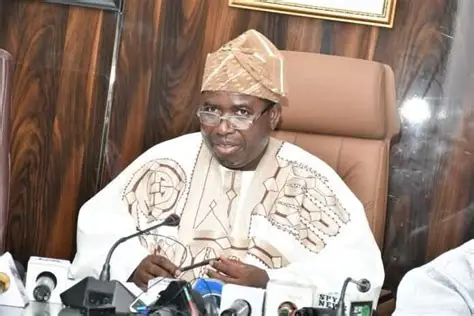
The Managing Director of the agency, Abba Aliyu, disclosed this while briefing journalists on the sidelines of the 2026 budget defence session organised by the House Committee on Rural Electrification in Abuja on Friday.
Aliyu said the agency’s total budget proposal for 2026 stands at N170bn, out of which N100bn has been approved for the National Public Sector Solarisation Initiative, a flagship programme designed to provide sustainable and cost-effective electricity to government institutions.
He said, “N100 billion has been earmarked and approved for the National Public Sector Solarisation Initiative — a flagship programme designed to provide sustainable and cost-effective electricity to government institutions.”
He explained that the allocation will fund the deployment of hybrid mini-grids for Ministries, Departments and Agencies within and outside Abuja, reducing dependence on the national grid and cutting energy costs in public facilities.
Citing the National Hospital Abuja as an example, the REA boss noted that solar-based infrastructure has already been deployed to ensure uninterrupted electricity supply, significantly lowering operational costs while improving service delivery.
Giving a breakdown of the proposed interventions, Aliyu said the 2026 budget captures a mix of solutions tailored to the energy needs of different communities.
He added, “A significant number of the projects involve grid extension to communities located near existing power infrastructure.
“In such cases, the agency will extend distribution lines and install transformers to connect households and businesses to the national grid.”
For agrarian settlements and communities with cottage industries, the agency plans to deploy renewable-powered mini-grids to stimulate economic productivity. Mini-grids are also earmarked for agricultural processing clusters to enhance value addition, reduce post-harvest losses and support rural enterprise development.
In less populated and hard-to-reach areas, the REA intends to deploy solar home systems to provide standalone renewable electricity to households that are not economically viable for grid or mini-grid connectivity.
“What we presented to the National Assembly are the comprehensive details of these over 500 projects scheduled for execution in 2026,” Aliyu stated.
On budget implementation, the Managing Director disclosed that the agency achieved an 85 per cent execution rate for the 2024 budget.
He added that despite low releases in 2025, the agency has so far recorded 32 per cent performance for the current fiscal year, expressing optimism that implementation would improve as additional funds are released.
Earlier, the Chairman of the House Committee on Rural Electrification, Mohammed Bukar, said the committee was satisfied with the agency’s submissions after detailed scrutiny.
Bukar noted that the REA has made measurable progress in expanding access to electricity through off-grid and renewable energy interventions across rural communities, federal institutions and public sector establishments nationwide.
He commended the agency’s compliance with procurement regulations, fiduciary safeguards and development partner frameworks guiding its operations, but stressed that the committee would conduct oversight visits to project sites.
“Legislative oversight is a critical pillar of accountability, and we will continue to ensure that the Rural Electrification Agency remains aligned with its statutory mandate and national development priorities.
“However, at this stage, we are satisfied that the agency is operating within its mandate and delivering tangible impact. We encourage the agency to sustain this momentum as Nigeria advances its rural electrification and energy transition objectives,” Bukar said.
PUNCH Online reports that in recent years, REA has emerged as a key driver of Nigeria’s rural electrification and energy transition agenda, particularly through off-grid renewable solutions. The agency has implemented major programmes such as the Energising Education Programme, which has delivered solar hybrid power plants to federal universities and teaching hospitals, and the Energising Economies Initiative, targeting markets and small business clusters.
Through partnerships with development partners, including the World Bank and the African Development Bank, the agency has deployed hundreds of mini-grids and solar home systems under the Nigeria Electrification Project, bringing electricity to millions of Nigerians in previously unserved communities.
These interventions have helped reduce reliance on diesel generators, lowered energy costs for small businesses and public institutions, and supported economic activities in rural areas. The REA’s expanding portfolio reflects a broader national shift toward decentralised renewable energy as a practical solution to Nigeria’s persistent power supply gaps, particularly in off-grid and underserved regions.














Leave a comment