



Michael Olugbode
Lust beyond the quiet outskirts of Nasarawa Toto in Nasarawa State, where farmers once rose at dawn to tend cassava fields and fishermen cast their nets into narrow streams, a new sound now defines the morning air — the metallic grind of industrial machinery.
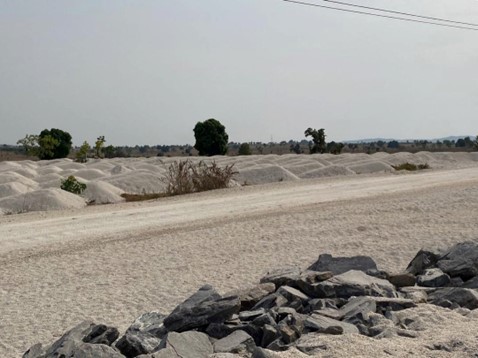
Two to three kilometres from clusters of mud-brick homes and farmlands, a sprawling lithium processing facility hums with activity. Conveyor belts roll relentlessly. Heavy-duty trucks thunder in and out. Fine dust occasionally rises into the sky, settling over nearby vegetation. To some residents, it signals long-awaited opportunity. To others, it carries uncertainty.
A Global Mineral, A Local Reckoning
Lithium — once a relatively obscure mineral — has become indispensable to the global clean energy transition. It powers batteries used in electric vehicles, smartphones and renewable energy storage systems. As international demand surges, mineral-rich nations are fast becoming strategic players in a high-stakes economic shift.
Nasarawa State has emerged as a focal point of this ambition. The federal government recently commissioned what is described as the country’s first and largest lithium processing plant in the state, constructed by the Chinese firm Avatar New Energy Materials Co., Ltd.. The facility reportedly boasts a production capacity of 4,000 metric tonnes daily.
Another Chinese firm, Canmax Technologies, has pledged over $200 million to build an additional lithium processing plant in the state — underscoring the scale of foreign-backed mineral investments reshaping Nigeria’s Middle Belt.
During a recent meeting with Chinese investors, President Bola Ahmed Tinubu reportedly commended their investment drive and encouraged them to take advantage of Nigeria’s vast market and comparatively low-cost labour — remarks that have drawn mixed reactions among policy watchers and civil society actors.
On paper, the outlook is promising. Mining offers prospects for job creation, infrastructure upgrades and expanded government revenue. Roads leading into some communities have improved. Young men now work as plant operators, drivers and security personnel. Yet beneath the optimism lies a more complex reality. The Voices of Concern
The civil society organisation Corporate Accountability and Public Participation Africa (CAPPA) has cautioned the federal government against pursuing industrial-scale lithium mining without strong environmental safeguards and community protections.
In a statement, CAPPA warned that Nigeria risks repeating patterns of ecological degradation seen in other extractive sectors if oversight remains weak. The group cited longstanding governance gaps in the mining sector, arguing that mineral resource control — constitutionally vested in the federal government — has often sidelined host communities from decision-making processes.
“We are concerned about the implications of these lithium investments for communities, given the systemic flaws inherent in Nigeria’s mining governance,” said Akinbode Oluwafemi, CAPPA’s Executive Director.
He noted that while Nasarawa State has reportedly secured mining licenses covering tin, gold and lithium, final decision-making authority over mineral resources rests with the federal government — a structure critics say creates accountability gaps.
CAPPA also questioned the level of transparency surrounding the environmental impact assessment of the Nasarawa lithium project, particularly amid ongoing discussions to amend the Nigerian Minerals and Mining Act to strengthen oversight and community inclusion.
The organisation further raised alarm about reports of informal and unregulated lithium extraction in parts of the country, warning that poorly supervised mining activities have been linked to insecurity, environmental damage and rural displacement.
In communities near the facility — including parts of Udege Development Area — residents describe subtle but troubling changes.
Farmers complain of dust settling on crops. Others speak of wastewater discharge and unusual substances appearing in local waterways.
Some residents allege that since December 2025, lithium-related spillage has affected parts of their river systems. According to them, the water has at times appeared whitish, raising fears of contamination.
Mohammed Amadu, a local resident, said community members who bathed in the river sometimes reported feeling feverish afterward.
“When people take their bath there, they feel unbearably feverish and fall sick for about one or two weeks,” he alleged, adding that many residents now avoid using the river water.
Another resident, Ibrahim Suleiman, called on the federal government to intervene, stating that appeals to the state authorities had yet to produce visible action.
Environmental specialists caution that lithium processing, if poorly managed, can generate chemical tailings, airborne mineral dust and industrial wastewater — all of which have the potential to contaminate soil and groundwater.
The area’s hydrology heightens concern. Streams around Nasarawa Toto eventually feed into the Benue River — one of Nigeria’s most critical waterways. Contaminants introduced upstream could, in theory, travel across state lines, affecting agricultural and fishing communities downstream.
As of the time of filing this report, efforts to obtain official comments from Avatar New Energy Materials Co., Ltd. regarding the alleged spill and environmental concerns were unsuccessful.
For many young residents, the plant represents rare economic relief in a region battling unemployment.
“I used to depend on seasonal farming,” one worker said. “Now I earn a steady monthly salary.”
But CAPPA has warned that promises of “cheap labour” — a phrase reportedly used in discussions with investors — risk reinforcing exploitative employment patterns if not accompanied by fair wages, skill development and long-term community investment.
Older residents frame the issue differently. To them, land is inheritance — a generational asset passed down through families. A polluted stream cannot be easily restored. Degraded soil may take years, even decades, to recover.
This generational divide reflects a broader national tension: economic urgency versus environmental stewardship.
Regulation, Oversight and Trust
Nigeria’s mining laws require environmental impact assessments and community engagement before large-scale operations commence. However, enforcement across the sector has often been uneven.
CAPPA argues that without restructuring the sector’s governance framework to embed community participation and strengthen oversight, industrial-scale lithium mining may deepen existing inequalities.
The organisation also pointed to reported controversies involving Chinese lithium operators in countries such as Zimbabwe, Namibia and the Democratic Republic of Congo, warning that Nigeria must avoid replicating harmful precedents.
Experts stress that independent environmental monitoring, transparent publication of soil and water test results, fair compensation mechanisms and open communication channels are critical to preventing long-term ecological damage.
Corporate social responsibility initiatives — such as boreholes, classrooms and clinics — may ease tensions, but they do not substitute for regulatory compliance and enforceable safeguards.
Trust, residents say, will depend less on assurances and more on measurable protections.
There is a striking irony in Nasarawa Toto’s transformation. Lithium is central to reducing global carbon emissions and accelerating the shift toward cleaner technologies. The mineral processed here may one day power electric vehicles in Europe or store solar energy in Asia.
Yet for those living beside the processing plants, the energy transition is not an abstract climate goal. It is immediate and deeply personal — measured in the air they breathe, the water they drink and the fertility of their soil.
As Nigeria positions itself as a strategic supplier of critical minerals, communities like Nasarawa Toto stand at a defining crossroads.
The deeper question is whether it can be managed responsibly by ensuring that the economic gains of today do not become the environmental liabilities of tomorrow.
















Leave a comment