



SEUN AWOGBENLE
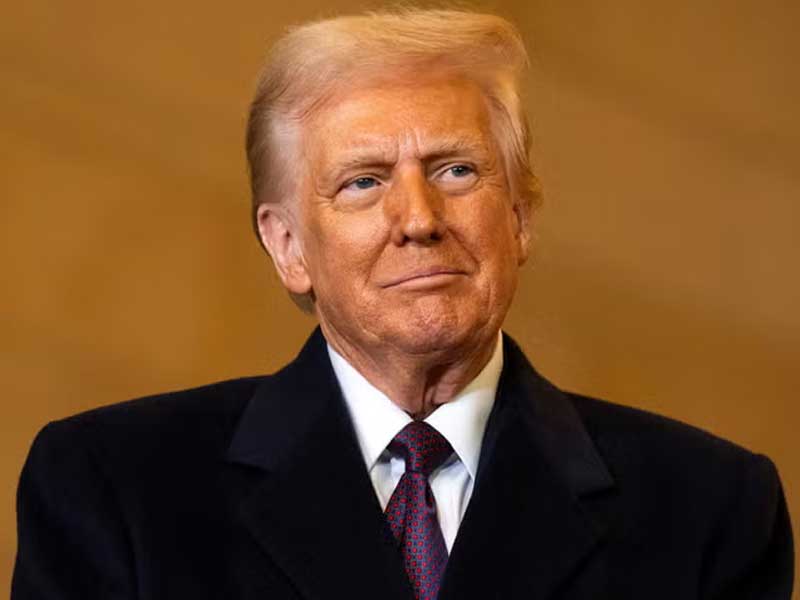
The story was once told of how President Donald Trump agreed to lower tariffs on Switzerland after receiving a delegation of Swiss industry leaders, who went to the Oval Office bearing Rolex and gold. Following a 39 percent tariff that was imposed on Switzerland, efforts by former Swiss President Karin Keller-Sutter to get the US to reverse the tariffs were unsuccessful. Switzerland came up with a plan; they dispatched a delegation of top Swiss industry leaders to President Trump, who went to him with a special Rolex desktop clock and a specially engraved gold bar. About a week after the meeting, President Trump announced that he had considered lowering tariffs on Switzerland to 15 percent.
Switzerland is one of the world’s leading producers of luxury watches and boasts significant gold exports. Although the Rolex and gold also came with some investment commitments to the tune of $200bn into the US economy. There are at least two reflections from that experience which provide some nuance beyond the gold bar diplomacy. The first is how the world order is now down to cold calculations and transactions, and secondly, how the rules-based international order which has guided foreign relations for several years is now effectively in gradual retreat.
For more than 40 years, foreign relations were conducted under a system that appeared to favour global cooperation, multilateralism and regional integration in the areas of trade, technology, security, defense and intelligence. Although far from fair, the system created some level of predictability and financial system stability. It could also be argued that it made smaller powers, notably low-income countries, dependent on the might and benevolence of middle and superpowers.
From higher tariffs, trade tensions, supply chain disruptions, protectionist and hardline anti-immigration policies, America, which was once the champion of globalisation, appears to be retreating. One of the few things that has been clear since the first day of the second coming of President Trump is that old assumptions that guided international finance, trade and security cooperation have now been discarded. At the World Economic Forum in January, President Emmanuel Macron and Prime Minister Mark Carney, who both took turns to speak, did not mince their words; they both predicted a likely end to multilateralism and said the world must now adjust to new realities.
Despite the United States Supreme Court ruling, declaring President Trump’s liberation day tariffs as illegal, the US government has gone ahead to implement a global tariff of 10 percent for all countries and may soon raise it to 15 percent in a separate order. Amidst the trade tensions and supply chain disruptions, countries have begun exploring alternatives as a way to build resilience. In the last couple of months, we have seen a rise in bilateral trade deals and defense partnerships.
Prime Ministers of Canada and the United Kingdom have already visited China to seek trade deals and explore partnerships. The UK has also secured a trade deal with India; Europe and the UK are considering setting up their own version of Mastercard and VisaCard to reduce their dependence on America-dominated financial systems. From technology, trade, finance and defence, countries are exploring crucial alternatives. More countries are conscious that they are unlikely to enjoy the blanket protection of a common system and that how far each country can go would be determined by each country’s ability to increase their own prosperity on the merit of their capabilities.
The change would certainly test the resilience of small and middle powers, including Nigeria. Although the situation may present a challenge at the outset, it also provides an opportunity to look inward and build strength at home in the areas of export, trade and investment. The question we must ask ourselves is what Nigeria would sell to the world amidst the current shifting world order and what would attract any country or investor to want to do business with Nigeria?
The current reforms are already a step in the right direction, as they provide an opportunity to reset the economy and get the fundamentals right. But beyond reforms, we must think in terms of value and competitive advantage in any of agriculture, manufacturing, services or tourism. The world should identify with Nigeria for much more than our oil. When you say ‘United Kingdom’, you think ‘financial services’, the same way Switzerland is famous for their luxury watches and gold, China for their manufacturing, Morocco for their tourism, Italy for their wine and Germany for their cars.
Nigeria must work to identify its competitive edge and determine to be a world leader in that export. And that cannot be in the export of raw materials; we must think in terms of value addition that ensures we can add value to our exports before they are taken out of the country.
The current global uncertainties provide an opportunity to interrogate what we must anchor the economy on in the long term and accept the reality that to increase our own prosperity, we must build strength at home by finding our competitive edge that can deliver long-term value in export and trade.
Awogbenle, a Development and Public Policy Professional, writes from United Kingdom. He can be reached via seunawogbenle@gmail.com.










Leave a comment