



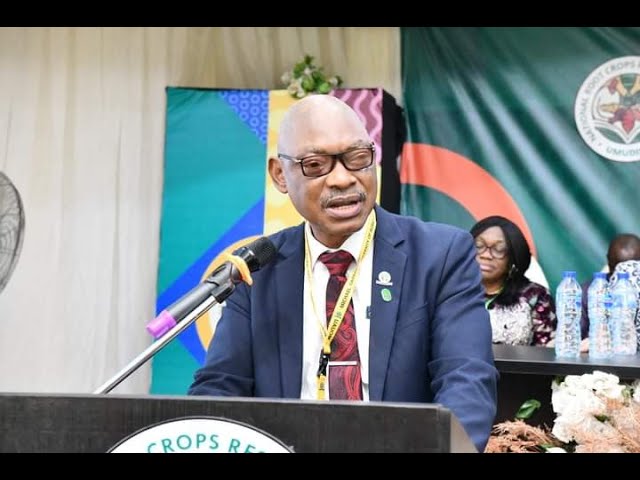
The outgoing Vice Chancellor of Michael Okpara University made a difference,argues
UBADIRE AGUA
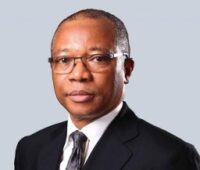
Professor Maduebibisi Ofo Iwe is set to bow out of office as the 6th Vice Chancellor of Michael Okpara University of Agriculture (MOUA) Umudike, Abia State, after five years at the helm of affairs of the University. Iwe, a thorough-bred academic and a renowned Professor of Food Science and Extrusion Technology for nearly 25 years, assumed office as Vice-Chancellor of the University on March 1, 2021, after a highly competitive selection process by the 7th Governing Council of the University led by Mohammed Lawal Zayyana, a crown Prince of the Sokoto Sultanate.
As one who was born and bred in Umudike, I have had ‘more than a passing interest” in the University since it was established nearly 34 years ago. I have followed events in the University and can tell the contributions of all former Vice-Chancellors either to the growth and development of the University or to its challenges.
I closely followed the trajectory of the University since the beginning of the five-year tenure of Prof. Iwe in 2021. I remember vividly that at the time of his assumption of office; the world was gradually recovering from the cataclysmic socio-economic impact of the COVID-19 pandemic that prompted a global shutdown.
I also know, as a matter of fact, that there was no harmonious working relationship between the University Management and many staff, given the issue of promotions, demotions, appointments, and proper placement, loss of programmes, etc., that characterized two administrations before his. I also know there were more than one hundred court cases against the University, instituted by aggrieved staff.
The worse, perhaps, was that some critical stakeholders had lost interest and confidence in the University and its reputation has taken the left curve.Prof. Iwe, was however, determined to serve the University in the best possible way. So, he did not allow the difficult situation he met on ground to deter him from pursuing his vision, which was to mobilise the University to positive thinking, positive action, productivity, and progressive programmes; make it an “agripreneurial” university, that is capable of self-sustenance; and to open it up to the world through productively collaborations and linkages.
He took things in stride, confronting the problems of the University systematically and trusting God to help him achieve his vision and the mission of the University, which is to reduce hunger by providing the knowledge-base to tackle food insecurity. Being a seasoned university teacher, researcher and administrator for forty-one years so far in his career, Prof. Iwe understood the importance of peace in a university system and that without peace, the University cannot make progress.
Hence, he took steps to reconcile the University and its aggrieved staff. In appreciation and reciprocation of his goodwill and gesture, the litigants withdrew their cases from the courts, and today, one can say with careful confidence, that the University is peaceful and a harmonious working relationship has been fully restored.
Besides restoring peace in MOUAU, Prof. Iwe also diligently and dexterously restored harmonious working relationship between the University Management and the Management of its Microfinance Bank, which was elusive for five years. He also restored the operating licence of the Institution’s consultancy limited liability company, MOUAU Nigerian Ltd, which had been moribund for 15 years. He reset both the MOUAU Microfinance Bank and MOUAU Nigeria Ltd. and strengthened them for business and generation of funds for the University’s good.
It is to the credit of Prof. Iwe’s administration that these enterprises worked together to retrofit the old University Guest House and expand it from 16 to 21 rooms and built a brand new 51-room University Guest House, described by visitors from other universities as the best in the country. The Guest House has saved the University a lot of funds that could have been spent on hotel accommodation for both Governing Council Members and other guests outside the University.
Prof. Iwe also operationalized the bread and biscuit factory and a water-treatment plant built by a former Vice-Chancellor. Today, Umudike bread, biscuit and bottled water are sold all over Abia State, giving the University a good name and positive reputation. It is worthy to note that these revived enterprises have also provided a practical training ground for students of the University, especially those in Food Sciences, Nutrition and Dietetics, Hospitality Management, Engineering and so on, who require industrial training experience as part of their studies.
The principled, focused and egalitarian leadership style of the 6th Vice-Chancellor, has yielded tangible and intangible results, including infrastructural development, landmark energy and smart agriculture projects, and digitalization of key departments in MOUAU, to mention but a few. Under Professor Iwe’s watch, for instance, the University started the development of a Permanent Site in 2023, which coincided with the 30th anniversary of the University.
Prior to the commencement of work at the Permanent Site at Olori, Oboro in Ikwuano LGA, Abia State, Prof. Iwe resolved almost all cases relating to land encroachment and ownership and secured the Certificate of Occupancy (C-of-O) of the University from the Abia State Government. Work has progressed at the Permanent Site with a three-billion-naira Special Intervention Fund from the Federal Government. The full-take off of the Olori Campus would see MOUAU running a two-campus structure like the University of Nigeria Nsukka (UNN) and other first-generation universities.
Another major achievement of the Prof. Iwe-led administration is the completion of the three megawatt Solar Plant by the Rural Electrification Agency of the Federal Government through the Energizing Education Project. Today, MOUAU enjoys steady and stable 24 hours electricity supply from the Solar Plant, that has also impacted administration, research and social life on campus.
The Vice-Chancellor equally focused on equipping and upgrading all University laboratories, to bring them to international standard. In fact, the Council for Regulation of Engineering in Nigeria (COREN) applauded the efforts of the Prof. Iwe during a visit to MOUAU recently, and noted that some of the equipment in Umudike, such as the amino acid analyzer, among other pieces of equipment, cannot be found in any other university in Nigeria.
To enhance transparency and accountability in the management of University finances, the Vice-Chancellor has completely digitalized the Bursary Department, installing electronic systems for accounting and financial transactions. This has made accounting and financial transactions in the university smooth and free from much human interference. With the digitalization of the Bursary Department, the University can easily send its annual financial report straight to the Office of the Auditor-General of the Federation or the Accountant-General of the Federation.
The University Library and the Medical Services have also been digitalized. The operations of the MOUAU Senate are now done electronically, saving the University enormous resources, including huge money spent on ink and paper. All these were achieved by the administration of Professor Iwe without beating the drums.
In addition, and as part of the digitalization of its operations, the University introduced a biometric process to create a comprehensive student database for improved record-keeping. Through the Biometric Student Capture process, a database was created, from which the University can give up-to-date information and respond within 24 hours to any official inquiries about its students. This was visionary, as it has helped students to access the Federal Government loans from NELFUND quickly. More so, students can now get their results and transcripts online, unlike in the past when getting transcripts seemed unattainable and highly challenging because of interference by human intermediaries, including transcript traders.
Prof. Iwe did a lot around academic planning, working with his team to reorient the University and ensuring that none of the academic programmes was lost. It is to the credit of his administration that five programmes in the College of Management Sciences, namely BSc. Accounting, Marketing, Economics, Banking and Finance, and Business Administration, which were delisted by the Federal Government in 2016/2017 were restored in 2024/2025 session. The University has also introduced new bachelor’s degree programmes like Mechatronics Engineering, Food Engineering and Embedded Artificial Intelligence to equip Nigerians for the future. In the last admission exercise, the University gained more than 1,500 students, which was not the case in previous exercises.
In the aspect of laboratories and equipment, Prof. Iwe’s administration upgraded and equipped laboratories in virtually all the Colleges, especially the Science and Engineering programmes. The Centre for Molecular Biosciences and Biotechnology (CMBB) was expanded and equipped for all manner of biotechnology and molecular investigations. The Tertiary Education Trust Fund (TETFund) Centre of Excellence for Root Crop Research and Development (CERCORD) has also received modern laboratory equipment for all manner of research in food sciences, crop sciences just to mention but a few.
TETFund has also built a Glass Soilless Greenhouse in the University in support of the Greenhouse Initiative of Prof. Iwe’s administration. In the last two years, the University has made a name for itself as a hub for smart agriculture, producing farm-fresh tomatoes, pepper, okro and cucumber in large quantities for sales to and consumption by members of the University community and traders in nearby markets in Abia State.
Dr Agua writes from Umudike, Abia State







Leave a comment