



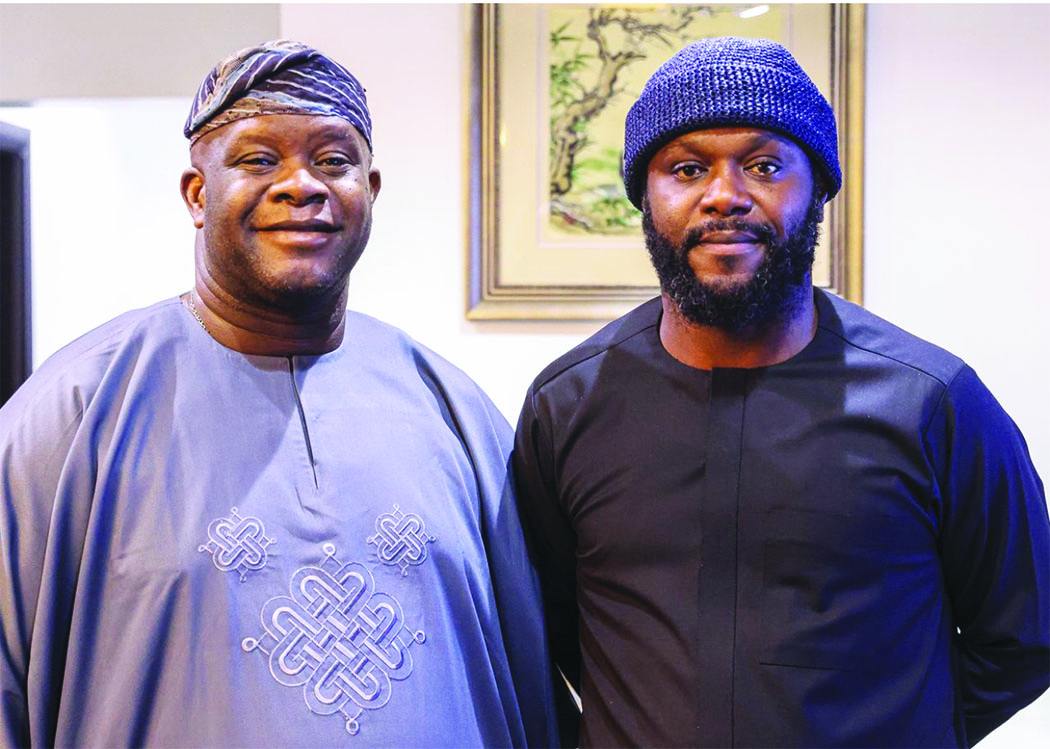
The Executive Chairman of Onigbongbo Local Council Development Area, Hon. Moyosore Adebanjo, combines academic grounding from the University of Lagos with a pragmatic, people-focused governing style. Since assuming office, he has prioritised measurable improvements in education, healthcare, infrastructure, youth empowerment, and social welfare, while strengthening local institutions for long-term sustainability. Adebanjo insists that every policy decision emerging from his office reflects the aspirations of residents. In this conversation with Azuka Ogujiuba, he outlines his vision for accountable, participatory and resilient local governance. Excerpts:
When you assumed office as Chairman of Onigbongbo, what specific leadership vision did you set, and how has that vision guided your key decisions so far?
On assumption of office as the Chairman of Onigbongbo LCDA, the specific leadership vision I remember was that I needed to make myself accessible to everybody, and not just those high up there as management staff or as leaders of my political party or senior community members of my LCDA. And that has really guided me in my feedback mechanism process to know what is actually happening and be on top of my game as a council chairman. That vision has really shaped my administration. So our decisions, or the decisions we make as a management or as leaders in that political office are very informed
When you took office as Chairman of Onigbongbo, what was the first major problem you identified, and how did you move to address it?
The problems I identified as council chairman couldn’t have been said to be just one. I had myriad problems ranging from infrastructural decay, provision of security, palliative measures for people who were disadvantaged within my community, catering for special people, people with special needs within my local government, and all of these people, I could tell you in the space of three months, were attended to.
What major infrastructural or social developments have been initiated or completed in Onigbongbo since you took office, and how do you measure their impact on residents?
I give an example of the Olushosun experience, where they had lacked water for the last 17 years. We took it upon ourselves to resolve it, and it’s still ongoing. Looking at the need to deploy community policing, which we have started, and then we enrolled over 250 community members in our free health insurance, particularly for our aged population. We also enrolled over 300 members of our community in our palliative intervention initiative, where we give some amount of money, tokens, every month, of about 50,000 Naira to community members. We also did our market storm, where we went to assist petty traders to upscale their businesses by giving them cash grants. These and many more are what we’ve done. And particularly roads too, that we attended to, from the Abiola Crest Road on Toyin Street to the dilapidated road of Olushosun, Ojota, to Afolabi Brown in Opebi, and a number of roads too.
How frequently do you engage directly with people at the ward and community level, and how do those interactions shape your decisions?
I do that daily. I run an open-door policy. People have access to my phone number, they have access to my email, they have access to my social media handles, and they have access to my office. I run an open-door office. There’s no day you come—except lately, that I now said you cannot see me on a Monday. Monday is a working day; it’s the first productive day of the week for me, and I also hold my management meetings. So I restrict people from seeing me on Mondays. But going forward, there’s no time you come, you won’t see me as a council chairman.
Since your assumption of office, what measures have been implemented to improve security, social order, or community trust within the local government?
As we speak now, if you visit the website of Onigbongbo LCDA, we are recruiting 100 Onigbongbo Marshall members for our community policing within our local government. We have also started the deployment of their cabin offices. This is one to promote social order and security, and also to encourage young people to apply, get engaged, and be equipped to attend to their needs.
How do you reassure residents that decisions taken in your office are driven by community needs rather than political alliances?
Decisions taken in my office are purely driven by community needs because we have stakeholder engagement from time to time. We have the CDA representatives from time to time. They tell us what to do. For instance, in Awoshe Estate, they told us where and when they wanted us to intervene in their matter. In Shonibare Estate, where we gave them tricycles, they told us what they wanted. At the GRA community where we revamped their security patrol vans, I mean, we go to communities to attend to their needs, and that’s the only way you can—they are the barometer through which we can adjudge our performance as a government.
What have been the most significant challenges you’ve faced as Chairman so far, and how has your leadership approach helped you navigate them?
Honestly speaking, the most significant challenge I’ve experienced so far is the way there’s no privacy. And there’s no closing time for anybody. It’s been a major challenge because, first and foremost, when you are healthy as a leader, you can give your best. It’s a challenge I’m trying to manage, and I’m trying to streamline, God helping me.
Your relationship with Seyi Tinubu has drawn public attention—how would you describe this relationship, and how has it, if at all, influenced development opportunities for Onigbongbo?
Yes, my relationship with my principal, mentor, brother, benefactor, Mr. Seyi Tinubu, has really greatly helped me in no small means because, of course, it is through that relationship I’m able to be given the opportunity I’m presently occupying. And it has really helped me in attracting other benefits to the council. Truth be told, it’s a lot of responsibility when people look at you from the spectrum of the son of the president to say you have access to a lot, or you can command a lot, or you can change a lot overnight, and the demands are truly overwhelming. But day by day, we are trying to attend to such demands and meet those needs. And I’m trying my best, but I could tell you for a fact that my relationship with the son of our national leader, Mr. President, has really broadened my horizon on how to relate with people of different strata and socioeconomic backgrounds.
What practical steps has your administration taken to empower young people and create economic opportunities?
I just told you about the recruitment. We no longer contract our intervention projects, like the desilting of drainages. As we speak, it is ongoing. There are community members we employ to do that. We have also given out tricycles to support youth groups and community-based associations. We have also given employment opportunities. We have also helped to provide training opportunities for our young people. We have also given out laptops, gadgets to help those that are very proficient with social media or modern-day techniques to enhance their businesses. These and many more are things we are doing, and we have done.
Aside from governance and politics what else do you do to engage yourself at your leisure time?
I learn. I travel a lot. I make visits to very informed or strategic places to learn. I build relationships, and I try to use the opportunity to unwind.
How can women’s leadership within Onigbongbo’s corporate and entrepreneurial ecosystem be intentionally leveraged to drive measurable economic growth, innovation, and long-term business sustainability?
Women’s leadership in Onigbongbo is not symbolic, it is strategic. Under our F.I.N.E Agenda, we will intentionally integrate women into economic planning, procurement systems, and executive leadership pipelines. Foster economic growth by increasing women-led business participation in LCDA contracts and formalising a verified women-owned business registry. Invest in the people through executive training, mentorship, and capacity-building partnerships. Nurture ideas and enterprises via a public–private co-financed Women Enterprise Fund and stronger digital market access platforms. Ensure good governance by institutionalising transparent procurement, fair access to opportunities, and a secure business environment. Our goal is measurable impact: higher IGR, job creation, innovation growth, and long-term business sustainability.
What concrete public–private partnership commitments can emerge from this engagement to expand access to capital, procurement opportunities, and executive leadership pathways for women while delivering tangible economic impact for the LCDA?
From this engagement, we expect access to capital through blended finance models and credit guarantees for women-led SMEs. Procurement commitments from corporate partners to allocate a percentage of sourcing to women-owned businesses. Executive leadership pathways through board shadowing, governance training, and leadership pipelines. These commitments will drive inclusive growth, expand the LCDA’s economic base, and position Onigbongbo as a model for gender-responsive local economic reform.











Leave a comment