



Temitope Ajayi
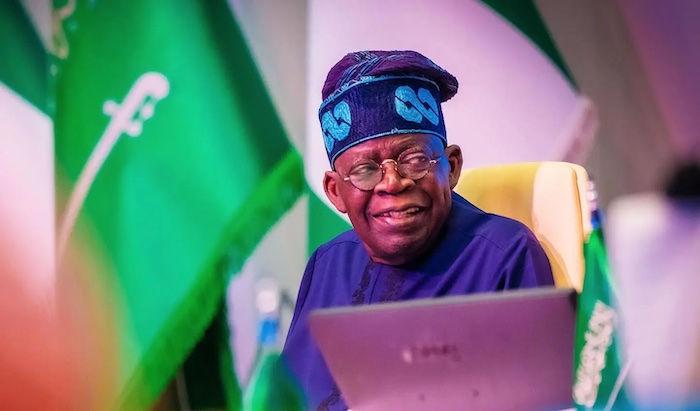
President Bola Tinubu will land at the airport on March 17, 2026, to begin a historic State Visit that will showcase to the world the unique bond that exists between Nigeria and the United Kingdom.
When the formalities of the visit begin on March 18, President Bola, in the company of his wife, Senator Oluremi Tinubu, he will be the fifth Nigerian leader to be so honoured at the highest level of diplomacy by the British Crown and the first to be hosted at Windsor Castle. The four previous Nigerian leaders were hosted at the Buckingham Palace.
This visit carries symbolism beyond ceremony. It reflects the steady evolution of a relationship shaped first by history, then by diplomacy, and now increasingly by commerce, investment, and shared global ambition.
Nigeria’s post-independence leader, Prime Minister Tafawa Balewa, the first to be invited on a State Visit by a British sovereign, was received on December 14, 1965, by Queen Elizabeth II in a move that signalled the preeminent status of Nigeria as the giant of Africa on a global stage, just five years after independence from British colonial rule. Eight years later, Queen Elizabeth II hosted General Yakubu Gowon, the Military Head of State, on June 12, 1973. That visit was followed by that of the first democratically elected President of Nigeria, Alhaji Shehu Usman Shagari, which began from March 17 through March 20, 1981.
By the time the fourth visit by a Nigerian leader took place in 1989, the country had, again, fallen under military rule after the short spell of the Shagari administration from October 1, 1979, to December 31, 1983. Queen Elizabeth II hosted General Ibrahim Babangida and his late wife, Mariam Babangida, to a spectacular State Visit that ended on May 12, 1989.
If the previous four State Visits elevated the special relationship between Nigeria and the United Kingdom, President Tinubu’s scheduled visit, which was first announced by the British Royal Family on February 10, 2026, is taking the bond between the two great nations to a new era of cooperation and shared values. It is worth stating that Nigeria is the only country in Africa whose leader will be hosted on a state visit by His Majesty’s government for the fifth time.
Only South Africa whose President has been received three times came close and the last was when President Jacob Zuma and his wife, Thobeka Zuma were hosted between March 3 to March 5, 2010. Other leaders of African countries such as Egypt, Ghana, Zimbabwe, Senegal, Morocco, Malawi, Liberia, Zambia and Tanzania, have only been hosted once.
Since its independence in 1960, Nigeria and the United Kingdom have enjoyed robust bilateral relations covering education, defence, trade, culture, technology, and sports.
Security cooperation has also remained a central pillar of this partnership. The United Kingdom continues to support Nigeria in areas such as counter terrorism training, intelligence collaboration, and military capacity building, particularly in efforts to stabilise parts of the country affected by insurgency and organised crime. This cooperation reflects the shared interest of both nations in regional stability and international security.
Tinubu’s visit to the UK on the invitation of King Charles III, at a time the United Kingdom is redefining her global trade relationships following exit from the European Union, is not just another visit. It is a visit that speaks to the status of Nigeria as the world’s largest Black democracy and the biggest market in Africa. It is also coming on the heels of significant economic reforms initiated by President Tinubu to stabilise Nigeria’s economy, liberalise the foreign exchange market, reform the tax system, and reposition the country for investment-led growth.
Nigeria today stands at an inflection point where bold domestic reforms are beginning to align with a renewed diplomatic push to attract global capital, expand trade, and reposition Africa’s largest economy for long-term competitiveness. With a population projected to become the third largest in the world within the next three decades, Nigeria’s economic trajectory will increasingly shape the future of Africa’s growth story. As global investors look toward emerging markets for the next wave of growth, Nigeria is positioning itself to become one of the most consequential economic frontiers of the 21st century.
The post Brexit UK government continues to expand trade and market access for British goods and services through strategic bilateral partnerships around the world. Nowhere else in Africa will the UK seek to deepen cooperation more than with the continent’s largest market, where hundreds of British corporations have maintained a strong and profitable presence for more than a century.
Nigeria is the second largest trading partner of the United Kingdom in Africa with annual bilateral trade volumes estimated at eight billion pounds across energy, finance, education, technology, and retail. Nigeria’s trade and economic partnership with the United Kingdom have been significantly strengthened under the UK Nigeria Enhanced Trade and Investment Partnership (ETIP), which was signed in 2024 under the leadership of President Tinubu. Under the ETIP, the two countries designed a strategic framework to boost bilateral trade beyond current levels while removing barriers to commerce and expanding cooperation in sectors such as agriculture, technology, renewable energy, fintech, manufacturing, retail, and the creative economy. In an era where global supply chains are shifting and emerging markets are competing for capital, deeper economic cooperation between Nigeria and the United Kingdom presents opportunities for both nations to expand trade, investment, and innovation across multiple sectors.
Other key aspects of the ETIP include economic diversification and support for export-led economic activities. With ETIP, Nigerian exporters can effectively leverage the Developing Countries Trading Scheme (DCTS), which offers low to zero tariff access to the UK market for more than 3,000 products. The framework is also focused on job creation for the citizens of both countries by stimulating private sector investment, strengthening value chains, and supporting Nigeria’s broader economic reform agenda.
While Nigeria’s creative and cultural products are on global ascendancy, ETIP also provides a platform for structured cooperation in the creative industries through a specialised Technical Working Group.
The group will work to deepen collaboration in film production, music, fashion, digital media, and cultural exports while attracting more British investment into Nigeria’s fast-growing creative economy, which has emerged as one of the country’s most powerful drivers of youth employment, cultural influence, and soft power.
President Tinubu’s State Visit is notable in several respects. He will be the first Nigerian leader to be honoured as a special guest of the British Royal Family since Nigeria returned to democratic rule in 1999.
In an interesting historical symmetry, it was the then Prince Charles, now King Charles III, who represented the British Government and Queen Elizabeth II at the inauguration ceremony of President Olusegun Obasanjo on May 29, 1999.
Then Prince Charles was among the visiting Heads of State and global leaders at Eagle Square in Abuja who witnessed the rebirth of Nigeria’s democratic era after sixteen years of uninterrupted military rule.
In a fitting tribute to that historic democratic transition, King Charles III will now play host to President Tinubu, an avowed democrat and one of the prominent figures of Nigeria’s pro-democracy movement, on a State Visit as the democratically elected leader of Nigeria.
It is important to state that the United Kingdom has been home to Nigerians for more than two centuries, with an active and influential diaspora population currently estimated at over 500,000 people. This vibrant community represents one of the strongest bridges between the two nations. Nigerians in the diaspora contribute significantly to both economies through entrepreneurship, professional excellence, and remittances, which contribute billions of dollars annually to Nigeria’s economy.
For higher education, the UK remains one of the most attractive destinations for Nigerian students. It was reported that over 53,000 Nigerians were enrolled in UK universities as of 2023. Equally, Nigeria remains one of the leading sources of international students in the UK with 36,839 study visas granted to Nigerians as of September 2025.
The growing Nigerian British community continues to distinguish itself across sports, literature, film, music, and public life. Global cultural figures of Nigerian heritage, such as Sade Adu, Anthony Joshua, Bukayo Saka, Chiwetel Ejiofor, Cynthia Erivo, John Boyega, Nobel laureate Wole Soyinka, renowned novelist Ben Okri, and political leaders like Kemi Badenoch, continue to strengthen the cultural and historical ties that bind both countries together.
While in the United Kingdom, where he will hold bilateral engagements with Prime Minister Keir Starmer at Downing Street and attend a private sector-led business summit with Nigerian and British business leaders, President Tinubu will use the State Visit to further deepen economic cooperation and strengthen strategic partnerships with the government and people of the United Kingdom. He will present Nigeria’s reform story and highlight the vast investment opportunities emerging across key sectors such as mining, energy, infrastructure, agriculture, livestock, food processing, technology, and the creative economy.
More importantly, the visit represents an opportunity to advance a relationship that has evolved from shared history into a modern partnership built on investment, innovation, and mutual growth. As both nations navigate an increasingly competitive global economy, Nigeria and the United Kingdom are well positioned to translate their long-standing ties into a forward-looking alliance driven by enterprise, opportunity, and shared prosperity.
More than six decades after Nigeria’s independence and decades after the earliest diplomatic exchanges between both nations, the relationship between Nigeria and the United Kingdom continues to evolve in ways that reflect the changing realities of the global economy. What began as a relationship defined by history has matured into one increasingly defined by opportunity. In that sense, President Tinubu’s visit is not only a reaffirmation of enduring ties. It is also a statement of intent about the future both countries seek to build together.
-Ajayi is Senior Special Assistant to President Tinubu on Media and Publicity











Leave a comment