



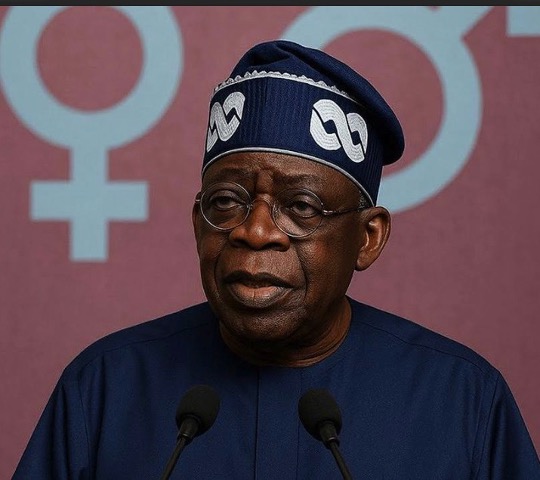
Crusoe Osagie writes that the conflicting conditions in Nigeria depicted by the haves and the have-nots perfectly fits a mental health condition known as Dissociative Identity Disorder
Nigeria today presents one of the most perplexing paradoxes in the modern world. It is a nation that appears to exist in two incompatible realities at the same time. In one reality, parts of the country resemble ungoverned territories where armed groups dictate the rhythms of daily life. In the other, a confident political and economic elite projects an image of stability, prosperity, and progress through lavish ceremonies, outlandish declarations of robust economic growth, global travel, and glittering displays of wealth.
The coexistence of these two extremes has produced what can best be described as a national psychological split — a kind of collective dissociative identity disorder.
Territories Without the State
Across several northern and central Nigerian states — particularly in parts of Borno State, Benue State, Niger State, and Kwara State — there are local government areas where the authority of the Nigerian state has been severely diminished.
In these communities, residents have reported paying levies to bandits and insurgents in order to farm their land, move along local roads, or simply remain alive. Entire villages have negotiated informal “tax arrangements” with armed groups that dominate nearby forests and rural corridors. These arrangements function as a crude survival mechanism in regions where government security presence is intermittent or absent.
The rise of these parallel systems of authority is tied largely to the insurgency driven by groups such as Boko Haram and its splinter faction Islamic State West Africa Province. The conflict has killed tens of thousands and displaced millions since it began in 2009, transforming large portions of northeastern Nigeria into prolonged conflict zones.
Banditry in northwestern and north-central Nigeria has compounded the crisis. What began as sporadic cattle rustling evolved into a complex criminal economy built on mass kidnappings, village raids, extortion, and protection rackets.
The most disturbing development is how normalised this condition has become. Communities now routinely negotiate with criminals for survival — an arrangement that reflects not merely insecurity, but the erosion of the state’s monopoly on force.
When Generals Fall
Perhaps the most symbolic evidence of Nigeria’s fractured security reality is the unprecedented targeting of senior military officers.
In previous decades, the deaths of high-ranking officers in active combat were extremely rare in Nigeria’s internal security operations. Over the past 10 years, however, insurgents and bandits have repeatedly ambushed military convoys, attacked bases, and even captured senior commanders.
Among the notable cases include:
Killing of Lt. Col. Aliyu Saidu Paiko
On 17 October 2025, Lt. Col. Aliyu Saidu Paiko, the Commanding Officer of the 202 Tank Battalion, was killed during a military operation in the Kashimri area of Bama Local Government Area, Borno State. The incident occurred while Nigerian troops were conducting a clearance operation as part of Operation Hadin Kai, the military campaign aimed at combating insurgency in northeastern Nigeria. During the mission, militants from Boko Haram/ISWAP launched a surprise ambush against the troops, triggering a heavy gun battle. In the course of the confrontation, Lt. Col. Paiko and several soldiers lost their lives.
This incident highlights the continuing capability of insurgent groups to target and kill high-ranking military officers even during organized military operations. It also underscores the persistent insecurity in Borno State, which remains a major stronghold of insurgent activity in northeastern Nigeria.
Killing of Brigadier-General Musa Uba
Brigadier-General Musa Uba, who served as the Commander of the 25 Task Force Brigade, was killed during operations against insurgents linked to the Islamic State West Africa Province (ISWAP) along the Damboa–Biu axis in Borno State. During the course of military operations, ISWAP militants ambushed the convoy in which the general was traveling.
Reports indicate that General Uba was captured alive by the militants after the ambush. The insurgents reportedly interrogated him before ultimately executing him. The incident demonstrated a disturbing level of operational coordination and intelligence capability among insurgent groups, suggesting that they were able to track or anticipate the movements of senior military personnel.
Multiple Officers Killed in Base Attacks (2025–2026)
Between 2025 and 2026, several coordinated attacks were carried out on Nigerian military bases located in Borno and Yobe states. These assaults were attributed to Boko Haram and ISWAP militants, who launched well-organized raids on the installations.
During these attacks, at least four military officers and numerous soldiers were killed as militants overwhelmed certain positions. In addition to the casualties, the attackers seized military equipment including weapons, vehicles, and ammunition from the bases they temporarily overran.
Ambush Killing of Soldiers in Zamfara (2026)
In 2026, Nigerian troops conducting security operations in Zamfara State were ambushed by armed gunmen. The attackers launched a sudden strike on the soldiers, killing five troops before reinforcements arrived.
The attack reflects the volatile security environment in northwestern Nigeria, where armed bandit groups frequently carry out ambushes on both civilians and security personnel.
The incident also demonstrates the geographic spread of violent attacks in Nigeria, indicating that security threats once concentrated in the northeast are increasingly affecting other regions, particularly the northwest.
Plateau State Ambush Killing Security Personnel (2026)
In 2026, security personnel operating near Wanka and surrounding communities in Plateau State were targeted in a deadly ambush by an armed group. The attack resulted in the deaths of approximately 20 security personnel, including officers and other security operatives.
The assault took place during security operations aimed at stabilizing communities affected by violent clashes and criminal activities in the region. The scale of casualties underscored the seriousness of the attack and the level of coordination displayed by the armed group responsible.
This event reflects Nigeria’s increasingly complex security challenges, where different threats—including banditry, insurgency, and communal violence—often overlap and stretch the capacity of security forces across multiple regions.
Large-Scale Military Casualties in Borno Base Raids (2026)
In 2026, a series of coordinated assaults on military positions in northeastern Nigeria, particularly in Borno State, resulted in the deaths of approximately 40 Nigerian soldiers. The attacks were attributed primarily to militants associated with ISWAP. During these operations, the insurgents launched simultaneous attacks on several military bases, employing advanced weaponry and well-coordinated tactics. In addition to killing soldiers, the militants abducted civilians and looted military equipment from the targeted bases.
Oreke–Okeigbo Attack (2025)
On 4 June 2025, armed gunmen attacked a mining site located in Oreke–Okeigbo, Kwara State, which was under the protection of Nigerian security forces. During the assault, the attackers killed Assistant Superintendent of Police Haruna Watsai and Inspector Tukur Ogah.Following the killings, the gunmen abducted two workers from the mining site before fleeing the area. The attack illustrates the vulnerability of security personnel assigned to protect economic sites such as mining operations, particularly in regions where criminal networks target resource extraction activities.
The incident also highlights the broader security risks facing Nigeria’s mining sector, where armed groups sometimes attack sites in order to kidnap workers, steal resources, or disrupt operations. Meanwhile, attacks on military bases have intensified in recent years, with insurgent groups sometimes overrunning forward operating positions and seizing equipment.
In any country claiming peacetime stability, such occurrences would constitute a national emergency.
The Kidnapping Economy
Parallel to insurgency is the meteoric rise of kidnapping for ransom.
What was once a sporadic crime on remote highways has grown into a highly organized criminal industry. Armed gangs now conduct coordinated raids on schools, villages, highways, and residential neighborhoods.
Victims range from farmers and traders to schoolchildren and clergy. Entire communities have been forced to pool resources to pay ransom for abducted members.
Kidnapping has effectively become a shadow economic sector — complete with logistics networks, informants, negotiators, and ransom brokers.
The Other Nigeria
Yet while these grim realities unfold in rural and conflict-affected regions, another Nigeria operates in dazzling contrast.
In the capital and major cities, political elites host elaborate state banquets and international summits. Presidential delegations travel frequently to stable global capitals such as Washington, D.C., London, and Ankara.
State visits are accompanied by declarations that Nigeria has overcome many of its challenges and is entering a period of renewed economic growth. Within the political class, party defections have become a daily spectacle. Politicians migrate between parties not on ideological grounds but in pursuit of electoral advantage and personal security.
The message projected outward is one of stability and continuity.
Billionaires and the Mirage of Wealth
Beyond politics, Nigeria’s elite economic class also contributes to the paradox. Prominent business figures regularly announce their inclusion in the Forbes list of global billionaires. Their combined wealth often appears to exceed the productive capacity of the national economy from which it emerged. Luxury real estate, private jets, and global investment portfolios project the image of a thriving capitalist powerhouse.
Yet the macroeconomic fundamentals tell a different story: high inflation, volatile currency values, widespread unemployment, and one of the world’s largest populations living in poverty. The glitter often obscures the fragility beneath it.
The Youth and the Spectacle
Nigeria’s young population — arguably the greatest victims of this contradiction — has learned to participate in the spectacle. Social media platforms are filled with displays of luxury lifestyles: Lamborghinis, Ferraris, Rolls-Royces, designer fashion, and exclusive travel experiences.
To be fair, some of this wealth is genuinely earned. Nigerian creatives have successfully exported talent to the global market.
The rise of Afrobeats has propelled artists onto international stages. Nigerian comedians and skit creators dominate digital entertainment platforms. Social media influencers and fintech entrepreneurs are building new industries that were unimaginable two decades ago.
These achievements deserve recognition.
But alongside legitimate success stories is a culture of exaggerated prosperity — one that celebrates visible wealth while ignoring the structural weaknesses of the national economy.
Dancing on a Fragile Edge
The result is a society that appears to celebrate itself while standing on unstable ground.
Political elites proclaim victory over crises that millions of citizens still experience daily. Economic elites accumulate immense fortunes while public infrastructure decays. Young people project luxury lifestyles even as unemployment and underemployment remain widespread.
In effect, Nigerians across social classes — from the ruling elite to the urban poor — participate in a national performance that disguises deeper systemic problems.
The danger of such a collective illusion is not merely moral; it is strategic.
A nation cannot sustainably build prosperity on narratives that contradict lived reality. Security crises cannot be resolved through optimism alone, nor can economic fragility be hidden indefinitely behind spectacles of wealth.
The Reckoning Ahead
Nigeria’s paradox is not unique in history, but it is unusually stark.
One Nigeria is governed by insurgents, bandits, and kidnappers in isolated territories. The other Nigeria celebrates diplomatic receptions, billionaire rankings, and global cultural influence.
Both realities exist simultaneously.
Until the gap between them narrows, the country risks continuing its strange dance — celebrating progress in one identity while struggling for survival in the other.
And like any untreated disorder, the longer the split persists, the more difficult the eventual healing may become.
















Leave a comment