



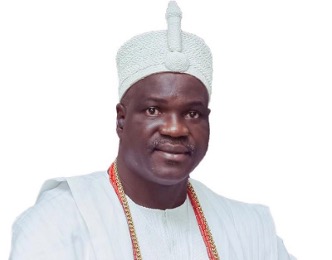
To describe Olugbon of Orile Igbon, Oba Olushola Alao, as a formidable force that is fast emerging as an awe-inspiring force whose growing influence is beginning to resonate far beyond his immediate domain is to state it mildly. Today, in Yoruba traditional influence, the monarch is steadily carving a niche that is as strategic as it is impactful.
Regal yet cerebral, Oba Alao has, in recent times, positioned himself as more than a custodian of culture—he is increasingly seen as a bridge-builder, one who understands the delicate threads that bind the Yoruba nation together. Those who have followed his trajectory speak of a monarch deeply invested in unity, quietly working the levers of influence to foster cohesion among Yoruba leaders and institutions.
What perhaps sets him apart in this unfolding narrative is his proximity to the seat of power. His relationship with President Bola Tinubu has, by many accounts, added a new layer to his influence. Sources within society circles suggest that this connection is neither recent nor incidental. Rather, it is said to have been nurtured over time, dating back to the critical period leading up to Tinubu’s emergence as Nigeria’s President.
Beyond the politics of proximity, Oba Alao’s growing status speaks to a broader shift beyond the Yoruba traditional institution as well as across the nation, a bridge builder, where intellect, diplomacy and strategic alliances are becoming as vital as lineage and heritage. In positioning himself as a unifier, the Olugbon appears to be embracing a role that transcends ceremonial duties, stepping into the realm of influence where culture meets statecraft.
As Society Watch findings suggest, his ascent is not accidental but carefully cultivated. And as the currents of power continue to shift, many are beginning to watch closely, convinced that in Yoruba land, a new axis of influence may well be taking shape around the Olugbon throne.











Leave a comment