



By Adewale Sanyaolu
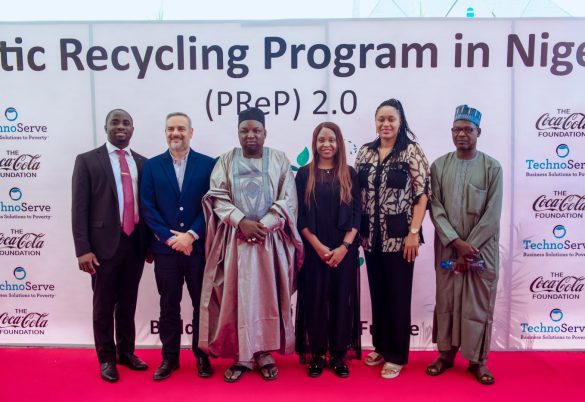
TechnoServe and The Coca-Cola Foundation have launched the second phase of the Plastic Recycling Program in Nigeria (PReP 2.0), targeting 32,000 metric tons of plastic waste recovery and 2,400 additional jobs.
The expansion builds on the first phase of the programme, which recovered over 59,000 metric tons of plastic waste and improved more than 10,000 livelihoods, particularly in Lagos and Anambra States. According to the partners, the new phase comes amid rising plastic waste challenges, with Nigeria generating about 2.5 million metric tons annually, while Lagos alone produces roughly 13,000 metric tons of solid waste daily.
According to the partners, a significant portion of this waste ends up in drainage systems and waterways, worsening flooding, environmental degradation and public health risks.
The statement noted that PReP has helped reposition plastic waste as an economic resource by developing a network of 51 aggregators, supported with equipment, training and working capital to strengthen the recycling value chain.
TechnoServe Nigeria Country Director, Adesuwa Akinboro, said the programme’s impact extends beyond environmental benefits, highlighting its role in economic empowerment.
“These achievements represent not just statistics, but powerful stories of resilience and transformation. Aggregators and collectors are now operating as business owners, improving their livelihoods and helping their communities while keeping plastic waste out of the environment,” she said.
Under PReP 2.0, operations will expand to Kano State alongside Lagos and Anambra, with a focus on building a more inclusive and profitable recycling system. The phase will also enhance collaboration among stakeholders, improve access to financing, and promote safer and more efficient recycling practices.
President of The Coca-Cola Foundation, Carlos Pagoaga, reaffirmed the organisation’s commitment to sustainability and livelihoods.
“Through initiatives like PReP 2.0, we are proud to deepen our impact, reducing plastic waste, cutting emissions, and supporting thousands of livelihoods across Nigeria as we work toward a cleaner and more inclusive future,” he said.
The statement added that the programme will prioritise gender inclusion, youth participation and environmental education, positioning women and young entrepreneurs at the centre of Nigeria’s recycling efforts.
It further emphasised the role of public-private partnerships in addressing environmental challenges, noting that PReP 2.0 is designed as a scalable model for converting waste into economic value while strengthening community resilience.














Leave a comment