



Kolawole Olasupo
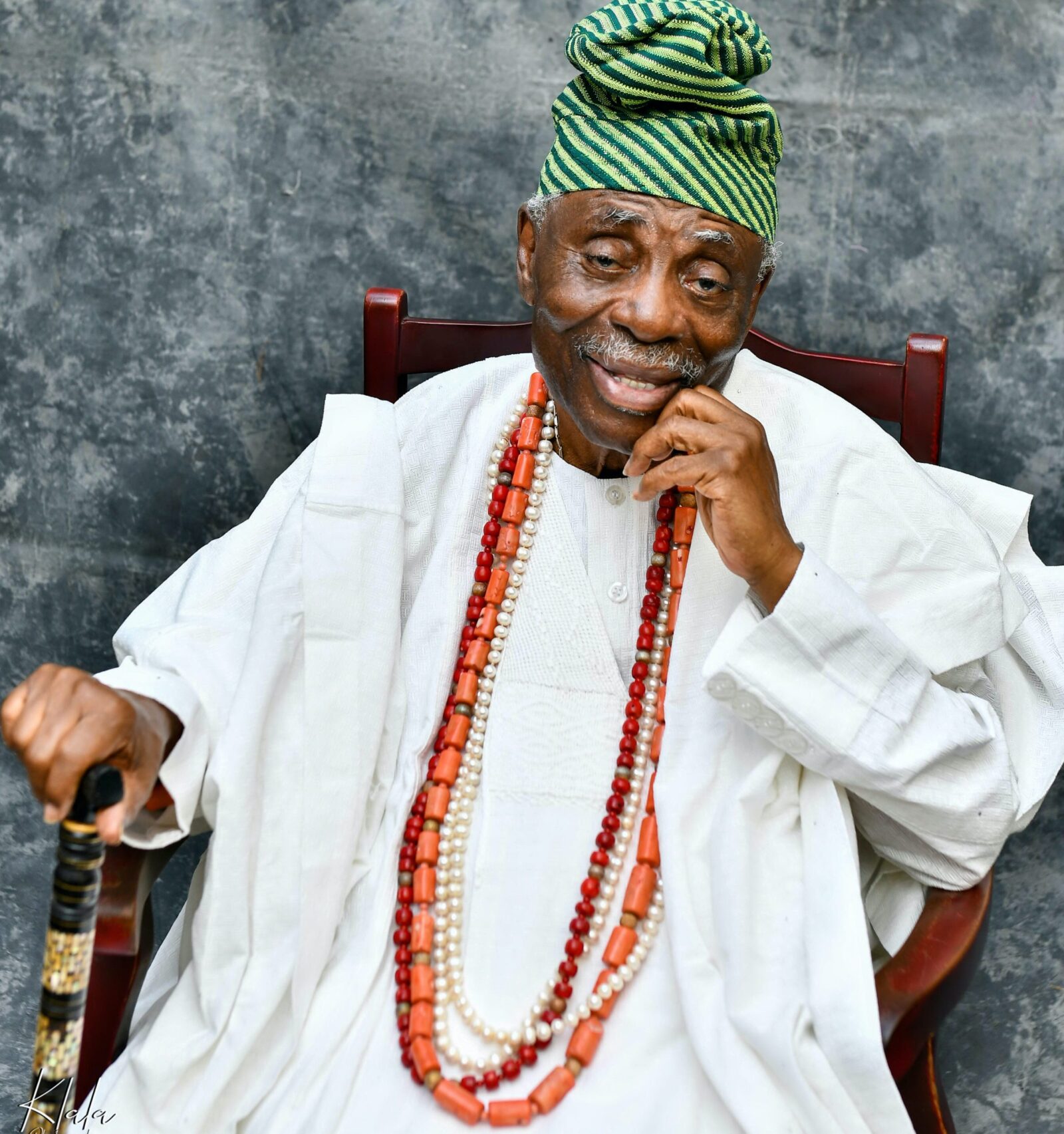
If Lagos politics were a long-running orchestra, many names would have taken centre stage over the years. But behind the curtain, steady, composed, and deeply influential, stands one man whose presence has shaped the rhythm of governance for decades: Otunba Busura Alebiosu, fondly known as Baba Bush.
At 90, the tributes pouring in are not just ceremonial; they are deeply personal. From political contemporaries to protégés and family, a consistent picture emerges: a man of principle, restraint, uncommon loyalty, and quiet authority.
For Tajudeen Olusi, Chairman of the Governance Advisory Council (GAC), the relationship goes beyond politics. It is brotherhood.
“We were like six and seven; egbon ati aburo,” he says with a smile that carries decades of shared history. “Even when we argued, we were inseparable.”
Their bond was not confined to political meetings or strategy sessions. For over a decade, both men undertook Umrah together during Ramadan; year after year, side by side. It was a relationship built not just on ideology, but on trust, faith, and mutual respect.
Together, they belong to a generation that laid the very foundation of modern Lagos politics. From the days of the Unity Party of Nigeria to the Social Democratic Party, through the turbulence of military rule and into the stability of the Fourth Republic, Baba Bush remained a constant; never loud, but always present.
“He was one of the most devoted party men,” Olusi recalls. “Not interested in position, but in making sure the system worked.”
That selflessness, perhaps, is one of his defining traits. Olusi recounts a moment when a key party position opened up. Though Bush was eminently qualified and even suggested for the role, he declined, insisting that Olusi take it instead.
“That is the kind of person he is,” Olusi says simply. “He comes last after others have been satisfied.”
It is this rare quality, placing collective progress above personal ambition, that has earned Baba Bush enduring respect across political generations.
For Babajide Sanwo-Olu, the Governor of Lagos state, Baba Bush is more than a political elder; he is a compass.
“He is a beacon,” the governor says. “A stabiliser. A man whose words bring calm in difficult moments.”
Inside the GAC, widely regarded as Lagos’ highest political advisory body, his presence carries quiet weight. He does not speak often, but when he does, the room listens.
“He sits beside me,” Sanwo-Olu notes. “That seat is always reserved for him, whether he is there or not. That tells you everything.”
His style is not forceful. It is measured. Reflective. Almost disarming.
“He is like a tranquiliser,” the governor adds with a touch of humour. “When he speaks, calmness comes over the room.”
That calm, according to many, is not accidental. It is the product of decades of experience, earned through struggle, negotiation, and survival in Nigeria’s often turbulent political terrain.
To Obafemi Hamzat, the current deputy governor of the state, Baba Bush represents something increasingly rare in public life: composure backed by conviction.
“Political meetings can be chaotic,” he says. “But Baba brings order. He takes you back to history, and that alone settles people down.”
Hamzat describes him as a man who understands that leadership is not about dominance, but balance.
“He reminds you that only one person can win,” he explains. “And what God has not given you, no one can.”
It is this blend of wisdom and humility that has helped sustain Lagos’ political stability over the years, a stability many attribute, in part, to the guidance of elders like Baba Bush.
Yet, beyond politics, there is another side to Baba Bush, one best captured at home.
For his son, Hon Dayo Bush-Alebiosu, the commissioner for Waterfront Infrastructure Development in Lagos state, the story is less about titles and more about values.
“He is a rock,” he says. “If I had the chance to choose again, I would choose him again and again.”
Growing up under Baba Bush was, by his own account, an education in discipline, patience, and perspective.
One childhood memory stands out. After getting into a scuffle over money owed by a classmate, young Dayo expected support. Instead, he got a life lesson.
“He told me not to fight someone who owes you,” Dayo recalls. “He said if you fight them, they may never pay. Instead, be calm, pray for them.”
At the time, it made little sense. But years later, in business and life, the wisdom became clear.
“That lesson has stayed with me till today,” he admits.
Beyond discipline, there was also openness. Baba Bush encouraged dialogue, even dissent.
“He bows to superior argument,” his son says. “He listens, not just to respond, but to understand.”
It is perhaps this rare ability, to combine firmness with fairness, that defines his leadership style.
Across board, one theme remains constant: Baba Bush is not a man of noise.
“He does not speak to the press,” Dayo notes. “He prefers to lead from behind.”
And yet, his impact is unmistakable.
From his early days as a councillor in 1976 to his tenure in the Lagos State House of Assembly, to his role in shaping political structures and mentoring leaders, his footprint is everywhere, even when his name is not.
“He has built trust,” his son adds. “That is his greatest asset.”
Another GAC leader, Abiodun Ogunleye, the former deputy governor of the state, Baba Bush represents a fading but vital tradition in Nigerian politics.
“He left office when the ovation was loudest,” Ogunleye says. “That is what the younger generation must learn.”
In an era where many cling to power, Baba Bush chose influence over position, guidance over control.
“He does not dictate,” Ogunleye explains. “He consults. He listens. But when it is time to decide, he is firm.”
Even in lifestyle, he remains grounded, choosing to live among the people in Kosofe rather than retreat to more exclusive parts of Lagos.
“That is grassroots politics,” Ogunleye notes. “That is who he is.”
At an age when many have long retired from public life, Baba Bush remains active, attending meetings, offering counsel, and shaping conversations.
It is not out of obligation, but conviction.
As Olusi puts it, “We must continue until we hand over, officially or unofficially, to the next generation.”
And perhaps that is the enduring lesson of Baba Bush’s life: that leadership is not about occupying space, but about building systems that outlive you.
As tributes continue to pour in, one thing is clear: Baba Bush is not just being celebrated for reaching 90. He is being honoured for how he has lived those 90 years.
With dignity. With restraint. With purpose.
And as Babajide Sanwo-Olu aptly prayed:
“May you continue to live in good health, with sound mind, and the grace to keep guiding us.”
In a world that often rewards noise, Baba Bush’s life is a quiet reminder that true power does not shout; it endures.
* Olasupo , the Special Assistant to the Lagos State Governor on Photojournalism, wrote from Lagos.











Leave a comment