PAT ONUKWULI argues the need for the country to act fast with resolve to pursue the truth, regardless of whose interests it may threaten
Nigeria today stands as a fragile porcelain vessel delicately balanced in the hands of a potter intent on shaping a national ideal but distracted by ongoing pressures. The vase is precious; its breakage would be catastrophic. Yet, despite recognising its value, the potter’s grip remains unsteady. This imagery illustrates the nation’s deteriorating security landscape, an environment in which a country moulded by aspiration is increasingly threatened by those determined to fracture it.
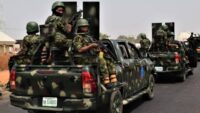
The escalation of insecurity across Nigeria, manifesting in insurgency, banditry, targeted religious violence, communal killings, and widespread abductions, has progressed from sporadic disruptions to a systemic national affliction. Communities in the North-west, Christian populations in the Middle Belt, and rural settlements in several states now endure a cycle of violence that has undermined both public confidence and national cohesion. In many of these communities, attacks occur with chilling predictability, often with little or no immediate state intervention. When security forces respond, they frequently do so after the damage has been done, reinforcing the perception that the government’s actions, however well-meaning, remain largely reactive.
Within this context, United States President Donald Trump’s recent call for the Nigerian Government to halt what he described as a “Christian genocide” highlights a troubling reality. His remarks, though provocative in tone, reflect a global awareness of Nigeria’s worsening security situation. Nigeria, a sovereign state with complex sensitivities regarding foreign commentary, should ideally not need international leaders to remind it of its responsibilities to its citizens. Yet when external actors amplify domestic issues on the world stage, it indicates that the crisis has reached a point where diplomatic silence is no longer possible. Whether one agrees with Trump’s characterisation or not, the fact that such descriptions have gained international attention warrants serious consideration.
The federal government’s responses have been notable but reactive in timing. President Bola Ahmed Tinubu’s recent declaration of a nationwide security emergency, authorising additional recruitment into the armed forces and police, deploying trained forest guards under the DSS, withdrawing officers from VIP duties for redeployment, and directing improved coordination across security agencies, is significant. The directive for an additional 20,000 police recruits, bringing the total to 50,000, and the explicit mandate to “flush out terrorists and bandits from the forests,” were emphasised in the recent State House statement.
Again, Tinubu’s pledge to support state-level security formations and promote legislation for autonomous State Police is commendable, signalling a potentially significant shift away from centralised policing. Nigeria’s vast terrain and diverse demographics continue to reveal the weaknesses of a single command structure. If well designed and protected from political interference, State Police could offer quicker response times, enhance local intelligence, and help restore community trust.
These measures, at least in principle, signal a strengthened government commitment. However, Nigerians have heard similar announcements from past administrations. The ongoing insecurity shows that rhetoric alone cannot eliminate deeply rooted threats. A key question, therefore, is: Does Nigeria have the political will to address insurgency, terrorism, and banditry at their source, including identifying, exposing, and prosecuting their sponsors?
Insurgency in Nigeria has never been solely an ideological issue. It is upheld by financial networks, arms supply chains, political enablers, and opportunistic actors whose vested interests thrive amid chaos. For far too long, inquiries into the financiers of terrorism have remained confined to theory, never advancing into actionable scrutiny. Public reports of “high-profile financiers” have rarely led to publicly disclosed prosecutions. As long as these networks remain intact, security forces will find themselves combating symptoms rather than the root causes. Nigeria must shift from tactical responses to strategic dismantling, which demands not only intelligence capabilities but also a staunch political will to pursue the truth, regardless of whose interests it may threaten.
The government’s repeated dependence on negotiations with terrorist groups further complicates this situation. The recent release of abducted schoolgirls, confirmed by both the Inspector General of Police and the Presidential Spokesperson, Bayo Onanuga, reignited longstanding public unease. While negotiations may offer immediate relief for vulnerable individuals, they inevitably entail longer-term costs. Terrorist organisations exploit such engagements to legitimise their tactics, often using them for financial gain, recruitment, and increased bargaining leverage.
In Greek mythology, efforts to mollify Ares, the god of implacable warfare, invariably proved counterproductive; each concession only intensified his fury and widened the scope of conflict. The ancients cautioned accordingly that he who accommodates destructive forces merely widens their dominion. Thus, negotiating with violent non-state actors risks creating a cycle in which abduction and kidnapping continue to become lucrative, and the state unintentionally funds the mechanisms that undermine its authority.
If the government sincerely believes it lacks the present capacity to confront these groups through force, then an honest national dialogue is required. It must acknowledge its limitations and welcome international support from partners, including the United States, which has expressed readiness to assist. Sovereignty is not diminished by collaboration aimed at safeguarding citizens; rather, it is strengthened when leadership prioritises security over political optics.
Despite these systemic challenges, it remains essential to acknowledge the bravery of the country’s armed forces, police officers, and intelligence operatives. These individuals operate in demanding conditions, often with limited resources and under constant threat. Many have made the ultimate sacrifice; many more continue to demonstrate steadfast dedication. Their contributions form the backbone of national security, and any sustainable reform must be anchored in improved welfare, training, equipment, and operational coordination.
Nigeria remains that precious clay jar in the hands of its potter, which should be shaped into form by national unity and fired into strength by the furnace of patriotism. Yet even the most skilled potter cannot mould a durable amphora while ignoring fractures. This moment requires structural intervention: political resolve, operational competence, transparency in security expenditure, and a collective national commitment to justice.
The country cannot continue its precarious dance at the precipice of escalating insecurity. The winds are rising, the ground is unstable, and the consequences of a national fall would be severe and enduring. The imperative is clear. Nigeria must act with resolve. It must act with integrity. And it must act now. Only decisive action will prevent the fragile vessel from slipping irretrievably from the potter’s hands.
Dr. Onukwuli, is a legal scholar and public affairs analyst. patonukwuli2003@yahoo.co.uk
Leave a comment