



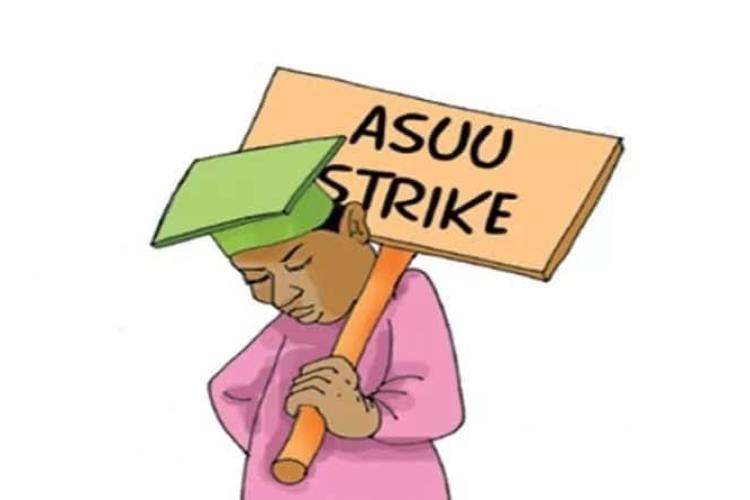
The Academic Staff Union of Universities (ASUU) has issued a fresh warning of an impending nationwide strike, accusing the Federal Government of deliberately reneging on long-standing agreements on the revitalisation and proper funding of public universities.
Speaking at a press conference on Thursday at the University of Jos, ASUU President, Prof. Christopher Piwuna, said university lecturers have been subjected to over two years of “broken promises and endless delay tactics” from the government.
He listed unresolved issues including the renegotiation of the 2009 ASUU-FGN agreement, unpaid salary arrears, withheld promotions, poor welfare packages for retired lecturers, and the government’s failure to release earned allowances.
“The general public should note that ASUU has written several letters to the Federal Government, appealing for amicable resolution. Unfortunately, the government has consistently turned a deaf ear,” Piwuna said.
The ASUU leader dismissed the government’s proposed tertiary staff support loan scheme, describing it as “a trap.” According to him, what lecturers need is the implementation of existing agreements to restore their purchasing power.
“Our members do not need loans. Government is still owing us three months’ salaries, yet it is asking us to borrow money,” he stressed.
The union also criticised the proliferation of new universities without sustainable funding, warning that such expansion has worsened Nigeria’s educational standards and global rankings.
On pensions, Piwuna lamented that professors who served the country for over four decades now earn as little as ₦150,000 monthly, despite rising inflation.
ASUU said it would await the outcome of a government meeting scheduled for August 28 before deciding on its next action. Meanwhile, the union announced plans to stage rallies across university campuses next week to register its frustrations.
“Time is running out. We cannot continue to wait endlessly while the future of Nigerian universities is destroyed,” Piwuna warned.
With this ultimatum, anxiety is mounting among students, parents, and stakeholders that another round of ASUU strike may soon cripple Nigeria’s already fragile education system.
 ‘
‘ ‘
‘Do you want to share a story with us? Do you want to advertise with us? Do you need publicity for a product, service, or event? Contact us on WhatsApp +2348183319097 Email: platformtimes@gmail.com
We are committed to impactful investigative journalism for human interest and social justice. Your donation will help us tell more stories. Kindly donate any amount HERE















Leave a comment