



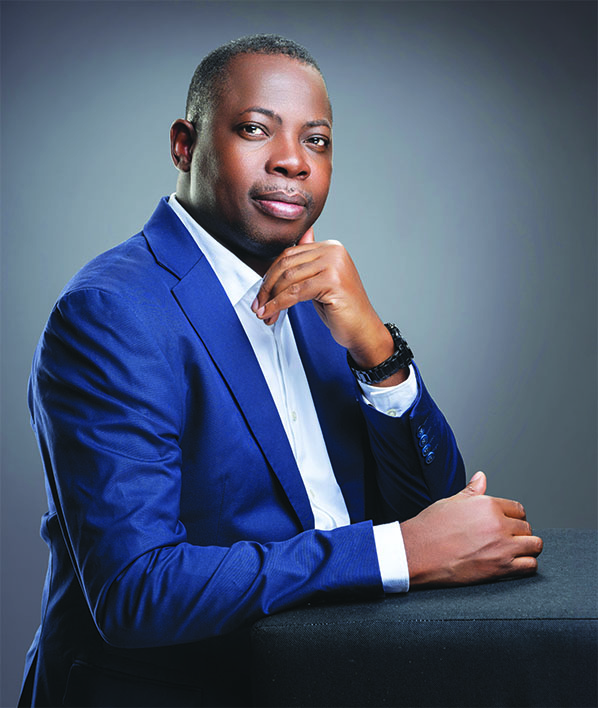
From a laboratory trained in microbiology to the boardrooms of one of the world’s biggest spirits companies, Managing Director of Pernod Ricard Nigeria Michael Ehindero’s career defies convention, it speaks to a deeper instinct for reinvention. Calm, reflective, and quietly audacious, Ehindero is not your typical industry executive. His journey cuts across science, professional accountancy, and multinational leadership spanning Nigeria, Europe, and Angola where he steered Pernod Ricard business to astounding market dominance and profitability. In this conversation with Omolabake Fasogbon, Ehindero reflects on the values that shaped him growing up in Nigeria, lessons from Angola, industry challenges requiring discipline to surmount and why moderation and sustainability are redefining the future of the wine and spirits industry. Excerpts:
You started out in microbiology. How did you end up in finance?
Finance was definitely not my first choice. My first degree was in Microbiology, but very early on, just after university, I began to question whether that path truly reflected who I was. While I enjoyed science, the career trajectory felt too inward looking for my personality. I am a mix of an introvert and extrovert. I enjoy reflection, but I also thrive on interaction and seeing the bigger picture. I wanted a career that allowed me to engage more broadly with people, businesses and systems. I also knew I was comfortable with numbers, so finance became a natural pivot.
How challenging was the transition?
On the surface, microbiology and accountancy seem very different, but at their core, both are logical disciplines. I have always believed that if you apply your mind properly, you can learn almost anything. The transition was not intellectually difficult; it was more about mental adjustment. Once I committed fully, the process became smooth. I went into professional accountancy studies with ICAN eventually qualifying as a chartered accountant, and in that period worked at KPMG. That experience reinforced a key lesson for me: mindset often matters more than background.
How did your family respond to this decision?
Interestingly, I did not tell my parents immediately. At the time, I was serving in the NYSC and funded my professional exams myself by teaching after school classes in chemistry and biology, subjects that were in high demand. That income sustained me through the transition. My initial ambition had been medicine, but circumstances in Nigeria at the time made that difficult due to challenges within the university admission process. Eventually, I learned that life is not always about following your original plan. Life rewards adaptability, courage and self-awareness.
Growing up in Nigeria, what values stayed with you most strongly?
Resilience, without a doubt. Nigeria teaches resilience whether you like it or not. Growing up here forces you to think on your feet. My father used to say, “Don’t lose your sense of smell,” meaning you must always stay alert to opportunities. There are many reasons to feel discouraged in Nigeria, from economic pressures to systemic challenges, but we remain optimistic. You cannot just hope things will improve; you must seek opportunities, solve problems and make a difference, not just for yourself but for the wider society.
You’ve had an interesting career spanning KPMG, Cadbury and now Pernod Ricard, most notably in Angola, your last posting before returning. How did you navigate leading the business in that new environment?”
Nigeria prepared me well. The resilience and work ethic Nigerians imbibe tends to stand us out wherever we go. When I arrived in Angola, I immersed myself fully in the environment. I learned Portuguese on my own, both spoken and written, and took time to understand the culture and business landscape. That effort helped me earn credibility. It was also my first role in general management and it came with significant challenges especially due to the deep economic challenges faced by the country in that period. By the time I left five years later, the business had become the dominant market leader, profitable and largely debt free (managed leverage), with a highly motivated workforce. That experience shaped my leadership approach in a very fundamental way.
How would you compare Angola with Nigeria in terms of business environment?
I often joke that Angola is like Nigeria, just on a smaller scale. Across Africa, many markets share similar challenges such as currency volatility, high inflation growth rate and unemployment, but they also share immense opportunity. Africa has a young, aspirational population and growing consumer sophistication. Whether it is Nigeria, Angola, Ghana or South Africa, success comes from understanding local dynamics, tuning them to your business advantage rather than being overwhelmed by the challenges.
Your Angola record, including over six percent market share growth in five years remains remarkable. How are you replicating same in Nigeria?
I daresay that we are already on that path, data is there to prove this though I acknowledge that it will be stiffer competition here due to the nature of the Nigeria business culture and opportunity. The 2024 International Wines and Spirits Report (IWSR) which is the industry’s widely accepted benchmark measure, rates us as number one in Nigeria’s premium plus segment. We now lead with the top Irish whiskey and Cognac brands, while even our mainstream labels have risen to become category leaders. It’s a clear trajectory of success. As I often tell my team, Angola was a great school for me, not just in delivering financial results but in consolidating on resilience and innovation. Here in Nigeria, we have piloted bold marketing activations, including the landmark Martell Tower and its latest edition, The Martell on the Move encompassing two elements – Martell Voyager and the Swift Ascendant. In the past year alone, we have won about 14 to 15 industry awards, underscoring our momentum. And beyond my own experience, I am backed by a solid team, truly the best in the industry which makes me confident that we are on a very strong trajectory.
As the MD, how are you getting to align the company’s global priorities with the unique realities of the Nigerian market?
Nigeria is a key focus for us. Since establishing a full subsidiary here in 2012, we have operated end‑to‑end from production to importation, sales, and distribution which reflects our long‑term commitment. Nigeria is potentially the largest economy in Africa and one of the most promising; so it is only natural that we invest deeply in this market. Our presence is not just about profits; it is also about developing people and talent. Many Nigerians who started their careers here have grown into roles across Europe and other parts of Africa, which shows the opportunities this market creates. For us, aligning global priorities means adapting to local realities while building capacity, nurturing talent, and ensuring Nigeria remains central to the group’s vision.
You have lived, studied and worked across different geographies. How has this exposure shaped your outlook on life and business?
My education and career have been a blend of academic learning and professional experience across different countries, and that exposure has shaped my worldview significantly. It gives me an international outlook on how I process information, approach problem solving and relate with people from different backgrounds. What has been particularly helpful is that my education has never been detached from reality. It has always been closely linked to the markets I work in and the decisions I make daily. That balance between ideas and execution has been very important in shaping who I am as a professional.
The local wine and spirits industry faces distinct regulatory, economic, and social challenges. What key risks do you navigate as a leader?
For me, I would say the most significant challenge remains counterfeiting. This represents a massive loss of revenue to both governments in the form of taxes and to legitimate operators and more importantly, poses serious health and safety risks to consumers. Despite the billions invested by manufacturers in production, marketing, and distribution, counterfeiters continue to exploit the system.
How in your opinion can this threat be curtailed?
For us, we have taken some innovative steps which combine technology, partnerships and education. Initiatives like Glass to Life help remove bottles from circulation, making it harder for counterfeiters to reuse them. By actively removing used bottles from circulation, we address not only environmental concerns but also brand security and consumer protection. We also work closely with regulators. Ultimately, an informed consumer is the strongest defense. Counterfeiting remains a major issue not just in alcohol, but across multiple product categories in Nigeria. It thus requires sustained and collective action to tackle.
Sustainability appears central to the business strategy. Why is this so important?
Given our extensive global footprint, we are acutely aware of our environmental impact.
As a result, both our global and Nigerian operations have made sustainability central to how we do business. Environmental responsibility is not an add-on; it is core to our corporate identity. In practical terms, this means eliminating single-use plastics across our activations and offices—no plastic straws, cups, or bottled water. We have also extended these commitments into our production processes. For instance, the Absolut Vodka factory in Sweden operates as a carbon-neutral. In Nigeria, we are driving local sustainability initiatives such as Glass to Life, which focuses on collecting post-consumer bottle waste and reintegrating it into the circular economy through recycling. Working with partners across the country, we are turning waste into value while reducing environmental harm.
So how do you embed these values in Sustainability is embedded in how we work, from town hall meetings to business and marketing plans with a constant focus on reducing waste. Through initiatives like ‘Bar World of Tomorrow,’ employees and partners learn how waste, especially glass, can be repurposed into useful products like cup, glass, chandeliers etc
This approach extends to our brands and consumers. We minimize the use of natural resources at every step by imagining, producing and distributing our products and experiences in ways that reduce carbon emissions and waste. We redesign packaging, such as Chivas 18, to reduce glass use, and at events we eliminate single-use plastics and replace with biodegradable alternatives such as paper or edible straws and cups. We replace bottled water with water refills and promote responsible drinking. Each touchpoint also serves as consumer education, reinforcing our commitment to sustainability.
The company is so intentional about its stance on moderate drinking. How does it get to reconcile this with its growth and profit objectives?
Globally, our vision is to be creators of conviviality but conviviality does not mean irresponsibility. True enjoyment has no place for excess. When people lose control, conviviality is lost, and that is not what our brands stand for. Our role is to bring people together, not to create harm. We believe moderation enhances experience and we champion balanced and convivial drinking as a conscious and aspirational choice. In that sense, profitability and responsibility are not in conflict; they reinforce each other. Ultimately, we will never put profit ahead of the health and wellbeing of our consumers.
What trends do you consider to be shaping the industry, and how are you responding to them?
One clear trend is what we call premiumization. Consumers appear to be drinking less overall but are increasingly seeking premium+ brands. This shift in preference is reshaping the market, and we have positioned ourselves to take advantage of that opportunity. Our approach is guided by extensive research, which highlights where growth lies and how consumer tastes are changing. By focusing on premium categories and adapting to evolving expectations, we ensure the business remains aligned with both global priorities and local realities.
How would you describe Nigeria’s drinking culture compared to other climes?
Nigeria’s drinking habits are still at an exploratory stage, especially compared to markets where spirits are integrated into daily life. In many countries, enjoying a drink, whether an aperitif before lunch, a digestif after dinner, or a glass of wine with a meal is a routine part of life. Here, alcohol is mostly reserved for celebrations rather than everyday enjoyment. Despite this, Nigeria shows strong promise as a market. With evolving lifestyles and growing exposure, there is potential for more regular, responsible consumption over time.
How important do you consider brand differentiation in the Nigerian spirits market?
Brand differentiation is essential. It is about relevance, essence, and experiences. Our brands stand for something—Martell for audacity and luxury, Jameson for heritage and craftsmanship. We bring this to life through immersive events, collaborations with artists, and interactive activations that let consumers experience the brand’s story and quality firsthand. Memorable experiences build loyalty and advocacy.
Your company’s tagline is Creators of conviviality. On a personal level, how does this resonate with you?
Conviviality, for me, makes life easier. I am naturally open‑minded, and I enjoy striking a balance between seriousness and relaxation. Conviviality is not about excess; it is about having a good time with purpose and impact. That philosophy aligns closely with my values and the way I live and lead.
Your role seems all consuming. How do you manage the pressure?
Members of my team and family often say I work a lot. But in this industry, the job is more than an 8‑to‑5; it’s a lifestyle. I don’t use the term ’work‑life balance.’ Instead, I fuse both worlds and stay flexible enough to prioritize what matters most at any given time. If personal issues require attention, I focus there; if business demands are greater, I give them priority. Planning helps me a lot. I schedule carefully, which allows me to fit so much into 24 hours without feeling I have lost out. For me, balance is not a fixed formula, it shifts depending on the moment, whether for the professional life or for my personal life.
What leadership philosophy guided you through in your present role?
Leadership is not just about numbers; it is about people. An empathetic leader understands that team members have different strengths and face both high and low moments. My view of leadership is to set a clear vision and direction, gain the commitment of the team, and ultimately deliver impact through both results and the environment we create together.
As someone widely travelled, how vital is global exposure for business leaders?
Very important. International exposure opens your mind, builds multicultural understanding, and helps you see things differently. It’s invaluable for leadership in today’s interconnected world.
So what are you up to after shutting down your laptop?
I sleep. I live a very active life and value rest. I sleep early and enjoy it whenever I can. Beyond that, I love to travel. My work takes me across Nigeria, but personally I also explore the world. I have visited about 36 or 37 countries so far, though I have yet to experience South America. Travel opens the mind in ways books cannot; it is a form of education that broadens perspective and deepens understanding.
Who are your role models?
I don’t have just one. In philosophy and vision, I admire Obafemi Awolowo. In discipline, my late father shaped me deeply. In business, I learn from Warren Buffett, while in courage I look to Aliko Dangote. And in faith, my role model is Jesus. Altogether, different aspects of these figures inspire me depending on the context.
What inspires you personally?
I am inspired by making a difference, especially through youth development. As chairman of the alumni board of trustees for my secondary school, Federal Government College, Ikom, Cross River State, I am actively involved in mentoring and supporting young adults, and seeing their progress motivates me. One example is a boy I met years ago while at Cadbury; I sponsored his education, and today he works successfully in the fintech industry. Stories like his remind me that success is best shared.
So what is next for you after Pernod Ricard Nigeria?
I work in a global business, so opportunities within the group are wide. I look forward to contributing more globally while continuing to develop Nigerian talent.













Leave a comment