



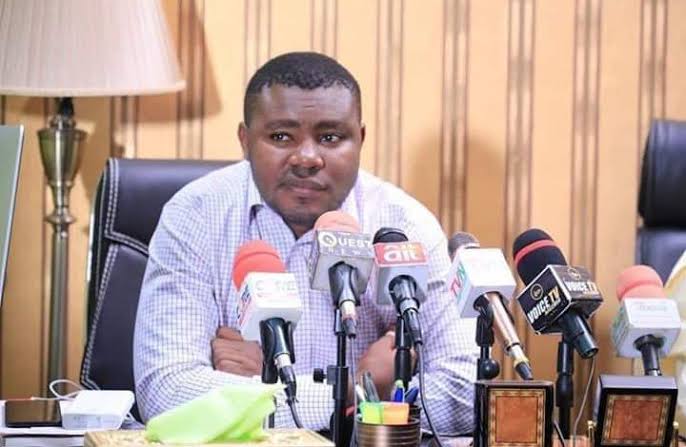

The Deputy Spokesperson of the House of Representatives, Philip Agbese, has called on Nigerians to play an active role in supporting ongoing efforts to tackle insecurity across the country.
Agbese also pledged to mobilise public backing for the Armed Forces’ newly launched Operation Savannah Shield, a multi-agency security effort covering parts of the North Central region, including Niger State, Kwara State, and Benue State.
The operation was flagged off at Sobi Barracks by the Governor of Kwara State, AbdulRahman AbdulRazaq, alongside the Chief of Defence Staff, Gen Olufemi Oluyede, and the Chief of Army Staff, Gen Waidi Shaibu, following approval by President Bola Tinubu.
The deployment comes amid renewed attacks by suspected terrorists and armed groups in the Kaiama axis of Kwara North and neighbouring communities in Niger State, raising concerns about the spread of criminal networks across forest corridors in the North Central zone.
Speaking at the launch, AbdulRazaq described the operation as “a big relief” for residents, especially in communities affected by banditry and abductions.
The Chief of Defence Staff said the initiative represents a proactive and coordinated response aimed at dismantling terrorist and criminal networks operating in the region.
According to him, the joint task force comprises personnel from the Nigerian Army, Navy and Air Force, with a mandate to secure lives and property, neutralise criminal elements and disrupt kidnapping operations.
Reacting to the development during an interview with journalists in Abuja on Saturday, Agbese commended the military leadership for what he described as a comprehensive effort to restore peace in the North Central region.
He noted that states such as Kwara, Benue, Kogi, Niger, Plateau and Nasarawa had witnessed an upsurge in violent attacks in recent months, leading to the displacement of hundreds of residents.
According to him, the launch of Operation Savannah Shield reflects renewed strategic coordination within the Armed Forces and a firm commitment to addressing security challenges.
“Security is a collective task and Nigerians must do their part in the war against insurgency.
“The renewed cooperation, where rivalry has become a thing of the past, is a clear indication that the Armed Forces have surmounted internal obstacles that did not help in the past,” he said.
Agbese further observed that with the military receiving support from international partners, particularly the United States, citizens must rally behind security agencies to ensure the success of ongoing operations.
The All Progressives Congress lawmaker also announced plans to launch a public advocacy campaign aimed at galvanising nationwide support for the Armed Forces.
“I have always been an ardent supporter of the Armed Forces, even as an ordinary citizen,” he said, adding that he is inspired by the current military leadership and the reform agenda of President Bola Ahmed Tinubu to drive sustained public support for security operations.
He expressed confidence that stronger collaboration between government, the military and citizens would help the country overcome its security challenges.
Calls for greater citizen involvement in security efforts have intensified in recent years as Nigeria confronts multiple threats, including insurgency in the North-East, banditry in the North-West and North Central, communal clashes and widespread kidnapping.
Security experts and government officials have repeatedly stressed that military operations alone cannot defeat these threats without timely intelligence from local communities. The vast and often forested terrain used by armed groups has made community-based information critical to tracking movements, disrupting hideouts and preventing attacks.
Authorities have also encouraged residents to cooperate with security agencies, report suspicious activities and avoid shielding criminal elements within their communities.
The push for public support has been reinforced by efforts to improve civil-military relations and rebuild trust, amid concerns in some areas about misinformation, fear of reprisals and weak communication between security forces and civilians.
For policymakers, initiatives such as Operation Savannah Shield are expected to yield better results when backed by public cooperation, intelligence sharing and sustained community engagement.










Leave a comment