



Tajudeen Suleimans
It was Rigoberta Menchú, the Guatemalan Indian-rights activist and Nobel Peace Prize laureate who said “Without strong watchdog institutions, impunity becomes the very foundation upon which systems of corruption are built. And if impunity is not demolished, all efforts to bring an end to corruption are in vain. “
Thus, overcoming impunity, through policy and operations, is the challenge of all anti-corruption institutions, especially in a third world country like Nigeria. Without anti-corruption institutional checks and measures, Nigeria had long suffered pillage by greedy politicians, public office holders and their private sector accomplices.
In late 2001 Nigeria found itself on an international blacklist of countries that enable money laundering, a list maintained by the independent Financial Action (FATF). FATF is the leading global organisation tasked with tackling money laundering, as well as terrorist and proliferation financing. It promotes global standards to prevent these crimes and assesses whether countries are taking effective action.
It was in response to this that Nigeria created the EFCC in December 2002 to crack down on money laundering and other illicit financial flows. It was a watershed moment in Nigeria’s fight against the bull called corruption and the laundering of public funds.
There were no effective anti-corruption measures and institutions before the EFCC was established. But 24 years down the line, the agency has become a bulwark against money laundering and illicit financial flows, sending high profile public officials to jail for corrupt financial dealings.
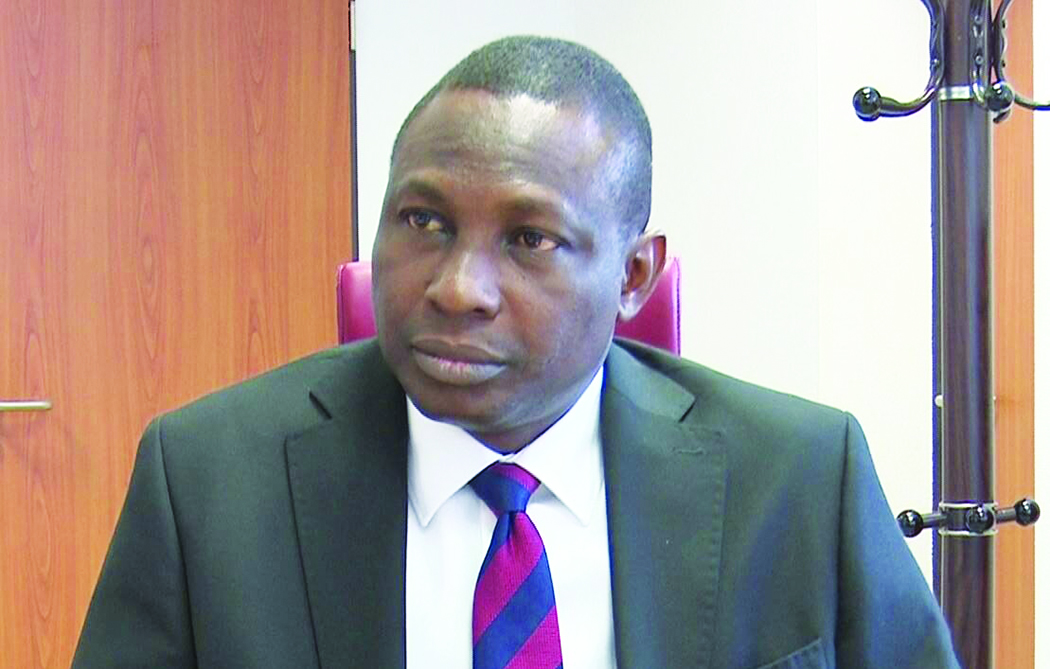
Ola Olukoyede, the current chairman of the EFCC, has elevated the anti-corruption battle and brought professionalism into its operations. A man that seems born with the passion for transparency, has been valiant and dauntless in the pursuit of his mandate since coming to office in October 2023.
He has been a thorn in the flesh of politically exposed villains while also turning the heat on cyber criminals. Under Olukoyede, the EFCC has transformed into a 21st century intelligence organisation, gathering and sharing vital intelligence with local and international partners on illicit financial flows and cybercrimes.
Under Olukoyede, the EFCC has secured 7,503 convictions and recovered ₦566,319,820,343.40, $411,566,192.32, £71,306.25, €182,877.10, and other foreign currencies from proceeds of financial and economic crimes by October 2025 against all odds.
He has secured more than half of the over 13,000 total convictions across the agency’s 22-year history, highlighting increased efficiency and focus on due process. The sustained operations against illicit financial flows under Olukoyede, in partnership with other MDAs, private sectors international partners have led to the exit of Nigeria from the black list of the Financial Action Task Force (FATF) in October last year.
Among the notable landmark assets he recovered are: the final forfeiture of 753 units of duplexes in Lokogoma, Abuja, and the forfeiture of Nok University, now the Federal University of Applied Sciences, Kachia, Kaduna State.
Olukoyede seemed ready for the job from day one and was uniquely placed to hit the ground running without having to learn the ropes. He has been part of the operations of EFCC years, operating at top levels.
He was Chief of Staff to the former Acting Chairman, Ibrahim Magu, where his job involved coordinating and analysing reports from all the directorates in EFCC, supervising investigations involving all suspects, politically exposed persons and other high-profile cases, and analysing updates on the prosecution of all cases handled by the Commission.
While serving as Secretary to the agency from 2018 to 2023, he headed its secretariat and was in charge of developing, implementing and coordinating compliance with Strategic Policy documents for operations, legal and administrative sections of the Commission.
Thus, knowing how anti-corruption operatives can easily be compromised when the system is weak and opaque, he first declared his full assets and demanded same from his staff. He then went on to restructure the agency, strengthening existing units and creating new ones to improve transparency and efficiency.
In a bid to strengthen its operations, equally upgraded all the zonal commands of the commission to the status of Departments, with each of them headed by a Director. To this effect, 14 new Directors have been appointed to head each of the zonal commands.
In the world of Olukoyede, an anti-corruption operative must be conscientious and unbribable to be efficient and effective. Unscrupulous operatives no longer have a hiding place in the agency. In 2024, he dismissed 27 staff for misconduct and sanctioned investigations into internal fraud, including a $400,000 scandal involving a unit head. Such transparency is rare in Nigeria’s public institutions and has set a new benchmark for accountability.
As expected, corruption, as Nuhu Ribadu famously stated during his time at EFCC, will always fight the people who expose it. Corruption now seems to be baring its fangs at Olukoyede after just two years of giving bloody noses to some amoral, corrupt political office holders.
The forces of corruption are up in arms, weaponizing half truths and lies to weaken Olukoyede and the institution he leads. He has been accused, without any evidence, of taking brides and amassing wealth as the anti-graft boss.
Last Sunday, while speaking on a Channels Television programme, Olukoyede dared his faceless accusers to come up with evidence of their claims. In a rare show of transparency and diligence, he challenged anyone who has any dirt on him since he joined public service to bring it on!
“I’d like to tell Nigerians here, with every sense of responsibility, all through my service in the public sector, as Chief of Staff, in the EFCC, as Secretary in the EFCC, and I make bold to say that I’ve never been involved in any fraudulent activity,” he said.
The EFCC chairman further stated, “I’ve never been involved in any fraudulent activities. I serve as Chief of Staff, no Nigerian, and I challenge anybody to say, ‘Oh, this man has ever collected one bottle of coke or one naira to influence my sense of judgement in carrying out my responsibility.’”
He also addressed allegations that he acquired assets corruptly when he was the EFCC Secretary under Ibrahim Magu. He said, “As Secretary, I’ve got to manage assets here and to dispose assets. I never—you can’t trace any asset to me, nor any member of my family, as a matter of principle. And no Nigerian can say I collected one dime because of carrying out my activities.”
Olukoyede seemed to have been inspired by Peter Eigen, founder of Transparency International, who said in 2011 that it’s possible to fight corruption when you’re conscious of it. Asked if he considered himself incorruptible, Olukoyede said, “To the best of my knowledge. I do my work with every sense of diligence, and I do my work with every sense of commitment and loyalty to the mandate.”
If the EFCC continues the positive trend which finally caused the delisting of Nigeria from the FATF’s blacklist, it would a win for the country’s economy. It would boost investor confidence, enhance the nation’s reputation in international markets, and attract foreign investment. It also signals that Nigeria is taking meaningful steps toward creating a more stable and trustworthy financial system.
And for businesses, it would mean easier access to foreign capital, smoother international transactions, and better opportunities to secure partnerships and lenders who previously viewed the country as high-risk.
President Bola Tinubu described the delisting as “a major milestone in Nigeria’s journey towards economic reform, institutional integrity, and global credibility.” This is no doubt an indication that the anti-corruption institutions in the country have come of age, and are impacting governance.
Olukoyede’s single-minded determination to turn the tide in anti-corruption must be encouraged and supported. Hardly do public officers put their heads in the game to deliver on their mandates the way Olukoyede is doing. He’s locked on to the task, and he constantly reminds me of the words of Padmé Amidala in the television series Star Wars : “There are still those of us who work to overcome corruption and believe it to be possible.”
Tajudeen Suleiman is an Abuja based journalist. He can be reached









Leave a comment