



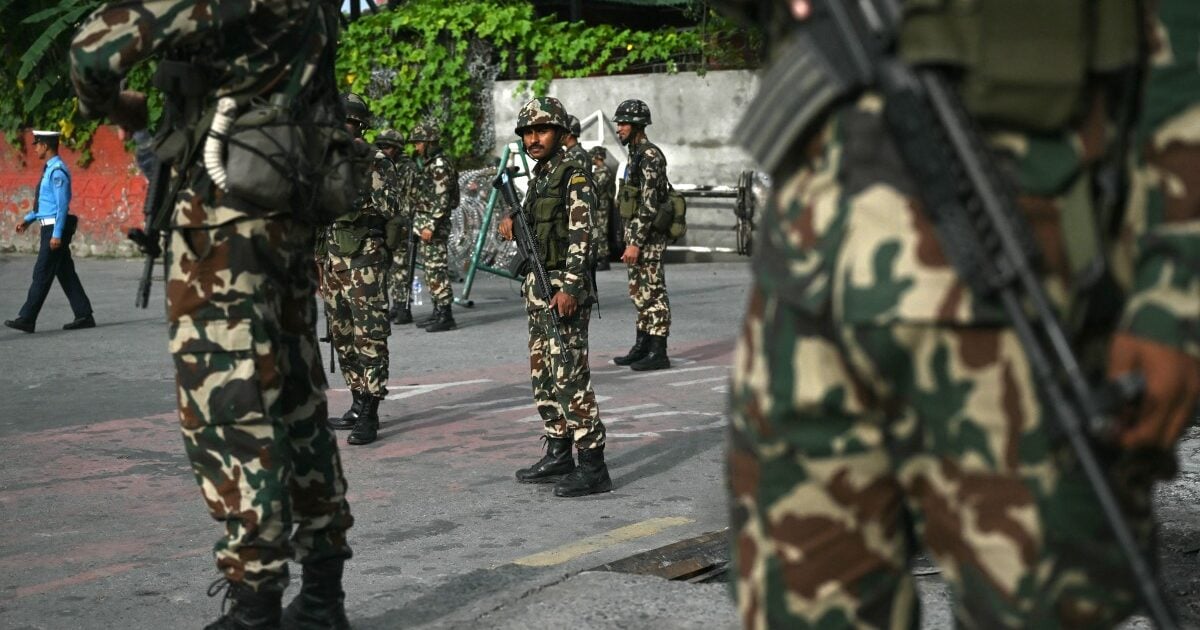

THE concerns expressed by a former Chief of Army Staff, Tukur Buratai, over the persistent deployment of soldiers for internal security duties are valid. Amid unrelenting violence, it speaks to a systematic weakening of the Nigeria Police Force, reinforcing calls for an urgent police reform so they can fully assume their statutory internal security functions.
In his Keynote Address at the 2026 Armed Forces Celebration and Remembrance Day lecture in Abuja, Buratai said: “The extensive deployment of the Armed Forces of Nigeria in internal security provides immediate stability, but it also perpetuates a cycle of dependency that weakens civil police capacity and strains defence resources.
“Internal security, more or less, should be civil-driven and intelligence-driven by the state intelligence services and the police, essentially.”
Effective security management is possible when each agency focuses on its core mandate and only provides support as needed. The military is currently overstretched, while the police are woeful.
Ordinarily, the police have responsibility for internal security. Unfortunately, the situation is different in Nigeria.
For decades, the Nigeria Police have been neglected and grossly underfunded.
Consequently, the police remain overwhelmed by escalating violence across the country, necessitating the drafting of the military to wade into matters clearly beyond its mandate. This has dire consequences for the efficiency of both the police and the military.
The needless exposure of the military to civil life has had an adverse toll on its discipline and operations. The otherwise disciplined military has joined the ranks of bribe and toll collectors on the roads.
On New Year’s Day, a soldier attached to a company in Ikot Abasi, Akwa Ibom State, killed Timothy Daniel, 13, for no particular reason.
Rather than re-engineering, retooling and empowering the police to tackle insecurity headlong, the Federal Government chose the easy but counterproductive option of drafting the military to contain insecurity. Yet, violence has escalated.
In hindsight, an early opportunity to equip the police to live up to their internal security role was missed under Sunday Adewusi as the IG during the Shehu Shagari administration (1979-1983).
The police acquired Armoured Personnel Carriers and other sophisticated weapons for improved policing during the period, but the initiative was repelled by the military, which regarded APCs as a threat to the regime.
Buratai’s observation only confirms the mess the military imposed on Nigeria. Yet, he did not make efforts to right this wrong while in office.
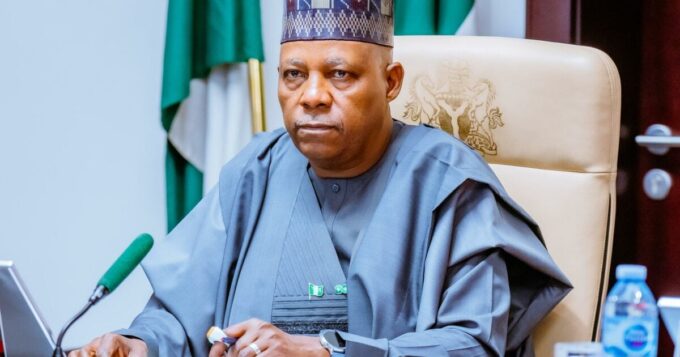
The outcomes are horrendous. Vice-President Kashim Shettima estimated that the Boko Haram insurgency has cost Nigeria over 100,000 lives and displaced over two million citizens.
A survey by the NBS suggests that an estimated 2.24 million kidnapping incidents occurred between May 2023 and April 2024, while households reportedly paid an average ransom of N2.7 million during this period.
In all this, it appears the police are being hampered from performance by the government. From policy deficit to dire underfunding to poor welfare, the government has been negligent about the police, especially when compared to other security agencies.
The police stations across the country are starved of operational funding. In many cases, the police complain of a lack of petrol to pursue emergency cases. Complainants are compelled to pay for pen and paper to write statements.
Despite the police’s claims that bail is free, it is a key “IGR” point for officers. The police practically kit themselves, thus explaining why some wear slippers with uniforms.
A constable in the NPF reportedly earns less than N120,000 per month under the currently reviewed salary regime. This is a far cry from what obtains in South Africa, where his counterpart earns R14,500 to R18,300 and in the UK, where he earns £2,500-£2,700.
The governments must reform the police to align them with contemporary security needs and take over their internal security role.
The first step is to set a deadline to withdraw the military from internal security operations. This should be a maximum of one year.
Second, the Federal Government and the states should heavily fund the police to achieve their operational functions.
The governments should invest in technology, including drones and APCs, to win the internal security battles.
Funding and investment in technology must be complemented with training and re-training of police officers.
There are lessons from elsewhere. The UK Metropolitan Police recently compelled their officers to declare their Freemason, Lodge and other hierarchical associations status to achieve efficient service delivery. Nigeria must follow in their footsteps.
The dire security situation in the country requires the immediate establishment of state police.
The police are central to the security function of the government. Therefore, adequate and widespread reforms are required to get the police working.













Leave a comment