



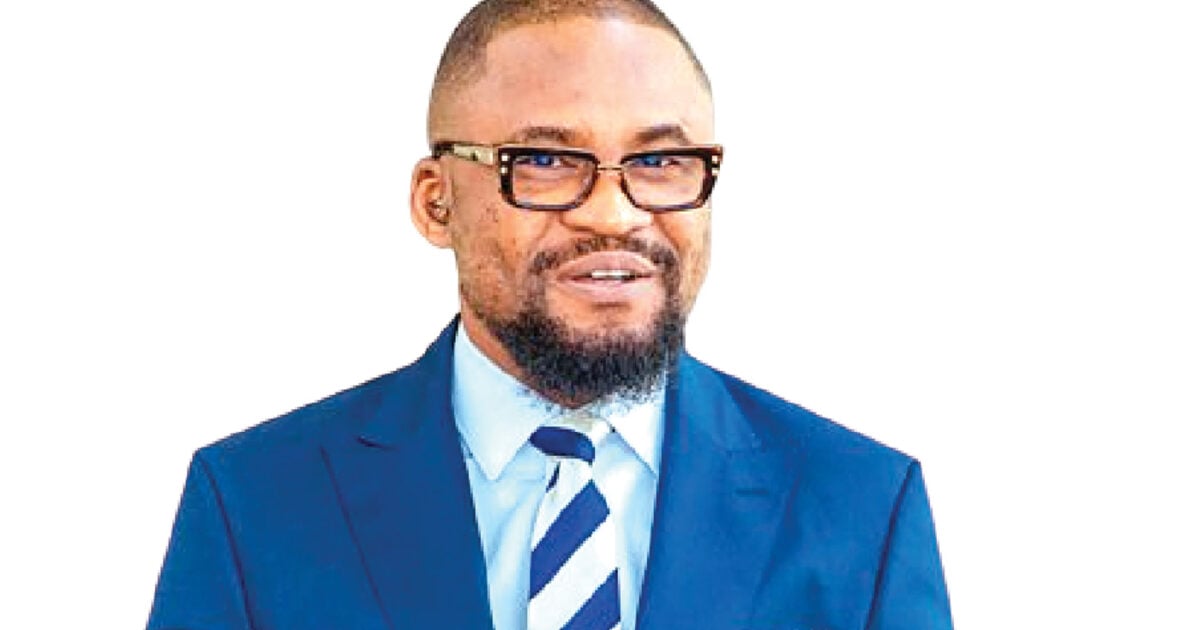

Founder of Rifugio Communications Limited, Dr Kayode Thomas, discusses Nigeria’s mobile phone market with DARE OLAWIN, reflecting on the company’s growth journey, operational challenges, and expansion plans. He also shares what continues to motivate his investments in Nigeria despite prevailing headwinds, and addresses perceptions that phone importers are exploiting Nigerian consumers
In light of the current economic environment, what sustains your confidence to continue investing?
When I came back to Nigeria many years ago, I was in a different business. I had been doing that for about 10 years before this came along. This initially started as a pet project. But by the time we looked at the market and saw how huge it is, I sat down and said, ‘No, this is not child’s play. This is a very serious business.’ What gives me the confidence is, in an ironic way, what discourages some. This environment is what gives me the confidence because the opportunities are there. The growth potential is there. The people are there. The resources are there. Yes, there are many things that are wrong with the country, but there are many things that are good about it. So, I focus on the fact that I can’t do anything about what is wrong. I’m not in politics. I’m not in government. Let them sort it out. However, we cannot wait for the government to take all the necessary steps. No, we have to employ people. We created employment, which is exciting for me. The environment is tough, no doubt about that. But if you can weather the storm, you will achieve success.
What is your view on the widespread claim that phone importers are exploiting Nigerians because the same devices are cheaper in other markets?
Yes, they are cheaper in China. Why don’t they fly to China to go and buy them? Pay for the tickets, accommodate themselves, buy the cheap phone, and come back. That is what I would say. Many things are cheaper in China. But we don’t produce here. You have to get there to get it, and then you import. Do you know what the duties are? You pay duties. If your container is not moved quickly, there is demurrage. And then there is the high cost of doing business in Nigeria. It’s not just the cost of the phone; it is your entire operating cost that I mentioned earlier. Rent is not cheap; you have to pay staff salaries. You pay for utilities: electricity, water, and Internet. So, the cost of doing business in Nigeria is very high. I understand it is very true that things are more expensive here, but you see, sometimes it is also a misconception because of the high exchange rates. That is why when the economy stabilises, what you find is that what you think is very expensive out there is not so here, particularly when you are looking at specific brands. If you buy a phone abroad, when you convert the dollar to naira, it is almost the same thing here, but here you also get a warranty. If you buy a phone from overseas and it has a problem and you live in Nigeria, you are not going to get a warranty here. You have to wait until you travel. If you get a phone here, for those two years, you have peace of mind if anything goes wrong with it. So yes, there are cost implications, but the cost of doing business in Nigeria is pretty high.
What actions should the government take to simplify operations for businesses like yours?
I think it is to stabilise the economy and stabilise the exchange rate, which I think is being done, because the exchange rate has been relatively stable lately. That anxiety alone can kill a business. You do not know whether the rate is going to go up or down. So it’s not just the high exchange rate that is our problem; it is the fluctuation. When it is not stable, you cannot plan. When people adjust their income, and then suddenly it changes overnight, it is not very healthy. I think that is the right trajectory—stabilise the economy, stabilise the exchange rate, and let the environment be more conducive for doing business.
Rifugio has just clocked 10 years. How would you describe the journey so far?
The company itself was formed 10 years ago with a vision of being a leading electronics retail and enterprise solution provider in Nigeria. From that very humble beginning in 2015 with our very first outlet, the company has grown phenomenally to well over 24 or 25 outlets and is still spreading. There has been almost no year since we started that we have not added to our chain. In addition to that, beyond what you see in the retail outlets, we have a number of corporate customers, various organisations from small to medium to large, who patronise us. We also have online stores.
Do you think phone manufacturers deliberately push consumers to overspend by rolling out new models too frequently?
They told me a long time ago that the day we stop innovating is the day we die. If it is that bad, why is it that every time new models are launched, they are hot cakes? That tells you that people want new things. Some people do not change phones every year. But eventually you will find your phone is an old model. Nobody would use their phone for 10 years in this day and age.
Even if it hadn’t broken, technology would have moved on.
What is in the name, Rifugio?
‘Rifugio’ is Italian for ‘refuge’. So we created a safe haven for all our customers. It is a one-stop shop. We started in Lekki, and we grew to over 20-something locations. Not just selling mobile phones and electronics and things like that, but other value-adding services. So you can pay all in one. We offer ‘pay small-small’. You have an old device; we value it for you. You can swap it and pay the difference for a new device. You want to insure your phone; we offer insurance in case it is lost, stolen, damaged, screen damaged, and all that kind of thing. We offer all sorts of value-adding services. But it has been a tough journey because, for example, when the naira was devalued, it hit retailers a lot on two fronts. Number one, phones became very expensive and unaffordable, and what that meant was that business went down. We have had two or three major challenges. The pandemic was another one that affected people’s ability to buy new things. Although eventually, as the pandemic eased off, we found that businesses started to pick up because more people started to do online meetings, and then they realised that maybe the device they had was not good enough for that. By the time the naira was devalued and the whole thing went up again, we went down a little bit, but it is a commodity product. The company is here to stay. We weathered the storm over the last 10 years. We are excited about the future. We know that it is a growth market. The population here is huge. Our vision is to be present in every state and every corner of the country.
What level and type of investment are required to run and scale Rifugio?
The investment is a never-ending journey because you have to open one outlet. Not only do you have to put consideration into the lease, which is not cheap, but you also have to hire people and then train them. You have to carry a lot of inventory. If you are talking about N100m to put into one store, if you multiply it by 25, you begin to get an understanding of the scale of the investment that goes into the expansion. But if you have the doggedness that Nigeria requires, you will be okay. The statistic is that 80 per cent of all startups fail in the first five years. So our first journey was that we had to survive five years. Having survived five years, we are now at 10. We are not arrogant about it. We are very confident that Nigeria still provides a lot of opportunities in spite of the difficulties.
What goals have you set for the company over the next ten years?
Expansion. As I said, our vision is to be everywhere. We are not everywhere yet. So that is expansion, continuous growth. That is the vision that we have so that we are able to spread what we provide. Still, about 80 per cent of our presence is in Lagos. So we need to start moving out from the shores of Lagos State as well. We are in Oyo State. We are in Rivers, Abuja, and Kaduna. Still, we are not yet in 15 states, let alone all of the states in Nigeria. So we still have a long way to go.
Are there any plans to move into local manufacturing or assembly in the future?
There is always a possibility. In our other business, it took an arm and a leg to get to the point where we could start to remotely produce something locally. For high technology, there are a lot of other sensitivities. Someday, maybe, but at the moment, it is still very challenging. We have to look at the value chain and decide where to play, where is feasible and viable. Let us be honest with ourselves. Let us not go and do something that would cripple us altogether. As the environment changes, we are there. If it is not us, we will leave the legacy. Other people that come after us can then decide, ‘Okay, these people have traded for 20-something years. Let’s move on to the next level.’ That is the idea. But we have to lay a very solid foundation and build a sustainable business.
Business owners usually complain about multiple taxes and other hurdles. What is your view?
I try not to comment on things I can’t do anything about. It is just part of the enterprise. Well, the government should just create a conducive environment that is more business-friendly. That is all, but I cannot do anything about it. We all have to face the headache and still survive.
What advice would you give to entrepreneurs operating in Nigeria?
Stay the course. Be patient, be resilient, be determined, be dogged. I always describe Nigeria as a rose bush. You will be scarred because there are thorns, but that does not stop people from plucking roses and giving them to loved ones.












Leave a comment