



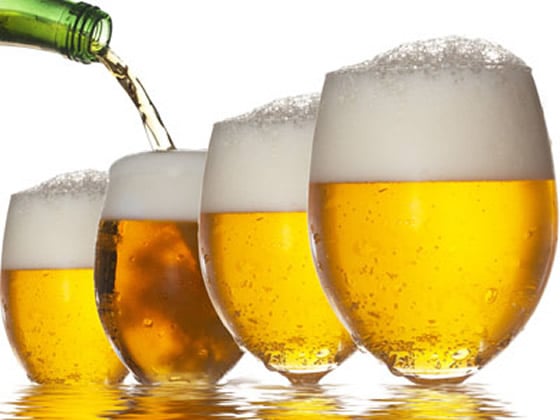

Some Nigerians have said they turn to beer as a way of easing frustration and coping with stress brought on by harsh living conditions in the country.
Despite shrinking incomes and rising living costs, they explained that consuming a few bottles of beer helps them calm down and strategise better.
PUNCH Healthwise discovered that many Nigerians continue to spend scarce resources on beer and other alcoholic beverages, a habit they say offers temporary relief from daily pressures.
Speaking with beer consumers across different socio-economic backgrounds, our correspondent gathered that for many, alcohol has become a coping mechanism for stress, unemployment, and uncertainty.
Some of them described it as an affordable escape in the face of worsening hardship.
Beer, an alcoholic beverage produced by brewing and fermentation of starches from cereal grains, most commonly malted barley, has been one of the most consumed beverages in Nigeria.
From parties, social gatherings, and hangouts in bars and lounges, beer and other alcoholic beverages are part of the offerings people consume alongside other delicacies.
In bars, beer parlours, and lounges, these beverages are paired with pepper soup, peppered meat, grilled fish, suya, Nnkwobi, and Nsiewu, among others, for a memorable event or hangout.
N1.54tn spent on beer, others in nine months
Against the backdrop of rising living costs and shrinking disposable incomes, Nigerians’ cumulative spending on beer translated into the N1.54tn revenue reported by brewing companies in the first nine months of 2025.
The figure underscores the scale of beer and other alcohol beverages consumption among Nigerians despite prevailing economic pressures.
An analysis by The PUNCH shows that Nigerian Breweries Plc, International Breweries Plc, and Champion Breweries Plc generated a combined revenue of over N1.54tn from the sale of beer and other non-alcoholic drinks in the first nine months of 2025.
This figure indicates the estimated amount spent by Nigerians on brewery products during the review period.
According to the unaudited financial statements of the three major listed brewers, for the nine months ended September 30, 2025, the companies collectively recorded strong top-line performance driven largely by beer sales.
Nigerian Breweries Plc, the largest brewer in the country, recorded net revenue of N1.05tn for the period, up from N710.87bn in the corresponding period of 2024. Cost of sales stood at N631.23bn, resulting in a gross profit of N415.15bn.
International Breweries Plc, which operates in Nigeria and other West African markets, generated revenue of ₦472.57bn for the nine months ended September 30, 2025, up from ₦343.45bn in the same period of 2024.
While Champion Breweries Plc recorded revenue of ₦21.44bn for the nine months ended September 30, 2025, up from ₦14.02bn in the same period of 2024. The company posted a profit after tax of ₦2.05bn, compared with ₦21.50m in 2024. Cost of sales rose to ₦11.14bn from ₦N8.13bn, while selling and distribution expenses increased to ₦4.24bn from ₦3.25bn.
Overall, the combined revenue of the three companies amounted to ₦1.54tn, with Nigerian Breweries Plc accounting for the bulk of sales.
Why we take beer – Nigerians
Findings by PUNCH Healthwise in bars and lounges around Lagos and Ogun States revealed that, depending on the brand and location, a bottle of beer costs between ₦1,000 and ₦2,500.
The findings were in sharp contrast to the announced price increase by Nigerian Breweries Plc in February 2024, which saw beer drinkers in Nigeria paying as much as ₦1,300 for a bottle.
As of then, the new price list shows that a bottle of Gulder, which used to sell for ₦700 sold for ₦950, while Star Lager and 33 Extra beer from ₦600, rose to ₦850.
Also, following the price hike in 2024, beer drinkers pay ₦1,300 for a bottle of Heineken, Life beer goes for ₦850, and ₦1,250 for a bottle of Legend, while Tiger beer was sold for ₦750.
But for several Nigerians who spoke with PUNCH Healthwise, consuming beer is one of the few affordable comforts left in Nigeria with the prevailing economic reality.
They noted that with the prices, they now restrict themselves to three bottles at most in a sitting.
A corporate worker, Sola Ajisafe, said he takes beer for several reasons, but most importantly, to escape pressures.
He noted that after a tedious day at work, with uncertainty of bills waiting for him to be sorted at home, he dashes to a bar to take some bottles.
“At home, there are different responsibilities and sometimes, issues with my wife. So I mostly just step out, sit somewhere else, take a couple of beers, evaluate how the day went, reflect on events, and plan for the following day or even the next week,” he said.
Ajisafe explained that things were easier as a single man, adding that raising a family brought additional responsibilities worsened by Nigeria’s economic situation.
“As a married man, especially when your children are still very young, personal space becomes limited. You are expected to always be present. Some of us have found some form of relief in stepping out occasionally, sitting outside that environment, relaxing with a beer, thinking, and planning.
“When I was much younger, I could finish a whole fridge of beer or even more, depending on where I am. But these days, one or two bottles are enough. The body is no longer the same, and responsibilities have also increased,” he said.
He explained that the economic situation has also affected the drinking patterns of him and his friends.
“Many people complain about the economy and rightly so, because the state of the economy has affected people’s pockets. I agree with that. However, in my case, I don’t think it has significantly affected my ability to afford the quantity of drinks I take.
“The price of beer has increased, from around ₦250 to about ₦1,000 in some places. But the places I go to are those that allow you to sit quietly, reflect, and relax. In such places, drinks can cost between ₦2,500 and ₦5,000. For me, that is not a big issue,” he told PUNCH Healthwise.
On the health implications of such continuous consumption of beer almost daily, he explained that he sometimes experiences migraines.
“I don’t see my drinking as injurious to my finances, and as of now, I don’t think it has affected my body in any significant way,” he said.
Also speaking to PUNCH Healthwise, an unemployed graduate, Adeyemi Quadri, said he takes beer to lift himself out of depression.
“I use alcohol to cure sadness and depression, for example, now I may want to sort some basic bills, and there’s no money and no way to sort it at that particular time, I believe you know how that will be disturbing to the brain.
“When the trauma comes, I will have to do something to make it disappear, that’s how I always take alcohol,” the graduate of economics said.
Also, a trader, Ifeanyi Charles, said the slow pace of business and family pressure continue to make him a regular customer at beer parlours.
He noted he had to rely on something to numb himself from constant thinking about his condition.
“I come to the bar just to cool off. Taking three to four bottles helps lighten the weight and takes me off thinking about the situation of my business and the mounting pressure from families, particularly those who don’t know my own condition or what I am facing in my business,” he said
Aside from beer, Charles said he had adopted sachet drinks, known in local parlance as ‘fenuja’, also to cope with his current reality.
“With the current cost of living. I don’t take more than four bottles at a go because beer prices are also up now. So, most times, I substitute beer with fenuja,” he told PUNCH Healthwise.
For Gbenga Ogunsanya, he takes beer to refresh and cool things off.
“It’s not only for social reasons, but it’s also just a way to calm down, and for social reasons, it helps gists,” he said.
According to him, after drinking beer, I feel elated, and also sleep better at times.
“I take two bottles, at most three. But the current cost of living, including the cost of beer, has reduced my outings to beer spots and the number of people I hang out with,” Ogunsanya said.
Also speaking to PUNCH Healthwise, Alex Olalekan, said taking a beer cools his mind after a long, stressful day.
According to him, I take three bottles to make me relax if my brain is not too light.
“Then, we always take more than four crates of beer daily. But now, we have reduced it to just one crate when we go out. The cost of living has affected our drinking pattern.
“These days, I drink beer just to get away from worries. Because I just don’t want to be home thinking about situations I can’t change,” he said.















Leave a comment