



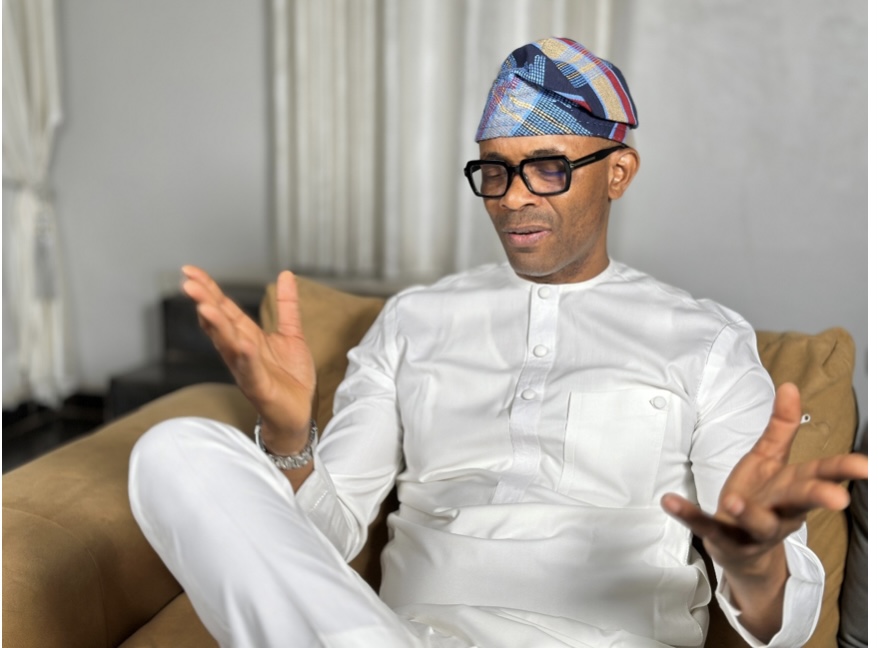
Jide Peters is the founder of Paul J. Peters Foundation and the promoter of “A New Nigeria is Here”, a documentary focusing on success stories of Nigerians across the country. In this interview with YEKEEN AKINWALE, he says the motive behind the initiative is to elevate local changemakers.
How did your work in social entrepreneurship lead you to the idea of producing a documentary like A New Nigeria Is Here?
Our work in social entrepreneurship has consistently exposed us to individuals and community-led initiatives across Nigeria that are creating meaningful changesdespite limited resources. Through this work, we saw a recurring gap: while many solutions were working on the ground, their stories, lessons, and models are rarely documented or amplified in a way that could inspire replication or broader participation.
This insight led to the idea of producing “A New Nigeria Is Here”, a documentary series designed to highlight innovation, resilience, and leadership across sectors, including education and youth empowerment. The series emerged as a strategic tool to shift narratives, elevate local changemakers, and demonstrate what is possible when communities are empowered, aligning closely with our broader mission of education, empowerment, and social transformation. So, we want to tell the stories of changemakers, people who are adding values to Nigeria’s economy through public and private sector synergy.
We are going to be showcasing a Nigerian company that provides some innovations in drones that even being used in countries like Senegal. The firm is owned by young Nigerians. We also have solar panels, battery systems that are made in Nigeria and are working. There is a Nigerian who is making over a billion naira through yam cultivation.
Many Nigerians believe that the country is not working, given the prevalent economic realities, what personal experiences or observations of Nigeria’s transformation motivated this project?

There are quite a number of them. There have been a lot of inanities and innovations that are adding values to the economy which a lot of people are not aware of. There many instances of things working in the country and are not being talked about. Through direct engagement with communities, young people, educators, and social entrepreneurs, we repeatedly witnessed Nigerians developing practical solutions to everyday challenges, particularly in education, livelihoods, and civic life, often with very limited resources. These experiences contrasted sharply with the dominant narratives that focus primarily on Nigeria’s struggles. Seeing the resilience, creativity, and determination driving change at the community level inspired us to create a platform that documents and shares these stories, celebrates progress, and encourages greater belief and investment in people-led transformation across the country.
So, what key sectors or success stories does the documentary highlight, and why were they chosen?
The documentary focuses on real stories of Nigerians who are driving change across critical sectors of the economy. We looked at the art and also fashion industry. There has been a lot innovators in the fashion industry. Our art has improved dramatically; Nigeria has come up in the art sector, music sector,
We also highlight local manufacturing, featuring companies like Innoson Group, led by its Founder and Chairman, Chief Innocent Chukwuma, to show how indigenous industries are creating jobs and strengthening Nigeria’s industrial base.
We also spotlight youth-led entrepreneurship and investment, including Alami Capital, led by OlufunmiWhite, Founder and Managing Partner, to demonstrate how young Nigerians are not just seeking opportunities but actively building and financing the future.
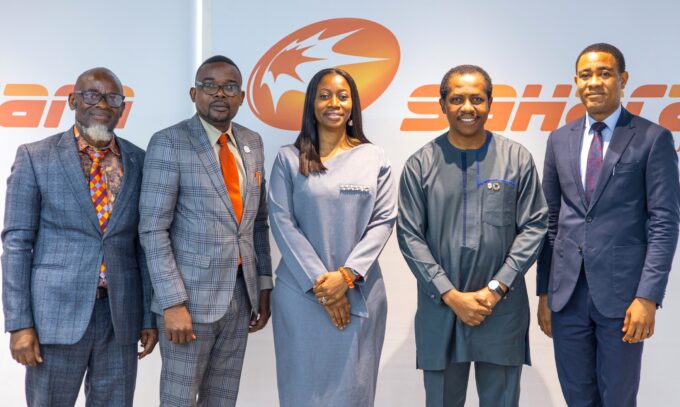
On the policy and systems side, the series features engagements with institutions and private-sector leaders such as Sahara Group and SkipperSeil Group. Also, the Federal Inland Revenue Service (FIRS), the Bank of Industry (BOI), NITDA and Some government initiatives such as NELFund, which gives student loans to the tune of N162 billion to 864,000 students to date. The NELFund has brought succour to students and their parents, particularly the poot, who could not hitherto afford university education.
The presidential CNG initiative, in which compressed natural gas is being used to power motor vehicles at affordable rate. This initiative is also eco-friendly and a ploy to reduce transportation cost especially after subsidy removal.
Also, youth empowerment projects like LEEP, the 3MTT, I.T innovative projects etc. These stories were chosen to show how collaboration between government and the private sector is shaping reforms, innovation, and economic growth.
Together, these sectors were selected because they represent practical, visible transformation stories that Nigerians can relate to and learn from, and that challenge the idea that progress is not happening. The goal is to show that a new Nigeria is already being built by its people
But how does the documentary balance the country’s challenges with its progress, because it is not yet what one can call a celebration so far?
The documentary is very intentional about being honest. It does not ignore Nigeria’s challenges; issues like infrastructure gaps, unemployment, or access to opportunity are clearly acknowledged. But instead of stopping there, we focus on how Nigerians are responding to those challenges in practical ways. We focus on what is working and what ought to work.
Each story places progress in context, showing the problem first and then the people, ideas, or institutions working to solve it. This balance allows viewers to see a realistic picture of the country—one that recognizes difficulties while also highlighting resilience, innovation, and forward movement. The aim is not to paint a perfect picture, but to show that meaningful progress is happening alongside the challenges.
You are very excited about this project, what impact do you hope the documentary will have on public perception of Nigeria?
It is really going to create confidence in average Nigerian about having hope and believing in the country. We want the documentary to broaden how Nigeria is seen beyond its challenges to the real progress being made. By showing everyday Nigerians driving change in business, policy, and their communities, the series helps audiences understand that development is already underway. The goal is to build confidence, especially among young people, and position Nigeria as a country with momentum and long-term potential.
We would like you to tell us what inspired you to start the Paul J. Peters Foundation and champion initiatives around education and empowerment?
The Paul J. Peters Foundation was inspired by firsthand experiences with children and young people who had the ability and desire to succeed but lacked access to basic educational support and opportunities. We observed that many families are willing to prioritise education, yet structural barriers such as poverty, lack of learning materials, and limited access to quality schooling continued to hold children back.
These realities motivated us to establish the Foundation and champion initiatives focused on education and empowerment, addressing immediate needs like school supplies and scholarships while also building confidence, skills, and pathways for long-term self-reliance. Our work is driven by the belief that education remains one of the most effective tools for breaking cycles of inequality and enabling young people to reach their full potential.
What’s next for the Paul J Peters Foundation, and how do you plan to continue making a positive impact?
What’s next for the Paul J. Peters Foundation is a deeper focus on access and sustainability in education. We want to move beyond short-term support and continue building initiatives, like our book library project that creates lasting learning environments for children and young people. At the same time, we’ll keep expanding scholarships and basic learning support while strengthening partnerships with schools and communities. Our aim is to make a consistent, measurable impact by ensuring that more children not only have access to education, but also the tools, confidence, and support they need to thrive over the long term. Almost 1000 students have benefited from the empowerment programme. The workshop we introduced is a kind of training for youths to believe in themselves, building confidence and also making them to see that education is not just about the four walls of classroom but a continuous endeavour and about a hundred students have benefitted from the scholarship project, which cut across primary, secondary schools and tertiary institutions.
Are there any upcoming projects or initiatives you are excited about?
Yes, one initiative we’re particularly passionate about at the Paul J. Peters Foundation is the book library projectfocused on expanding access to reading and learning resources for children and young people in underserved communities.
The project is designed to create safe, accessible spaces where children can develop reading habits, improve literacy, and engage with educational materials beyond the classroom. It builds on our existing work providing learning materials and scholarships, and reflects our belief that early and consistent access to books plays a critical role in long-term educational outcomes.
We see this as a practical, scalable way to deepen our impact in education and youth development. It will provide books to tertiary institutions and we are targeting over a million participants with this project. There is going to be incentives, including mentorship, cash prize, gift items, among others to create desires among students to embrace reading culture.
We have also initiated a programme to take care of our street sweepers, majority of who are women, widows and less privileged. We take care of about 400 in Abuja and its environs for the October 1 project. There is also clean water initiative which is about providing water for some deprived communities in Abuja. We believe that we go a long way in improving their health and livelihoods.
Through Bullion Project Group, we’re currently working on The New Nigeria Festival, an idea-driven platform designed to bring together creatives, entrepreneurs, policymakers, and young people to exchange ideas, showcase innovation, and shape conversations about Nigeria’s future. The festival is built around dialogue, creativity, and solutions, with the long-term vision of growing it into Africa’s largest idea festivals and a space where forward-thinking ideas can connect with opportunity and global impact. The New Nigeria Festival is a natural progression from A New Nigeria Is Here. The documentary focused on telling the stories of people, ideas, and institutions driving change across the country. The festival takes that a step further by creating a live platform where those ideas, conversations, and innovators can come together in one space. In simple terms, the documentary showed what is possible, and the festival is about convening people to build on that momentum through dialogue, collaboration, and action.









Leave a comment