



-
New NRS building shows progress in Nigeria’s tax reforms – Edun
From Adanna Nnamani, Abuja
The Executive Chairman of the National Revenue Service (NRS), Zacch Adedeji, has said Nigeria would have spent as much as 76 per cent of its projected N68 trillion budget on fuel subsidy if the policy had not been scrapped.
Adedeji disclosed this on Tuesday during the commissioning of the NRS headquarters in Abuja, noting that the removal of fuel subsidy by President Bola Tinubu was a critical fiscal decision that prevented the country from sliding into a major economic crisis.
According to him, at an estimated oil price of $120 per barrel, subsidy payments alone could have gulped about N52 trillion, leaving limited resources for capital projects and essential government services.
He described the decision as not just a policy choice, but a fiscal necessity, stressing that maintaining the subsidy regime would have significantly strained public finances and undermined economic stability.
The NRS boss further stated that the reform has contributed to improved fiscal health, including a sharp rise in Nigeria’s external reserves, which he put at $34 billion, compared to a projected $2 billion if the subsidy had remained in place.
Adedeji also highlighted gains from other economic reforms undertaken by the current administration, including foreign exchange adjustments and tax system restructuring, which he said have enhanced transparency, boosted investor confidence, and strengthened revenue generation.
Providing further data, he noted that Nigeria’s revenue has grown significantly in recent years, rising from N6.82 trillion five years ago to about N28.7 trillion in 2025. He added that distributable revenue to states also increased from N711 billion in May 2023 to N3.6 trillion as of September 2025.
He said the government’s approach to reform has focused on improving efficiency and governance rather than increasing tax burdens, with over 60 previously fragmented tax laws now streamlined into a more coherent framework.
On the newly commissioned NRS headquarters, Adedeji described the facility as a symbol of institutional reform and a platform to drive improved service delivery, transparency, and operational efficiency in revenue administration.
He added that the building, which can accommodate over 3,000 staff, would serve as a hub for innovation and strengthen the agency’s capacity to meet its mandate.
Adedeji commended President Tinubu’s leadership, saying the administration’s willingness to take difficult decisions has repositioned the economy and laid the foundation for sustainable growth.
Adedeji said: “Mr. President, if that decision had not been taken, fuel subsidies alone would have consumed about 76 per cent of the N68 trillion budget. At an estimated oil price of $120 per barrel, we were looking at subsidy costs of over N52 trillion. That would have left very little for capital projects, social services, and national development.
“Today, because of that courageous decision, we have moved from a position of fiscal strain to one of relative stability. Our external reserves have grown to about $34 billion, compared to a projected $2 billion if we had continued on the same path. This clearly shows that the removal of subsidy was not just necessary, but critical for the survival of our economy.
“The reforms undertaken by this administration are delivering measurable results. Revenue has increased significantly, and allocations to states have improved, while the system itself is becoming more transparent and efficient. These outcomes demonstrate that with the right policies and strong leadership, Nigeria can achieve sustainable economic growth.
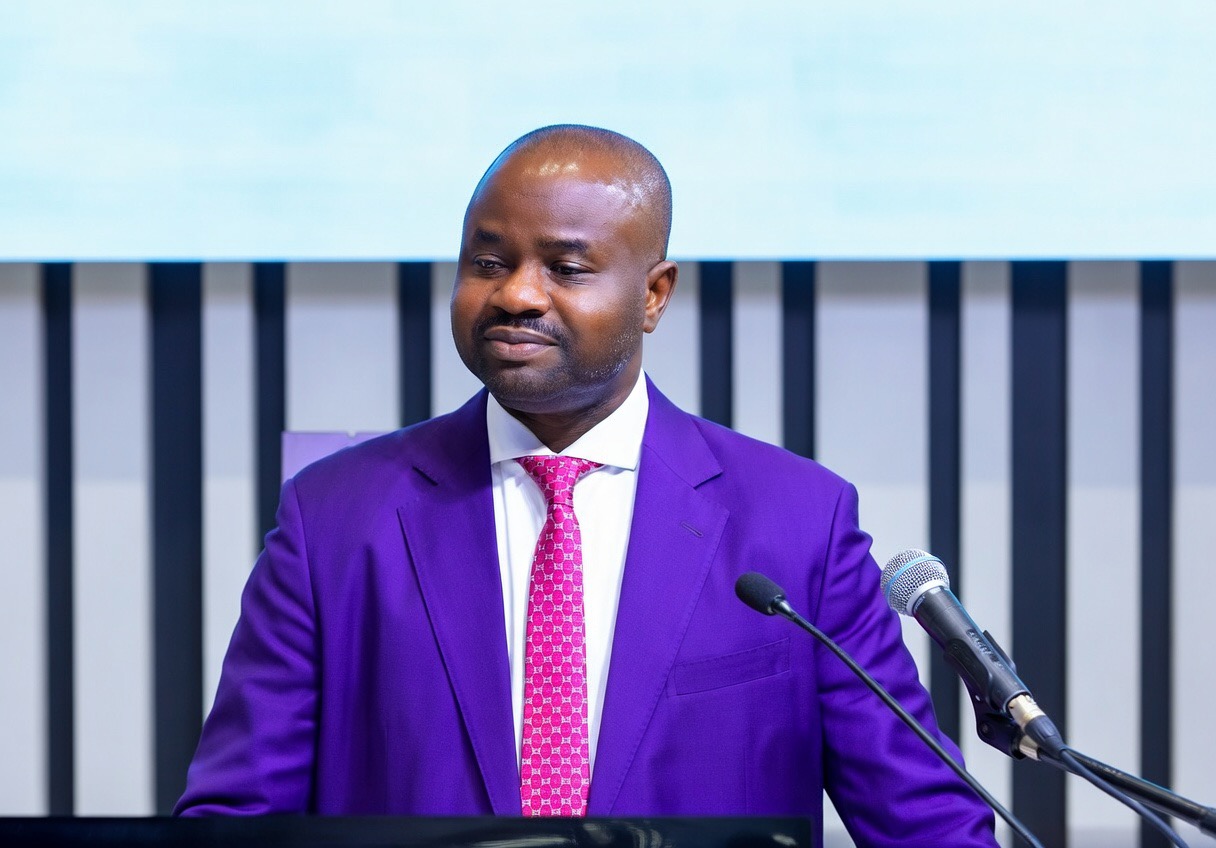
Delivering a goodwill message, the Minister of Finance and Coordinating Minister of the Economy, Wale Edun, said the newly commissioned headquarters of the Nigeria Revenue Service (NRS) reflects the country’s ongoing transformation in tax administration and fiscal governance.
Edun, who was represented by the Minister of State for Finance, Taiwo Oyedele, said the facility represents a fundamental shift in how the country organises and manages its revenue system. He noted that the transformation of the former Federal Inland Revenue Service into the Nigeria Revenue Service goes beyond a name change, adding that it demonstrates stronger governance, broader mandates, and improved accountability.
According to him, the country’s fiscal system had previously been constrained by fragmented tax laws, weak coordination, and a low tax-to-GDP ratio, but noted that reforms under President Bola Tinubu have begun to reverse the trend.
The Minister added that Nigeria has moved from a fragmented system to a more coherent revenue architecture, which is critical for improving investor confidence and ensuring efficiency in governance. Edun also highlighted the role of technology in the new system, noting that the NRS is expected to deepen efficiency, strengthen compliance through transparency, and sustain strong revenue growth.
He further argued that investment in tax administration yields significant returns, stating that every unit of currency invested could generate up to ten times in revenue, and suggested that the country could now consider raising its revenue targets.
The Minister said: “This completed facility is not just a building, it is not just costs, it is investments. A physical expression of the fundamental shifts in how Nigeria is organising revenue administration.
“This mirrors the transformational progress we have seen in our tax system under the visionary leadership of His Excellency, President Bola Tinubu. Before the reforms of this administration, Nigeria’s fiscal system faced structural challenges, ranging from fragmented tax law, weak coordination, low tax to GDP ratio, and unsustainable debt service. Today, we are witnessing a different trajectory. Through decisive leadership, our reforms have strengthened revenue institutions, improved collections significantly, and laid the foundation for long-term fiscal sustainability. The transformation of the Federal Revenue Service into the Nigerian Revenue Service is not just a name change. It reflects broader mandates, stronger governance, accountability, and repositioning for greater performance.
“Finally, this is not cost, like I said, and critical evidence shows that for every 1 Naira or $1 that is invested in tax administration, return on investment is 10 times, that’s 1,000 percent.
With that in mind, I think we can now safely increase NRS revenue targets at a modest 100 per cent.”















Leave a comment