



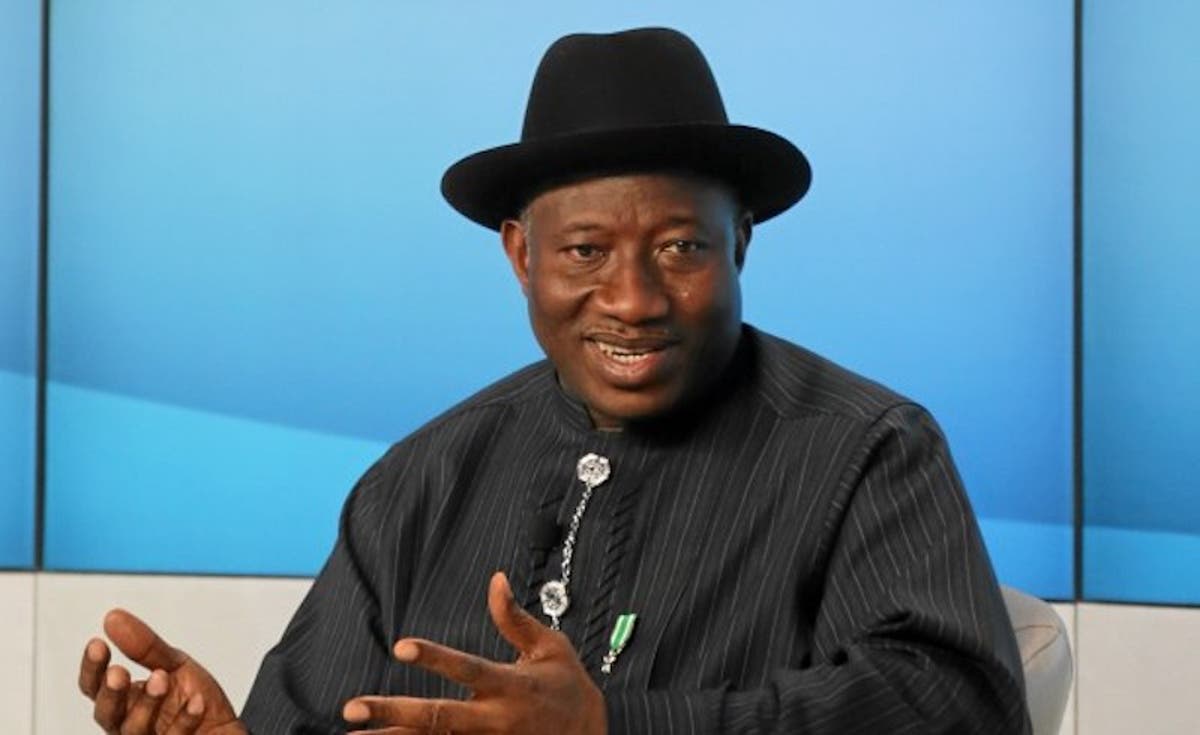
Renewed agitation for former President Goodluck Jonathan to contest the 2027 presidential election has ignited a fierce constitutional debate, with legal experts, politicians, and analysts sharply divided over whether he remains eligible to return to Nigeria’s highest political office.
The controversy, which has gained traction amid ongoing realignments within the opposition and internal tensions in the Peoples Democratic Party (PDP), has now snowballed into what some observers describe as a looming constitutional test that may ultimately require judicial clarification at the Supreme Court level.
Jonathan, who became president in 2010 following the death of President Umaru Musa Yar’Adua, went on to win the 2011 election before losing his re-election bid in 2015 to former
President Muhammadu Buhari. His historic concession of defeat in 2015, widely praised both locally and internationally, has since kept him in political circulation as a potential consensus candidate in future elections.
However, fresh calls urging him to re-enter the presidential race have reopened contentious questions around constitutional limits, particularly provisions relating to tenure and succession.
At the centre of the legal argument is Section 137(3) of the 1999 Constitution (as amended), introduced through the Fourth Alteration in 2017, which provides that any person who was sworn in to complete the tenure of another elected president shall not be elected to the office of president for more than a single term.
The provision has triggered intense debate among constitutional lawyers over whether it can be applied to Jonathan’s case, given that the amendment came into effect several years after he left office.
While some legal practitioners argue that the section was designed to close loopholes around partial tenures, others insist that applying it retrospectively would amount to a violation of constitutional fairness and legal certainty.
A similar provision exists in Section 182(3) governing gubernatorial tenures, further complicating the interpretation and raising concerns about uniform application across elective offices.
The debate has been further fuelled by a recent Federal High Court judgment in Akure, Ondo State, which held that Governor Lucky Aiyedatiwa could not lawfully extend his stay in office beyond constitutionally permitted limits after completing a predecessor’s tenure and subsequently winning election in his own right.
In that case, the court relied on the Supreme Court decision in Marwa v. Nyako, which affirmed that no elected executive can exceed constitutionally defined tenure limits, even where succession arrangements occur mid-term.
That ruling has since been cited by some analysts as strengthening the argument that Jonathan may also fall within the same constitutional restriction, having completed Yar’Adua’s tenure before winning a full term in 2011.
However, others maintain that the Aiyedatiwa decision does not automatically settle Jonathan’s situation, arguing that constitutional interpretation must consider timing, legislative intent, and the absence of explicit retroactive effect in the 2017 amendment.
A senior legal practitioner, who spoke on condition of anonymity due to the sensitivity of the matter, noted that “the Jonathan question is not as straightforward as some are making it appear. The courts may eventually have to determine whether Section 137(3) applies to acts completed before its enactment.”
Political observers say the renewed legal discourse may not be unconnected to increasing behind-the-scenes mobilisation by political actors across party lines seeking a strong consensus candidate ahead of 2027, especially as opposition parties continue to grapple with internal divisions.
Within the PDP, where Jonathan remains a symbolic figure, his name has reportedly resurfaced in informal consultations, although no official position has been taken by the former president or his close allies.
Meanwhile, constitutional lawyers remain split on whether the former president is permanently barred or still eligible under existing laws.
Some argue that Jonathan’s tenure pattern—assuming office after a predecessor’s death and later winning a full term—places him squarely within the category of leaders limited by the “one additional term” doctrine introduced in the amendment.
Others, however, insist that unless a competent court rules specifically on his individual case, any conclusion on his eligibility remains speculative.
 ‘
‘ ‘
‘Do you want to share a story with us? Do you want to advertise with us? Do you need publicity for a product, service, or event? Contact us on WhatsApp +2348183319097 Email: platformtimes@gmail.com
We are committed to impactful investigative journalism for human interest and social justice. Your donation will help us tell more stories. Kindly donate any amount HERE













Leave a comment