



By Chinwendu Obienyi
Despite mounting global instability, worsening geopolitical tensions and a recent uptick in domestic prices, Nigeria is not backing away from its single-digit inflation target.
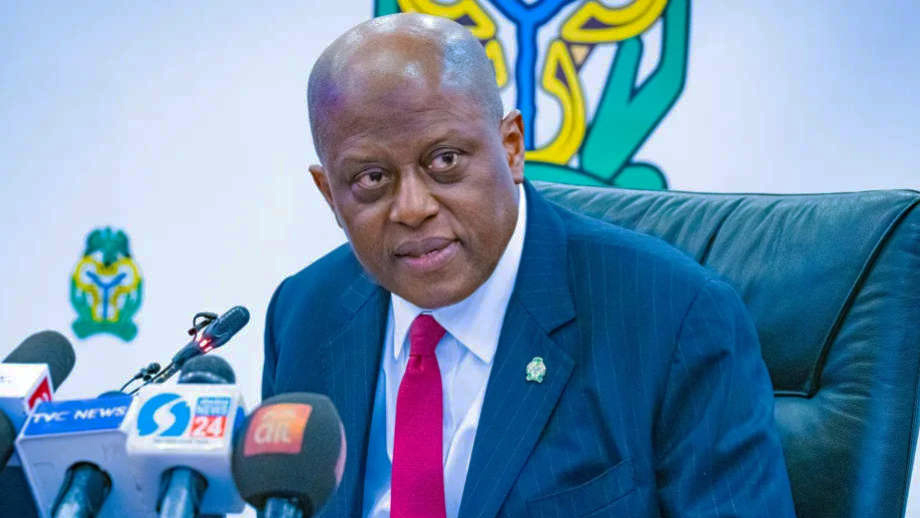
This was the assurance of Central Bank of Nigeria (CBN) Governor, Olayemi Cardoso, at the International Monetary Fund (IMF) and World Bank Spring Meetings in Washington earlier this month.
At various engagements, he insisted that recent reforms introduced by Nigerian authorities had significantly strengthened the country’s economic resilience and improved its ability to absorb external shocks.
According to him, while the Middle East crisis and related disruptions have created fresh inflationary pressures globally, Nigeria’s reform momentum remains intact and the country will stay committed to restoring price stability.
“We are not relenting on continuing to build resilience and also to stay the course with respect to something we have constantly been talking about, and that is bringing down inflation to single digits. In spite of all that is going on, we will stay that course,” Cardoso said.
His remarks came after the National Bureau of Statistics (NBS) announced that Nigeria’s headline inflation rate rose to 15.38 per cent in March 2026 from 15.06 per cent in February.
Though the increase marked the first upward movement in 12 months, economic managers say it does not represent a reversal of the wider disinflation trend that began in April 2025.
Instead, they describe it as a temporary spike driven largely by global supply-side shocks rather than domestic policy failure.
Debate over March inflation rise
According to the NBS, March’s increase reflected moderate upward pressure on prices compared with February.
“The headline inflation rate rose to 15.38%, up from 15.06% in February 2026 and stood 27.35% in the same month of the preceding year (March 2025),” the bureau said.
That means inflation remains significantly below the level recorded a year earlier, underscoring the progress made over the last 12 months.
The statistics agency added that the annual rate showed a 0.32 percentage point increase compared to February.
“However, on a month-on-month basis, the Headline inflation rate in March 2026 was 4.18%, which was 2.17% higher than the rate recorded in February 2026 (2.01%),” NBS said.
While the figures triggered concerns in some quarters, analysts note that one month of acceleration does not necessarily signal the return of entrenched inflation.
Rather, they say the rise reflects temporary pressures linked to higher international freight costs, energy prices, fertiliser costs and disruptions to trade flows caused by the Middle East conflict.
Global inflation threat returns
Across the world, central banks have battled inflation for several years, using aggressive interest-rate hikes and tighter financial conditions to curb rising prices.
For developing countries such as Nigeria, inflation has proven especially painful because it directly affects food affordability, transport costs, business survival and household welfare.
Higher global commodity prices often feed into domestic inflation quickly, especially in economies that rely on imports for fuel inputs, machinery, pharmaceuticals and raw materials.
The renewed war-related shock in the Middle East has therefore raised concerns globally, with oil, gas and shipping prices already reacting upward.
Yet Cardoso argued that Nigeria is now better prepared than in previous episodes of global stress.
Reforms building economic resilience
The CBN Governor said Nigeria’s ability to contain spillover effects from the latest global crisis reflects reforms already undertaken over the last two years.
He pointed specifically to exchange-rate stability, stronger reserve buffers and improvements in the monetary policy framework.
Those reforms, officials say, are restoring investor confidence after years of uncertainty in the foreign exchange market, weak capital inflows and multiple pricing distortions.
For many years, Nigeria struggled with parallel market pressure, FX shortages and speculative round-tripping, all of which weakened the naira and worsened inflation.
Recent policy actions have focused on correcting those distortions.
President Bola Tinubu has also reportedly directed economic managers to intensify policies aimed at reducing the impact of global shocks on ordinary Nigerians.
That directive is expected to include actions targeting food supply, transport costs, energy pricing and exchange-rate stability.
The Tinubu administration has repeatedly defended its reform programme, arguing that difficult decisions such as subsidy removal and market liberalisation were necessary to rescue the economy from structural imbalances.
Officials maintain that while reforms may create short-term pain, they are laying the foundation for sustainable growth, stronger public finances and lower inflation in the medium term.
CBN tightening measures showing results
The apex bank said its inflation-fighting measures are beginning to filter into the wider economy.
According to officials, tighter monetary policy and improved coordination with fiscal authorities are helping to restore macroeconomic balance.
The CBN believes lending conditions are gradually improving, investor confidence is recovering and currency volatility has reduced compared with previous periods.
Analysts say this matters because inflation in Nigeria is not driven by one factor alone.
Instead, it is often the result of multiple pressures including: excess liquidity in the system; exchange-rate weakness; supply chain bottlenecks; insecurity affecting farming output; imported inflation; high transport costs and fiscal deficits.
Because of this, experts argue that monetary policy alone cannot solve inflation, but it remains an important anchor.
FX reforms deepen dollar liquidity
One of the key pillars of the Cardoso strategy has been rebuilding confidence in the foreign exchange market.
The CBN has introduced several initiatives designed to attract more foreign currency into official channels and improve liquidity for manufacturers, businesses and households.
These include: Licensing new International Money Transfer Operators (IMTOs); creating products to attract diaspora remittances; implementing a willing buyer-willing seller FX model; providing timely naira liquidity for remittance operators; simplifying inflow channels for authorised dealers and encouraging transparent price discovery.
Officials say these measures have helped boost reserves and support the naira.
A more liquid and transparent FX market is seen as critical to controlling imported inflation and restoring long-term confidence.
Diaspora remittances offer strong buffer
Cardoso disclosed that Nigeria currently earns roughly $600 million monthly from diaspora remittances.
With annual inflows estimated at around $23 billion, remittances remain one of the most stable sources of foreign exchange for the economy.
Unlike volatile portfolio flows, remittances are generally steady and linked to family support, education, healthcare and household spending.
The CBN is expected to continue deepening formal remittance channels to ensure more of those flows enter the banking system.
Experts say capturing larger remittance volumes could reduce pressure on the naira and improve reserve adequacy.
IMF hails Nigeria’s reform direction
The International Monetary Fund also applauded Nigeria’s recent economic policy choices.
IMF African Department Director, Abebe Selassie, said the effects of sound domestic reforms were becoming increasingly visible.
He noted that fiscal strengthening and macroeconomic stabilisation efforts were helping create conditions for stronger growth and lower inflation.
He cited exchange-rate reforms, subsidy reduction and tighter monetary policy among the measures beginning to yield dividends.
“Countries such as Nigeria have reaped the benefits of macroeconomic reforms, exchange rate realignments, subsidy reduction and strength in monetary policy frameworks. In short 2025 was a year of hard-won stabilisation gains, and policymakers across the region deserve credit for achieving them”.
The IMF’s endorsement is significant because multilateral institutions had previously expressed concerns about Nigeria’s macroeconomic vulnerabilities.
New risks from Middle East war
Despite that praise, Selassie warned that the Middle East conflict had introduced serious new risks to African economies.
“Oil, gas and fertilizer prices have surged. Shipping costs have risen. Trade with Gulf partners has been disrupted. Tourism and emphasis are being squeezed. Financial conditions have heightened, particularly for fuel importing countries,” he said.
For Nigeria, the impact is mixed.
As an oil producer, higher crude prices can boost export earnings and government revenue.
However, higher energy prices can also raise domestic costs, especially where refining and distribution challenges persist.
Shipping disruptions also increase import costs for food, machinery and industrial inputs.
Africa’s growth outlook moderates
The IMF said Sub-Saharan Africa entered 2026 after a strong 2025, when regional growth reached about 4.5 per cent—the fastest pace in a decade.
But fresh global shocks have weakened the outlook.
Regional growth is now projected at 4.3 per cent in 2026, lower than earlier forecasts.
Oil-importing economies are expected to face deteriorating trade balances and rising living costs, while oil exporters may gain more revenues but remain exposed to price swings.
Median inflation across the region is projected to rise to 5.0 per cent by the end of 2026 from 3.4 per cent at the end of 2025.
The IMF also warned that higher food prices could worsen poverty and food insecurity across the continent.
Key domestic gains
An economist, Prof. ‘Abiodun Adedipe, founder and Chief Consultant of B. Adedipe Associates Limited, said several reforms were already strengthening Nigeria’s outlook.
According to him, forex market changes have reduced arbitrage opportunities and round-tripping.
He added that fuel subsidy removal ended a wasteful fiscal burden previously estimated at $10.7 billion annually.
Adedipe said bank recapitalisation would create stronger financial institutions capable of funding a $1 trillion economy.
He also pointed to fiscal consolidation, technology-driven revenue systems and stronger accountability across public institutions as positive developments.
“The real game changer remains the tax reforms,” he said.
According to him, tax modernisation could ignite healthy competition among states and unlock investment, much like decentralised competition helped power China’s economic rise.
Adedipe further highlighted several initiatives he believes could support long-term expansion, including:Nigerian Education Loan Fund; Consumer Credit Corporation; recapitalised Bank of Agriculture;
National Credit Guarantee Company Ltd
He noted that these institutions, if effectively managed, could widen credit access, support agriculture, expand home ownership and stimulate domestic demand.
Nigeria’s structural strengths remain powerful
Beyond current reforms, Adedipe said Nigeria still enjoys deep structural advantages.
He cited the country’s youthful and rapidly growing population, estimated at 237.53 million, with a median age of 18.1 years.
He also pointed to: rapid urbanisation; rising internet penetration; expanding mobile connectivity; growing local refining capacity; reviving manufacturing activity and increasing non-oil export interest.
Those trends, he said, could power stronger productivity and consumption growth over time.
“Improvement in infrastructure will begin to positively impact the cost of doing business,” he added.
Can Nigeria reach single digits?
Many economists believe the target is ambitious but possible if reforms remain consistent.
To achieve single-digit inflation, Nigeria would likely need: Sustained FX stability; lower food inflation through improved supply chains; better transport and energy logistics; continued monetary discipline; stronger domestic production; fiscal restraint; improved security in farming belts, among others.
They maintained that any reversal in policy consistency could delay the goal.
However, if current reforms deepen and global shocks ease, inflation could resume its downward trend after the March rise.
Interestingly, the message from the CBN is to stay the course.
For now, the CBN’s position is crystal clear that the March inflation increase is seen as a temporary interruption, not a collapse of progress.
Officials of the apex bank insist the country has stronger buffers, better policy tools and more credibility than in past crisis cycles.
That confidence explains Cardoso’s firm message from Washington which is that Nigeria will not abandon the single-digit inflation ambition.
Despite war-driven shocks, global uncertainty and domestic pressure, the authorities say the destination remains unchanged and the journey not thwarted.













Leave a comment