



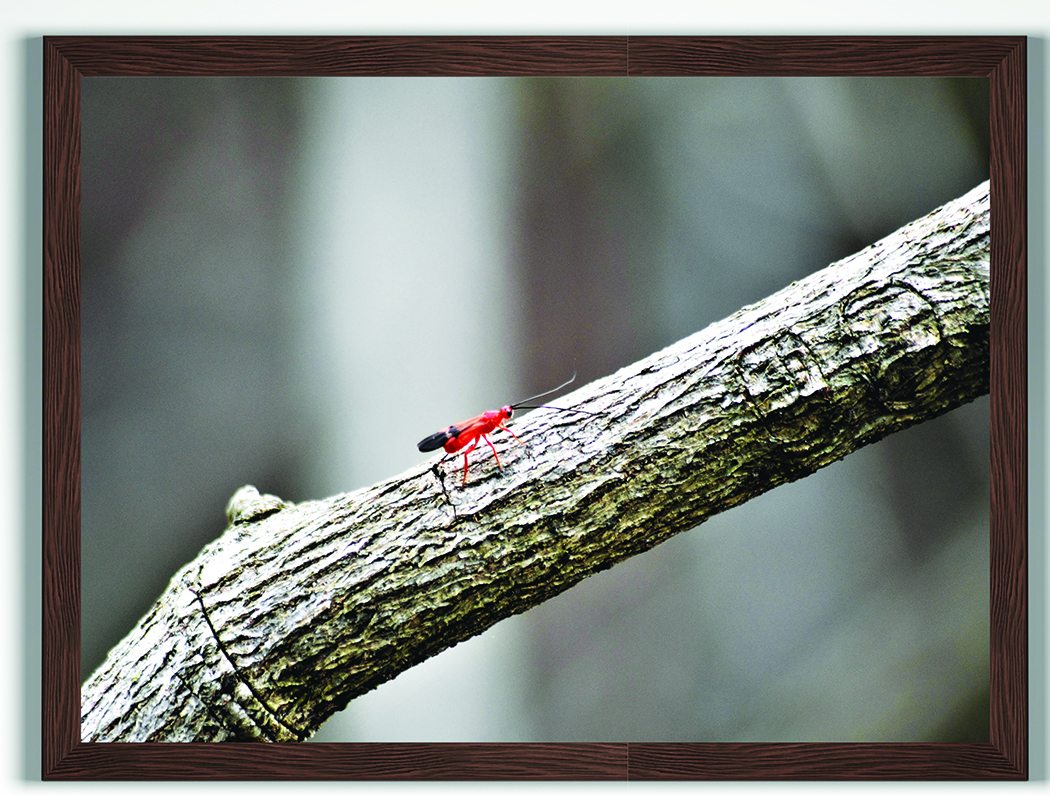
Yinka Olatunbosun
A quiet ripple in the stream of time often arrives unannounced—brief, luminous, and already slipping into memory. A flock of birds lifts suddenly into the sky. A passerby meets your gaze for a second too long. Such fleeting encounters are familiar, yet easily missed. For the retired astrophysicist, Aako Ugbabe, however, they are precisely what give nature photography its quiet urgency.
His engagement with the natural world deepened during the COVID-19 lockdown. Confined to his home, he found an unexpected opening into stillness. With a camera in hand, he would sit outdoors and observe birds reclaiming a space temporarily freed from human interruption. That period rekindled a long-dormant interest in photography, as avian life—responding to reduced urban pressure—began to drift more boldly into his immediate environment.
“The lonely bird rested in my yard for two days on its journey from somewhere to somewhere,” he recalled during the Lagos preview of his 65 nature photographs, drawn from scenes in Jos and Otukpo, his hometown. His wife, Kanchana, sat quietly beside him throughout the engagement. “On the second day, it posed for me—birds sometimes do that. But when they do, you may not be ready. That is the frustration of bird photography; better to be a bird lover and bird watcher.”
On another occasion, he encountered a trogon—an elusive species he was fortunate to capture on camera. Even then, he notes, it was difficult to convince some that such a bird exists in Nigeria, or had ever passed through his locality.
“Birds do not make or keep appointments,” he said. “The itinerant ones are unpredictable; resident species are always there; seasonal ones come and go; and one-time guests may be seen once, never again. And if you are not lucky, not even a photograph will serve as witness.”
Beyond documentation, Ugbabe’s practice reflects a deeper sensitivity to ecology and place. He often contrasts the restful ambience of Jos with the hyper-commercial intensity of Lagos, suggesting a widening gap in how nature is experienced across regions. While some parts of Nigeria still offer everyday proximity to the earth, Lagos, he observes, increasingly offers curated access to what remains of it.
Inside the Didi Museum on Victoria Island, his works—presented in sequence and quiet rhythm—evoke a contemplative stillness that feels at odds with the city outside. The solo exhibition, Wild Meets Urban, opens on May 2 and runs until May 16, offering what might best be described as a form of visual therapy, inviting viewers into a slower register of seeing.
Beyond birds, Ugbabe also turns his lens to human presence within natural and transitional spaces, including Fulani women engaged in everyday movement and trade. These encounters, however, are often brief and evasive.
“I want to take pictures, but they take off and run or hide their faces, or simply accept that I have already clicked the shutter,” he recalled.
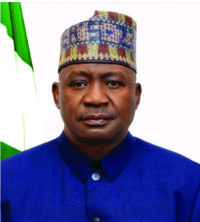
Aako Ugbabe, PhD, OON—engineer, physicist, and former astrophysicist with interests in philosophy—has, in retirement, returned to long-held passions: nature walks, birdwatching, and photography. Observing seagulls in New York once offered him unexpected insight into aerodynamics and flight, reinforcing his scientific curiosity through visual attention.
In the end, his photography is defined less by spectacle than by attentiveness. It reflects a patient way of seeing—one that recognises the extraordinary embedded within ordinary moments. Through his lens, nature and community are not separate subjects, but overlapping fields of presence, movement, and quiet revelation.











Leave a comment