



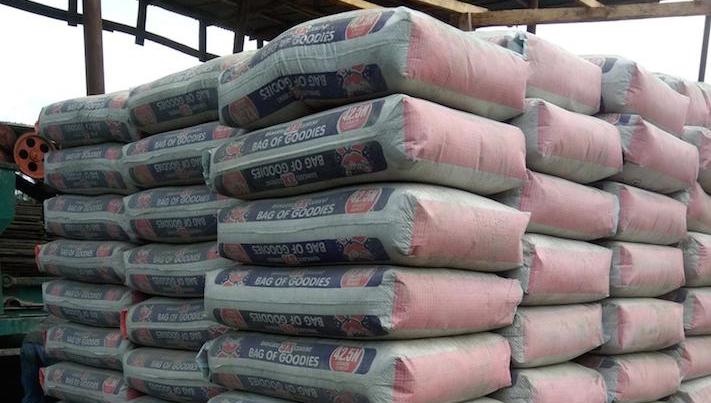
•Experts ask FG to fix power, dollar, transport problems
By Chinwendu Obienyi
Despite posting robust revenue growth and margin expansion, rising energy costs and macroeconomic pressures could weigh on the cement sector’s outlook in the months ahead.
Combined revenues of major players, Dangote Cement, Lafarge Africa and BUA Cement, rose to approximately N1.89 trillion in the first quarter (Q1) of 2026, underpinned by improved pricing, recovering volumes and sustained demand from construction activities.
Specifically, Dangote Cement’s revenue stood at N1.198 trillion as against N994.66 billion recorded in 2025, its pretax and post-tax profits stood at N471.17 billion and N321.10 billion as compared to N311.97 billion and N209.25 billion, respectively.
BUA Cement’s revenue came in at N354.98 billion as compared to N290.82 billion, pretax and post-tax profits stood at N192.68 billion and N176.38 billion as against N99.74 billion and N81.12 billion respectively. On the other hand, Lafarge Africa’s revenue stood at N334.88 billion while pretax and post-tax profits came in at N149.12 billion and N97.95 billion as against N73.11 billion and N48.64 recorded in 2025.
The performance reflects a broad-based recovery across the industry, with companies benefiting from price adjustments in the domestic market and stronger demand conditions in key Pan-African operations. Volume growth, particularly outside Nigeria, has been supported by improving macroeconomic stability and infrastructure spending across several African markets.
However, the sector faces mounting cost pressures, especially from energy, which remains the largest component of production expenses as seen in the firms’ audited Q1 results. For instance, Dangote Cement’s gross margin expanded by 349 basis points (bps) year-on-year (y/y) to 62.5 per cent as cost of sales grew at a slower pace (+10.2 per cent y/y) relative to revenue.
Cost pressures were driven by higher raw material costs (+27.4 per cent y/y | 24.7 per cent of COGS), reflecting increased production volumes, and a modest rise in energy costs (+4.3 per cent y/y | 41.2 per cent of COGS), supported by continued use of alternative fuels.
In the case of Lafarge Africa, its gross margin expanded strongly by 11.84ppts y/y to 61.4 per cent, as cost of sales grew at a slower pace (+3.2 per cent y/y) relative to revenue. This reflects continued benefits from cost efficiency initiatives, including increased use of alternative fuels and raw materials.
BUA Cement on the other hand saw its gross margin expanding by 927bps y/y to 56.9 per cent, supported by the modest growth in COGS (+0.5 per cent y/y) relative to revenue. Cost containment was aided by relative exchange rate stability, lower energy costs (-9.9 per cent y/y), benefiting from the company’s diversified fuel mix at the Obu plant, and a significant reduction in operations and maintenance service charges (-40.6 per cent y/y).
Commenting on the results, analysts note that global oil price increases are beginning to filter through to input costs, raising concerns about the sustainability of recent margin gains.
They warn that these gains could come under pressure if energy prices remain elevated or if foreign exchange (FX) volatility resurfaces. The sector is also exposed to rising logistics and maintenance costs, which could further erode margins if not effectively managed.
Analysts at Cordros Research said, “Looking ahead, we expect earnings momentum to remain firm, supported by sustained volume recovery across the Group and continued price adjustments in the Nigerian market. However, we note that elevated energy costs, driven by higher global oil prices, remain a key risk, with potential to pressure margins if cost pass-through weakens”.
For his part, Founder, Cowry Asset Management Ltd, Johnson Chukwu, called on the FG to implement targeted measures to support the industry and mitigate emerging risks.
He said stabilising domestic energy supply, improving access to foreign exchange, and addressing infrastructure bottlenecks remain critical to reducing cost pressures.
“Ensuring reliable and affordable energy supply is critical. Without that, the industry’s cost base will remain vulnerable to external shocks, particularly from global oil markets. There also has to be increased investment in transport infrastructure, including rail networks, to ease the movement of bulk cement and reduce dependence on road haulage, which is both costly and inefficient”, Chukwu explained.
















Leave a comment