



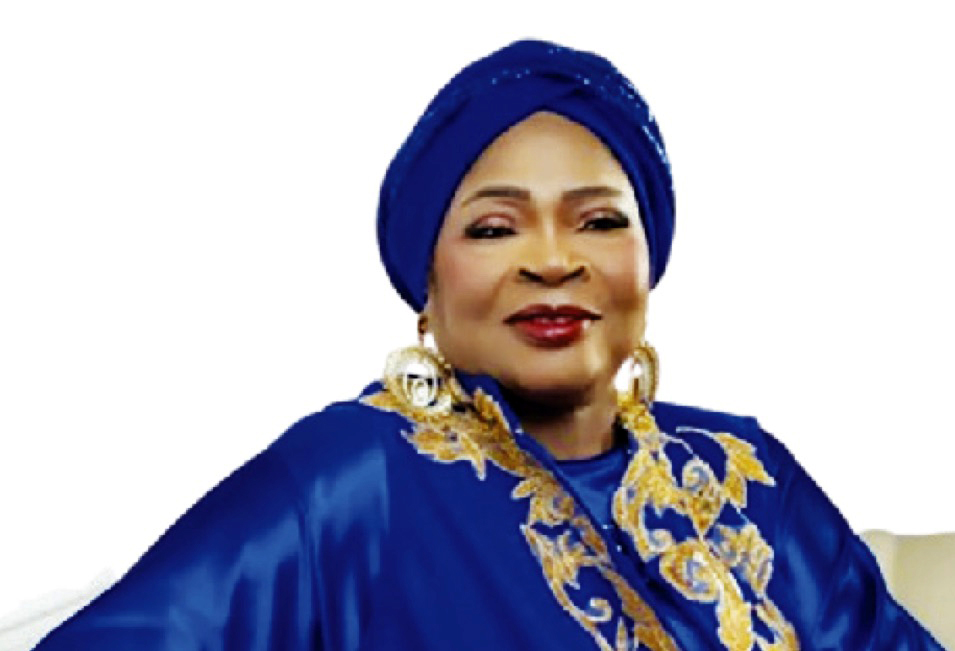
By Rita Okoye
Born on May 5, 1961, in Epe, Lagos State, with roots in Ijebu Waterside, Ogun State, Salawa Abeni Alidu rose to prominence as the first Yoruba female artist to sell over one million copies of an album in Nigeria.
Her groundbreaking 1976 debut album, Late General Murtala Ramat Mohammed, not only established her as a household name but also marked the beginning of an illustrious career spanning five decades.
In this interview with Saturday Sun, the veteran music icon reflects on her remarkable journey from working as a housemaid to becoming one of Nigeria’s most celebrated female musicians. She speaks on fame, sacrifice, industry challenges, royalties, the evolution of Nigerian music, and her enduring passion for storytelling through songs.
So far, how has 2026 been for you?
I’m good. We thank God for everything. We are working on a new song, and I’ll soon release a single.
What should fans expect from the upcoming track?
It will be about what’s happening in this country and life in general. Keep your fingers crossed; it will be released soon.
You became the first female Yoruba artist to sell over a million copies. How did you achieve that historic feat?
Well, you know, I was very young then. My first album was released in 1976, after the death of General Murtala Ramat Mohammed, who died 50 years ago. That means my first album was released 50 years ago. I released the album under the Lita Record Label. They said we sold over one million copies, but I did not receive any royalties. I was still a young girl then and living in the village with my husband.
Do you mean that up till now you have not received royalties from that album despite the high sales?
Not at all. I think that was the price I had to pay as a small girl who started her music career quite early. I didn’t know anything then. My job was to release songs and albums. Those people we formed the band with would say, ‘Do this, do that,’ and I would obey. I didn’t even know what royalties meant then. But thank God.
It is a blessing from Almighty God because my brother was a musician, and my father did not want another child from the same parents to join the industry. When I started playing music, my father didn’t like it either. He was very scared for me. It’s not like now, when anybody can start music. Back then, it was a struggle, especially for a small girl like me who knew nothing. My father would always tell my mother, “You are the one who knows where you brought this strange girl from. She hasn’t even reached 20 years old; she’s just about 14 or 15.”
You started music quite young…
When I started, I wasn’t even up to that age. I was 9 years old when I started. I was around 14 or 15 when I released my first album. So my father was very scared. He always told my mother, “You are the one who knows where you brought this girl from.” But in the end, he supported me.
I didn’t stay with him for long because I started my career in Igbogbo, Lagos State, under Epe Central, where I worked as a housemaid.
The people you worked for as a housemaid, how did they react to your interest in music; how did they allow you to go and record songs?
The couples were lovely people, Mr. and Mrs. Otun. The place where we rehearsed was right next door to our house. They encouraged me. Then our headmaster, Mr. Sobowale and his wife came to visit them and said, ‘This girl staying with you should go to school so that she can learn how to write.’
My journey began little by little. There was a programme on Radio Lagos that aired every night from 9 0’clock. The Yoruba programme was called Kalosun (Let’s Go and Sleep), and they played a lot of old music. I was very young then. I used to peep through people’s windows to watch them. When they noticed I came every night during moonlight, they stopped closing their windows.
Whenever musicians finished singing on the programme, the presenter would pray for them, and I would say to myself, ‘I would like to be a musician too, so people can pray for me and call my name — Salawa, Salawa, Salawa.’ I said it and added ‘Amen.’ That was how I started, my sister.
As a young girl, how did you tackle the challenges that came with being a female singer?
I just clocked 65 this month. I was not even 15 years old then. Late General Murtala Ramat Mohammed died in February, and I released my album around April or May that same year. I wasn’t yet 15 then.
But what were the challenges; it is not easy being a young female artist in a male-dominated industry. How did you overcome them?
It was a tug-of-war. I was not the only female singer then. I met people like Mama Batirah Lake, Adebukanla Jaworo, Mujida, Princess Olawunmi, and Princess Adetan. These women were old enough to be my mother. But it was still a tug-of-war. Honestly, I don’t even know how I made it, but what will be will be. What is destined can never be shaken.
Which of your songs brought you to the limelight; which one do you hold dearly for making you famous?
All my albums made me famous, but ‘Congratulations’ was the one people really loved. I think it is still trending today. Out of the more than 40 albums I have released, that song remains special.
You’ve spent decades in the industry. What key lessons do you think young artists should learn about music?
The young ones of today, including my son, who is also a rapper, should first of all be prayerful, cheerful, and strong. Whatever they want to compose, they should make it meaningful. These days, there’s a lot of slang in music, but they should still try to create songs with meaning.
Our kind of music back then was different from what Gen Z artists are doing now. I’m not against what they are doing. I’m happy for them, but they should understand what they are doing and make their music more meaningful.
There are many young artists now, like Davido, Wizkid, Burna Boy, Tiwa Savage, and Waje. Do you think they are making it difficult for veterans to get shows and events?
Not at all. I know where you are going with this, but not at all. We usually meet at shows. When they do their part, they call us, and sometimes they even ask us to perform first.
My own fans will dance for me, and their fans will dance for them. Those people you mentioned are like my children. Tiwa could be my daughter, and Wizkid and Davido are also my children. They are not disturbing me at all. They are very respectful.
How would you rate the current music industry compared to your early days?
Back then, life was freer. Nobody disturbed you. There were no bodyguards, police escorts, or convoys. But now, people embrace us more and show us respect. They also pay us well.
Another difference is that today’s artists are more educated and enlightened than we were when we started. There is less jealousy and less enmity. We see them as our children, and they respect us too. Female artists kneel to greet elders, while male artists prostrate.
But in those days, if two artists were invited to perform together, someone might use spiritual means against the other. You could open your mouth to sing, and nothing would come out, or blood might even come from your mouth.
Who were the top names you looked up to early in your career?
Chief Commander Ebenezer Obey; King Sunny Ade, and my late mentor, Dr. Sikiru Ayinde Barrister, whom I used to call ‘Daddy mi.’ There were also men like Peter, Prince Adekunle, and many others. For the women, I already mentioned Mama Batialake, Adebukanla Jaworo, Princess Olawunmi, Princess Mujida, and many more. Back then, whenever I heard their songs playing, I would say, ‘How I wish they would play my own songs too.’ I said ‘Amen’ to my dream without knowing it would become this big.
From being a housemaid to becoming famous, do you still relate to the family you worked for?
They are late now, but I still relate with their children. The husband died many years ago, while Mama died about three or four years ago. That’s why I used to call them Baba mi and Maami.
Last year, there were rumours that you had passed away. How did you feel about such news when you were still alive?
It is they who will pass on, not me. It is not yet my time. My mother died at the age of 90. How old am I? Just 65.
I wasn’t even in the country when the false news spread. I was in Canada. They did the same thing three times to our dear father, Chief Commander Ebenezer Obey. I was busy condemning them, not knowing they would come for me, too, along with some actors and actresses.
They do it for money. Why announce that a living person is dead? Thank God for a long life. It is they who will die.
Do you have plans to collaborate with any of these young artists?
Of course, yes. If they approach me, why not? There is a song Asake sang that I liked. I have never met him in person, but I listened to it, loved it, and remixed it. I posted it on my Instagram, and people kept commenting, ‘Asake, respond to mummy!’
Anybody who approaches me is welcome. This is what I know how to do, and I will continue doing it. May God continue to give our elders a long life. Chief Commander Ebenezer Obey is still singing, and Baba King Solaji will be 80 this year. We performed together last December at Eko Hotel. They all treat me like a daughter. Young artists are welcome. I don’t discriminate.
With economic and political challenges in the country, how do you stay inspired to create music?
Thank you. Personally, I am already working on a song about it. During (Gen. Ibrahim) Babangida’s regime, I also sang about the situation in the country. A house is not built in a day. I’m not a politician, and I’m not biased, but what is happening now did not start today. These things have been happening for a long time. We will continue to pray, and I will continue to sing about them.
Do you have plans to run for office?
No.











Leave a comment