



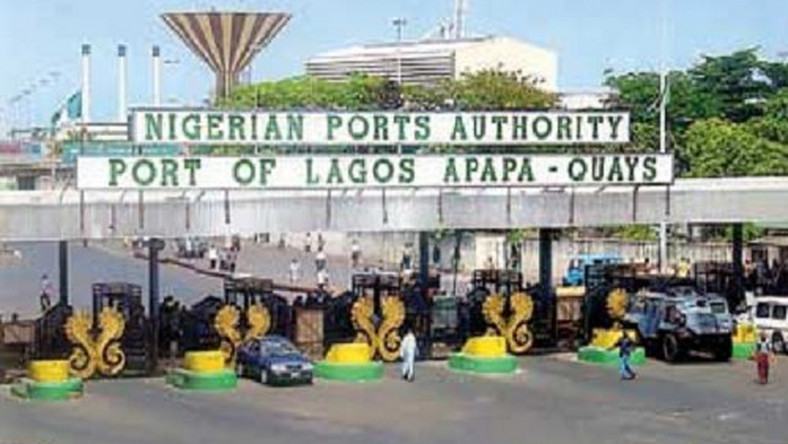
…Bigger ships, exports, reforms drive growth
Nigeria’s seaports recorded a strong start to 2026, with bigger ships, rising export activities and improved cargo movement driving growth across the maritime sector in the first quarter of the year.
Fresh operational figures released by the Nigerian Ports Authority (NPA) showed that Gross Registered Tonnage (GRT), a major indicator used to measure vessel carrying capacity, climbed by 19.5 per cent to 46.75 million in Q1 2026.
The development points to increasing traffic from larger vessels coming into Nigerian ports, a sign that global shipping companies are gaining more confidence in the country’s maritime sector.
The NPA, in its Q1 2026 Operational Performance Review, said the growth shows improving cargo efficiency and the gradual transformation of Nigeria into a major regional trade and logistics hub under the African Continental Free Trade Area (AfCFTA).
The report also linked the development to the growing operational influence of the Lekki Deep Sea Port, ongoing infrastructure upgrades and rising trade activities across the country.
Industry observers believe the increase in larger vessels is significant because bigger ships usually reduce shipping costs, improve cargo movement and attract more international trade business to ports.
The strong showing comes as the Federal Government intensifies efforts to modernise Nigeria’s ports, improve efficiency and position the country to capture a bigger share of cargo traffic in West Africa.
Managing Director of the NPA, Abubakar Dantsoho, recently stressed the need for Nigeria to urgently upgrade its maritime sector if it hopes to remain competitive in Africa’s rapidly expanding trade environment.
Speaking during an industry forum in Lagos, Dantsoho said countries that would dominate cargo movement under AfCFTA are those that embrace speed, innovation, efficiency and reliability.
“The time has come for a paradigm shift in the structure of Nigeria’s economy towards the full utilisation of our marine resources. Our port system, if properly harnessed, can serve as a major driver of economic growth,” he said.
Cargo throughput excluding crude oil terminals also posted healthy growth during the quarter.
According to the NPA report, total cargo handled at the ports rose by 11.6 per cent year-on-year to 32.38 million metric tons, compared to 29.02 million metric tons recorded during the same period in 2025.
The agency attributed the growth to stronger import and export activities, rising trade demand, improved cargo handling efficiency and sustained patronage of Nigerian ports.
One of the strongest areas of performance was export cargo movement.
Outward cargo traffic surged by 23.7 per cent to 14.13 million metric tons in Q1 2026, indicating stronger export activities and improved participation of Nigerian businesses in regional and global supply chains.
Analysts say the rise in export volumes may also reflect ongoing government efforts to diversify the economy away from crude oil dependence by encouraging non-oil exports.
Containerised export traffic recorded even sharper growth.
The report showed that outward laden container traffic rose massively by 67.6 per cent, increasing from 61,332 Twenty-foot Equivalent Units (TEUs) in Q1 2025 to 102,803 TEUs in the corresponding period this year.
The growth was largely attributed to improved export logistics, rising terminal efficiency and better cargo evacuation processes.
Vehicle importation also witnessed a major rebound during the period.
According to the NPA, total vehicle traffic jumped by 67 per cent to 58,870 units, compared to 35,262 units handled during the first quarter of 2025.
The increase suggests renewed activities within Nigeria’s automobile import market despite prevailing economic pressures and exchange rate challenges.
Another major highlight in the report was the sharp rise in transshipment activities.
The NPA disclosed that transshipment container traffic grew by 83.1 per cent during the quarter, an indication that Nigeria is gradually emerging as a preferred cargo redistribution centre within the West African region.
Transshipment involves cargoes brought into one port before being transferred to smaller vessels for delivery to other countries.
Industry experts say this development is important because it signals Nigeria’s growing strategic relevance in regional maritime trade, especially as AfCFTA continues to remove trade barriers across Africa.
The Federal Government’s ongoing maritime reforms have largely focused on infrastructure renewal, digitalisation and institutional restructuring aimed at transforming Nigeria into Africa’s leading maritime logistics destination.
President Bola Ahmed Tinubu’s administration has intensified efforts to tackle long-standing port inefficiencies that previously discouraged shipping lines and investors.
One of the key projects currently underway is the planned rehabilitation of the Lagos Port Complex and Tin Can Island Port following the signing of a Memorandum of Understanding for a $1 billion infrastructure overhaul.
The project is expected to address years of deteriorating port infrastructure, improve cargo handling speed and strengthen Nigeria’s competitiveness within the region.
Minister of Marine and Blue Economy, Adegboyega Oyetola, had also disclosed that procurement processes have commenced for upgrades at Warri, Port Harcourt, Onne and Calabar ports.
The government said the upgrades are part of efforts to ensure balanced port development across the country and reduce excessive pressure on Lagos ports.
In addition to physical infrastructure, authorities are aggressively pursuing digital reforms to simplify port operations and reduce delays.
These include the deployment of the Port Community System and the National Single Window platform designed to automate and streamline cargo clearance procedures.
Stakeholders believe the reforms could significantly cut the cost of doing business at Nigerian ports while improving transparency and turnaround time.
The government is equally investing in rail connections, inland dry ports, barging operations and export corridors to ease cargo evacuation challenges and reduce traffic congestion around port access roads.
Security improvements within Nigerian waters have also boosted investor confidence.
Nigeria has now gone more than four years without any recorded piracy incident within its territorial waters, a development widely credited to the Deep Blue Project and enhanced maritime surveillance operations.
The NPA said the first quarter performance demonstrates that Nigeria’s maritime sector is gradually becoming more commercially active, cargo-driven and capable of supporting broader economic growth.
Despite the encouraging figures, Dantsoho recently admitted that Nigeria still handles only about 25 per cent of cargo traffic within West Africa, even though the country accounts for more than 60 per cent of the region’s Gross Domestic Product (GDP).
He stressed that sustained reforms, infrastructure investment and operational efficiency remain critical if Nigeria hopes to fully unlock its maritime potential.
“With sustained commitment to these initiatives, Nigeria’s port system will enter a new phase and emerge as a leading maritime logistics hub in Africa,” he assured.














Leave a comment