



The Federal Government has said that there is a plan to reduce company income tax (CIT) from 30 per cent to 25 per cent.
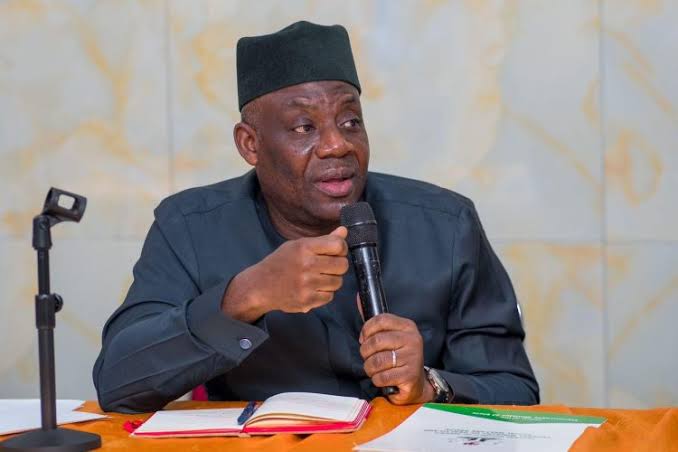
Speaking at the 28th Chartered Institute of Taxation of Nigeria’s (CITN’s) Annual Tax Conference, in Abuja, Tope Fasua who is the Special Adviser on Economic Affairs to President Bola Tinubu also said that anybody earning N1,000,000 and below per annum had been made to be tax-free, to walk away without taxation in Nigeria. Unfortunately, however, they don’t know that the new tax regime is for their benefit.
“They do not know that Micro Medium and Small Enterprises (MSMEs) earning N100,000,000 and below in turnover in a year are also tax-free. So, we have to continue to remind them. We have to continue to advise government. You are also interpreters of the law. You are educators. You are educators in every forum where you find yourself. You are administrators because people will come to some of you as tax consultants to pay their taxes. You must ensure that things are done properly. You are custodians of integrity within the fiscal system. That’s very, very important.
“The idea is to be able to move Nigeria’s tax-to-GDP ratio from 10 per cent, it used to be six per cent about three years ago, but now we are at 10 per cent. The destination in the interim is 18 per cent” he said. Fasua, who represented the vice president, emphasised that the idea of the new tax regime is not merely to generate revenue, observing that the issue of taxation has always been contentious since human beings started coming together.
“For those who remember the postulations of Thomas Hobbes, he talked about life being brutish, nasty, and short. And there was a time when human beings decided that let us come together so that we can defend ourselves as a group and vest our right for that self-defence in a government. Of course, taxation started around then because people needed to fund the government in order to do right” he stated
However, the Co-ordinating Minister of the Economy and Minister of Finance, Processor Taiwo Oyedele, who spoke virtually, explained that citizens are rapidly demanding greater accountability, fairness, transparency, and better public services. So, task systems cannot remain static because countries that do not modernise their fiscal framework may be left behind.
“In this environment, task systems can no longer remain static. Countries that fail to modernise their fiscal framework, risk losing competitiveness, discouraging investment, widening inequality, and weakening economic resilience” he said.
According to him, businesses face
a lot of impediments from inevitable enforcement and rising compliance costs. Citizens, he stated, often perceived the task system as unfair because the volume was unevenly distributed.
“At the same time, not very many remained insufficient relative to our development targets. This model became untenable and the system was simply unsustainable. The reforms we are implementing are therefore not without additional points of stake.
“They are built on a stronger fiscal foundation, a long-term national development. Now, let’s come to the philosophy behind reforms. Our approach is guided by a simple principle” he said ENDS














Leave a comment