



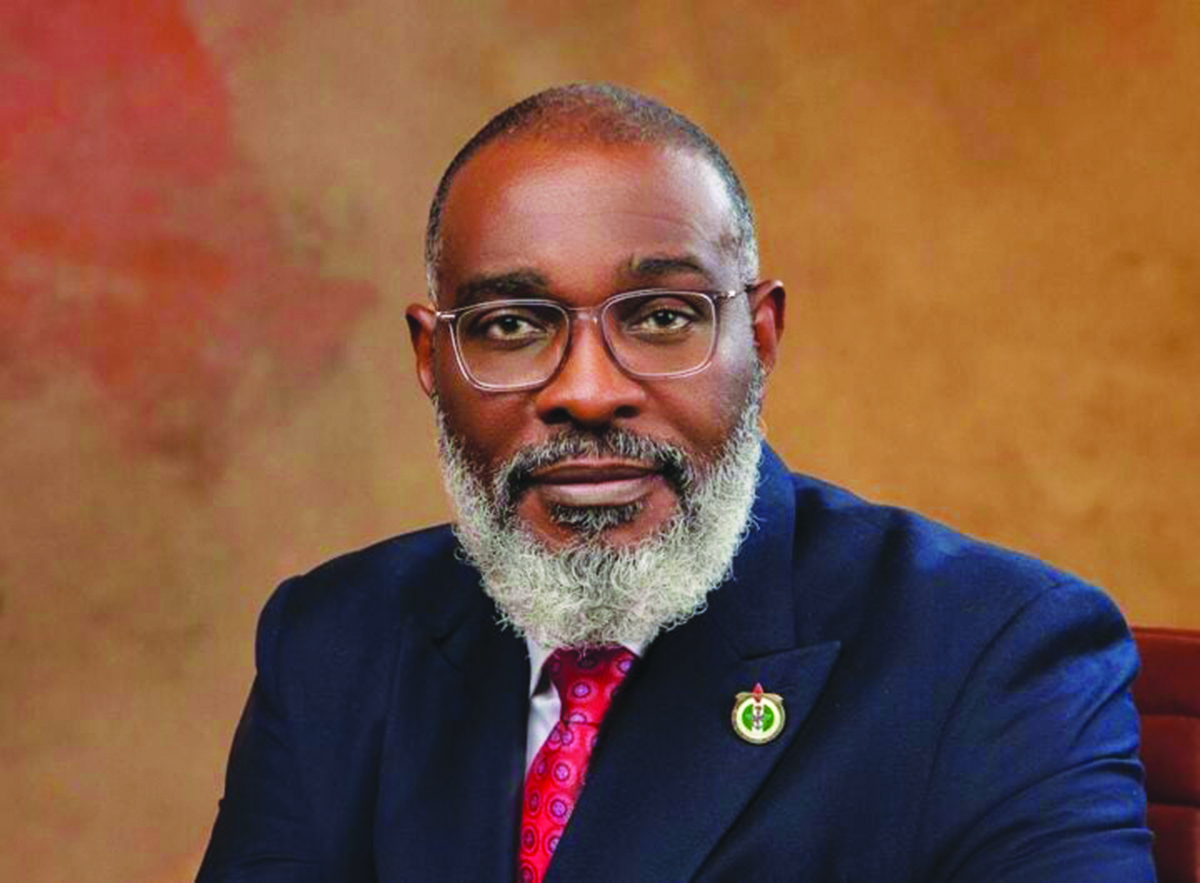
President Bola Tinubu’s latest effort to curb insecurity through the establishment of the Homeland Security Department has left critics wondering whether retired Major General Adeyinka Famadewa, appointed to lead the new department, will make any meaningful difference, Davidson Iriekpen reports
In a surprising move, President Bola Tinubu last week appointed Major General Adeyinka Famadewa (rtd.) as his Special Adviser on Homeland Security. The president expressed confidence that his appointment would deepen “coordination of homeland security initiatives, intelligence integration, and proactive risk management,” and urged him to deploy his wealth of experience in advancing the administration’s Renewed Hope Agenda.
According to the statement by the Office of the Secretary to the Government of the Federation (OSGF), the appointment was approved in recognition of Famadewa’s “exceptional record of service, strategic expertise, and outstanding contributions to Nigeria’s national security architecture.”
The statement added that the appointment “underscores the commitment of the administration of Bola Ahmed Tinubu to strengthening internal security coordination, enhancing intelligence-driven operations, and deepening inter-agency collaboration in addressing emerging security threats across the country.”
As a special adviser on homeland security, Famadewa would be tasked with enhancing the administration’s efforts to achieve a safer and more secure Nigeria through improved coordination of homeland security initiatives, intelligence integration, and proactive risk management, the OSGF said.
Before the announcement, Famadewa’s popularity was confined to the country’s defence and security circles. It was the announcement of his appointment that brought him to limelight
The appointment, however came as a surprise to many, who viewed it as another decorative addition in a security system that critics say has produced more structural adjustments than measurable improvements.
With over 30 years of experience in military service, Famadewa is believed to have a strong background in military intelligence, counter-terrorism operations, and national security strategy. He served as Principal General Staff Officer to the National Security Adviser (ONSA) between 2015 and 2021, and is credited with playing a key role in the establishment of the Intelligence Fusion Centre (IFC) under ONSA.
The IFC brings together major security agencies, including the Department of State Services (DSS), National Intelligence Agency (NIA), Defence Intelligence Agency (DIA), Nigeria Police Force, and the Armed Forces for coordinated intelligence sharing.
After his retirement, he worked as a Senior Research Fellow at the Nigerian Army Resource Centre, Abuja. His research focus includes policing, civil-security cooperation, and security sector reforms.
He authored a monograph titled “Policing and National Security in Nigeria”, focused on improving inter-agency collaboration. He is seen as a key figure in strengthening Nigeria’s intelligence coordination framework.
Famadewa has long been critical of Nigeria’s approach to tackling insecurity.
Once, he chose a 1990s hip-hop hit to vent his frustration. For instance, in a 2023 article, the veteran officer drew parallels between the country’s security architecture and Salt-N-Pepa’s ‘Let’s talk about sex’.
“To support this belief, the writer stated in the lyrics that the song would be prohibited by the radio services. However, surprisingly or even disappointingly enough, the song was all over the radios at that time because so much was said and yet, so little was said.
“The national security conversation in Nigeria for the last 15 years is akin to Salt-N-Pepa’s song on the aforementioned subject. While so much has been said about national security to the extent that it has influenced the decision of who sits at the apex of government in the revered Aso Rock Villa, the results we have consistently seen suggest that ‘yet, so little is said,’” Famadewa wrote.
Famadewa criticised the state’s over-dependence on the military as an all-encompassing solution to tackling insecurity and called for a multidimensional approach to mitigating threats. He also frowned on the absence of a clear definition of Nigeria’s national security and proposed a review of the country’s national security strategy.
No doubt his appointment has heightened expectations as many asking if he would implement his ideas on security.
While some state governors had created equivalent positions at the sub-national level, no previous Nigerian president had established a dedicated homeland security advisory role in the presidency.
In the states where governors have created equivalent positions, there hasn’t been respite for the resident as lives are not being wasted, but kidnappers are still having a field day in their nefarious activities.
The creation of the office marks a departure from Nigeria’s traditional security architecture, which has historically concentrated advisory functions within the National Security Adviser’s (NSA) office.
The question many are therefore asking is whether he can make a difference and break the cycle of the security challenges where successive service chiefs have failed?
“Many Nigerians are hoping that both the creation of the office and appointment of Famadewa is not another way of creating jobs for kinsmen, party loyalists, and supporters,” said one analyst.
Nigeria’s insecurity situation has continued to worsen over the years. Reports indicate that nearly 6,000 people have been killed across the country this year alone and thousands kidnapped.
The North remains the most afflicted, though the ripple effects are now felt in the southern part of the country
While the country has been contending with Boko Haram and Islamic State of West Africa Province (ISWAP) terrorist groups for over 15 years in the North-east geopolitical zone, a new group, Mahmuda, has come up in the North-central states of Kwara and Niger.
In parts of the North-west, the Lakurawa and Ansaru groups have gained notoriety, killing people and rustling cattle.
There is also al-Shabaab, whose members invaded Owo town in Ondo State and massacred over 40 worshippers.
In all of these, there are marauding bandits who pose a significant security threat. They are notorious for their brutality, as they attack villages, kidnap residents for ransom, and loot properties. All of this show how Nigeria’s map of insecurity keeps expanding.
Daily, communities are being ravaged by these criminal elements who operate with impunity. Kidnapping for ransom has become a thriving industry; farmers can no longer access their fields; and highways have been turned into danger zones.
For travellers, road journeys that once represented adventure now evoke dread. For many families, each day brings news of abductions, raids, and killings. This has exacerbated hardship and poverty in the country.
Due to heightened insecurity across the country in 2024 and 2025, President Tinubu in October 2025, sacked his former service chiefs and appointed a new set who he charged to reclaim peace, contain the spread of armed groups, and protect the nation’s fragile stability. From then till now, Nigerians have not seen any remarkable difference.
But since the assumption of office by the current service chiefs, insecurity has gone worse. Communities are not only still being constantly sacked, people are being kidnapped for huge ransom, soldiers and their commanders are killed, and military bases are being raided by terrorists.
While many believe that it is not the appointments of persons into positions that matter, such persons need to be supported with all that is necessary to make things work. Even the appointees, need to be sure that they know what it takes to make a difference.
Nigerians are in a hurry to celebrate peace. Security is an essential element without which everything is rendered meaningless.
For now, they are watching and waiting to see the difference Famadewa would make to bring peace to a troubled country.











Leave a comment