



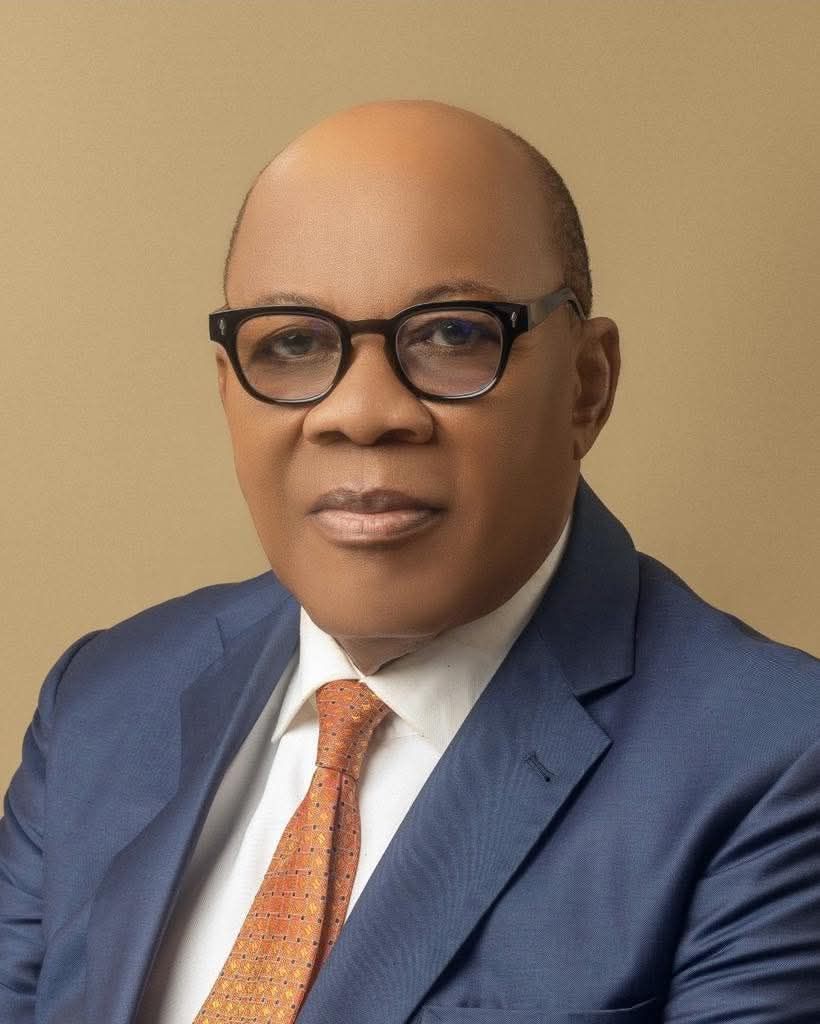
A former President of the Nigerian Bar Association, Olisa Agbakoba, has ignited widespread debate after declaring that a vast majority of Nigerian voters lack political awareness, warning that the country’s democracy is being undermined by weak institutions, poor leadership and fiscal indiscipline.
Agbakoba made the remarks on Monday during an interview on a public affairs programme in Ogun State, where he delivered a sweeping critique of governance, electoral behaviour and Nigeria’s rising debt profile.
The Senior Advocate of Nigeria said the nation’s core problem was no longer the absence of laws, but the persistent failure of leaders to obey them, stressing that institutional impunity had rendered even well-designed legal frameworks ineffective.
According to him, governance has drifted from public service to political survival, driven largely by money politics and elite interests, with dire consequences for economic stability and national development.
He said, “Nigeria’s challenge is not constitutional deficiency; it is the refusal of those in power to respect the law and manage public resources transparently.”
Agbakoba, however, commended President Bola Tinubu for pushing financial autonomy for local governments, describing the move as “brilliant,” but alleged that state governments were deliberately frustrating its implementation.
He noted that local councils, constitutionally responsible for grassroots development, had been weakened by undue interference and control of their funds by state authorities.
According to him, the failure to empower local governments has crippled service delivery in key areas such as primary healthcare, education and sanitation.
He lamented that many councils now exist mainly as political structures for mobilisation rather than functional institutions delivering tangible benefits to citizens.
On constitutional reforms, Agbakoba dismissed ongoing amendment debates as largely ineffective without leaders committed to the rule of law.
He argued that impunity had become entrenched in Nigeria’s governance system, with court orders frequently ignored when they conflict with government interests.
Drawing comparisons with advanced democracies, he said respect for judicial authority—not merely legal provisions—remains the foundation of functional governance.
“What Nigeria needs are leaders who understand and respect constitutional limits. Without that, reforms will achieve little,” he added.
The senior lawyer also decried what he described as a decline in the quality of Nigeria’s political class, warning that individuals with questionable records continue to access public office due to weak electoral scrutiny and the influence of money.
He said the current system rewards financial power and manipulation rather than competence and integrity, further weakening governance outcomes.
In a statement that has since triggered backlash, Agbakoba claimed that “99 per cent” of Nigerians with voter cards lack sufficient understanding of the electoral process.
He attributed this to widespread vote-buying and poor civic education, arguing that many politicians deliberately avoid educating voters to sustain political advantage.
The legal luminary suggested that Nigeria might need to consider stricter voter eligibility measures—an idea he acknowledged could be controversial.
His comments have since drawn mixed reactions, with critics warning that such views could undermine democratic inclusiveness.
On Nigeria’s rising debt, Agbakoba clarified that borrowing in itself was not inherently harmful, but warned against what he described as reckless and unproductive borrowing.
He called for a disciplined fiscal framework tied to measurable economic outcomes, as well as stronger oversight to curb revenue leakages.
According to him, loans should only be obtained for projects capable of generating returns sufficient for repayment.
He cited industrial investments by Aliko Dangote as an example of productive borrowing, contrasting it with what he described as government borrowing that benefits only a few.
Agbakoba urged President Tinubu to take firmer control of fiscal management and enforce accountability across key institutions, including the Central Bank and the Office of the Accountant-General.
“The issue is not borrowing; it is the lack of discipline and transparency in how borrowed funds are utilised,” he said.
Callers who participated in the programme largely echoed concerns over Nigeria’s fiscal direction and governance failures.
While some warned against the dangers of mounting debt without tangible returns, others criticised the continued importation of petroleum products despite Nigeria’s oil wealth..
 ‘
‘ ‘
‘Do you want to share a story with us? Do you want to advertise with us? Do you need publicity for a product, service, or event? Contact us on WhatsApp +2348183319097 Email: platformtimes@gmail.com
We are committed to impactful investigative journalism for human interest and social justice. Your donation will help us tell more stories. Kindly donate any amount HERE








Leave a comment