



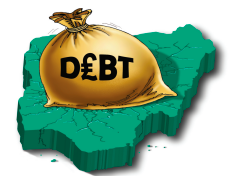
The reduction in Nigeria’s debt deserves cautious interpretation, contends FELIX OLADEJI
The recent report that Nigeria’s debt to the International Development Association (IDA) has declined to $18.5 billion has been presented as a positive signal within the country’s broader fiscal landscape. According to data from the World Bank, Nigeria’s outstanding obligations to the concessional lending arm fell by approximately $300 million within the review period, although the country still remains the third-largest IDA debtor globally. At face value, the reduction appears to reflect modest progress in debt management and fiscal adjustment. Yet beneath the optimism surrounding declining figures lies a more complex question: does a reduction in external debt necessarily indicate improving economic resilience, or does it merely reveal the difficult balancing act confronting developing economies like Nigeria?
Public debt occupies a complicated place within modern economic governance. For developing states, borrowing is often framed not simply as a financial necessity but as a developmental instrument—one used to finance infrastructure, stabilize economies, and support public investment where domestic revenue remains insufficient. Nigeria’s relationship with concessional lending institutions such as the IDA must therefore be understood within the broader realities of development financing, fiscal limitations, and structural economic dependency.
The significance of the latest figures lies partly in what they symbolize. In recent years, concerns about Nigeria’s rising debt profile have intensified amid growing pressure on public finances, exchange rate volatility, and debt servicing obligations. Any reduction in outstanding liabilities therefore offers the government an opportunity to project fiscal responsibility and reassure international financial institutions and investors about its economic management trajectory.
However, debt reduction figures alone reveal only part of the story. The deeper challenge is not merely the volume of borrowing, but the structural conditions that make borrowing persistently necessary. Nigeria continues to grapple with a narrow revenue base, heavy dependence on oil earnings, limited industrial productivity, and significant infrastructure deficits. In such an environment, external financing often becomes less a strategic choice than a recurring fiscal survival mechanism.
This reality reflects a broader paradox within developing economies. States are expected to invest in infrastructure, education, healthcare, energy systems, and economic diversification while simultaneously maintaining debt sustainability and fiscal discipline. Yet weak domestic revenue generation frequently constrains their ability to finance these priorities independently. Borrowing therefore becomes intertwined with the pursuit of development itself.
The IDA occupies a particularly important position within this framework because it provides concessional loans to lower-income countries at relatively favorable terms. Unlike commercial borrowing, IDA financing is structured to support long-term development objectives through lower interest rates and extended repayment periods. Nigeria’s continued reliance on such financing reflects both the scale of its developmental needs and the limitations of its domestic fiscal capacity.
At the same time, remaining among the world’s largest IDA debtors raises important questions about sustainability. Debt itself is not inherently problematic; what matters is whether borrowed resources generate productive economic returns capable of strengthening long-term growth and repayment capacity. The central issue therefore concerns the quality, efficiency, and developmental impact of public spending financed through debt.
Nigeria’s borrowing history has often been shaped by this tension between necessity and sustainability. While loans have supported infrastructure projects and budgetary stabilization, concerns persist regarding implementation efficiency, project continuity, and institutional accountability. Borrowing without corresponding improvements in productivity and governance risks deepening fiscal vulnerability rather than resolving it.
The issue of debt servicing further complicates the picture. In recent years, a significant portion of Nigeria’s public revenue has been directed toward servicing existing obligations, reducing fiscal space available for social investment and developmental spending. This dynamic creates a difficult cycle in which governments borrow to sustain development while simultaneously confronting rising repayment pressures that constrain future spending capacity.
Moreover, the global economic environment continues to place additional strain on developing economies. Rising interest rates, inflationary pressures, geopolitical instability, and fluctuating commodity markets have complicated fiscal management across much of the Global South. For countries like Nigeria, these external dynamics intensify the challenge of balancing development needs with debt sustainability.
The reduction in Nigeria’s IDA debt therefore deserves cautious interpretation. On one hand, it may indicate incremental progress in managing external obligations and improving fiscal coordination. On the other hand, the country’s continued position among the world’s largest concessional borrowers underscores the scale of unresolved structural economic challenges.
Importantly, debt discussions should not be reduced to simplistic narratives of either alarm or celebration. Developing economies require investment, and investment often requires financing. The more critical question is whether borrowing contributes to long-term productive transformation or merely sustains short-term fiscal management without addressing underlying vulnerabilities.
This is where governance becomes central. Sustainable debt management depends not only on reducing liabilities but also on strengthening domestic institutions, expanding revenue generation, improving industrial productivity, and ensuring transparency in public expenditure. Without these structural reforms, debt reduction risks becoming temporary rather than transformative.
The conversation also highlights broader questions about development itself. Many African economies continue to operate within international financial structures that require external borrowing to finance basic developmental priorities. This dependence reflects enduring inequalities within the global economic system, where access to capital and development financing remains unevenly distributed.
Ultimately, the significance of Nigeria’s declining IDA debt lies not simply in the numerical reduction, but in what it reveals about the country’s broader economic trajectory. Fiscal sustainability cannot be measured solely through borrowing figures; it must also be assessed through institutional capacity, productive growth, and the ability of the economy to generate inclusive opportunities for its population.
If Nigeria is to move beyond cycles of recurring debt dependence, the focus must shift from managing borrowing alone to building a more resilient and diversified economic structure. Debt reduction may provide temporary reassurance, but long-term stability will depend on whether the country can strengthen the foundations of sustainable development itself.
Oladeji writes from
Lagos














Leave a comment