



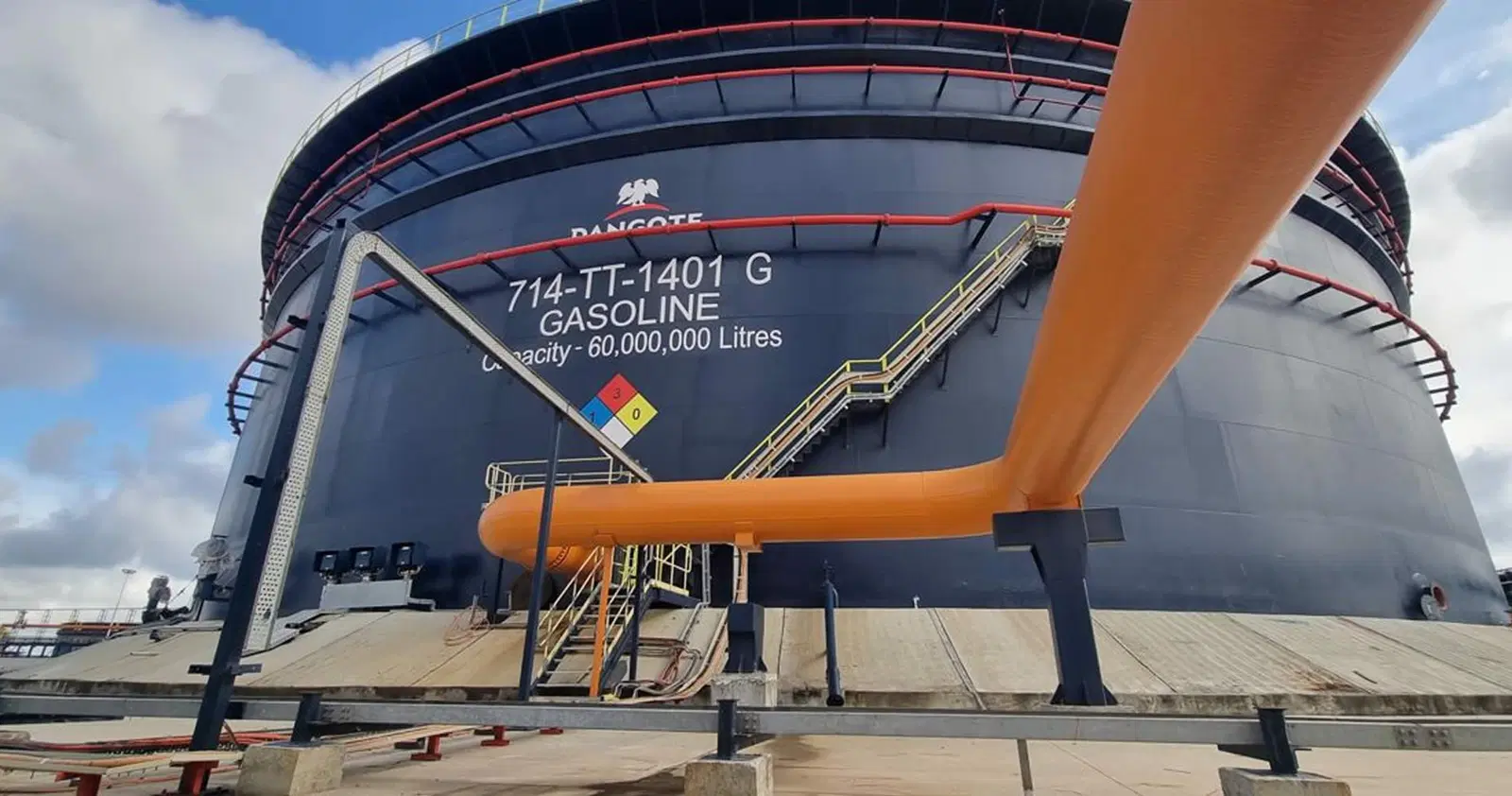
The Office of the Attorney General of the Federation (AGF) has taken charge of a coordinated legal defence as the federal government, alongside the Nigerian National Petroleum Company Limited and key regulatory agencies, moves to resist a fresh lawsuit filed by Dangote Refinery challenging petroleum import licensing in Nigeria.
The suit, marked FHC/L/CS/857/2026 before the Federal High Court in Lagos, has escalated tensions in the downstream petroleum sector, reopening debate over fuel importation, domestic refining capacity, and crude supply obligations.
Dangote Refinery is asking the court to stop the issuance and renewal of licences for Premium Motor Spirit, Automotive Gas Oil and Jet A1, arguing that its refinery is now capable of meeting Nigeria’s full domestic fuel demand. It further alleges that relevant government agencies, including NNPC Ltd., have failed to guarantee adequate crude oil supply to sustain its operations.
However, filings now before the AGF show that the Federal Government is firmly opposing the suit, with the Attorney General leading the defence after requesting formal responses from NNPC Ltd. and other agencies following a court order directing all parties to maintain the status quo.
NNPC Ltd., in its submission to the AGF, rejected Dangote’s claims and warned that the reliefs being sought could destabilise national fuel security, disrupt emergency supply arrangements, and weaken Nigeria’s strategic distribution system under the Petroleum Industry Act (PIA).
The Federal High Court had earlier on April 29 ordered parties to maintain the status quo, with NNPC formally served on May 4. The AGF subsequently requested its position on May 7 ahead of a scheduled hearing on May 13, prompting a detailed response the following day.
In its defence, NNPC argued that the current case closely mirrors an earlier suit filed in 2024—FHC/ABJ/CS/1324/2024—which was later withdrawn after what sources described as a strong legal pushback from defendants.
The company further contended that the new suit is effectively an attempt to reintroduce similar claims under Sections 317(8) and 317(9) of the PIA. It is also seeking joinder as a necessary party while challenging the legal competence of the case.
NNPC maintained that Section 317(9) of the PIA cannot operate in isolation without a formally activated Backward Integration Policy under Section 317(8), stressing that no gazetted policy or official directive currently exists to trigger such provisions.
It also argued that the cited provisions cannot apply to NNPC Ltd. given its existing trading activities and equity interests in the Port Harcourt, Warri, and Kaduna refineries.
In support of the AGF-led defence, NNPC emphasised that under Section 64(m) of the PIA, it remains the statutory supplier of last resort, a role that requires continuous import planning, strategic reserves, and nationwide distribution readiness to prevent fuel shortages and ensure stability.
Officials familiar with the matter said NNPC warned the AGF that granting Dangote Refinery’s requests could significantly weaken Nigeria’s ability to respond to fuel emergencies or sudden supply disruptions.
The company also insisted that NNPC Ltd., the Nigerian Midstream and Downstream Petroleum Regulatory Authority, and the Nigerian Upstream Petroleum Regulatory Commission are necessary parties in the suit due to their central roles in crude allocation, import planning, refinery operations, storage systems, and national fuel distribution management.
Industry observers say the case could reshape Nigeria’s petroleum supply structure, redefine competition in the downstream sector, and determine the future balance between domestic refining ambitions and import reliance.












Leave a comment