



From Uche Usim, Washington DC
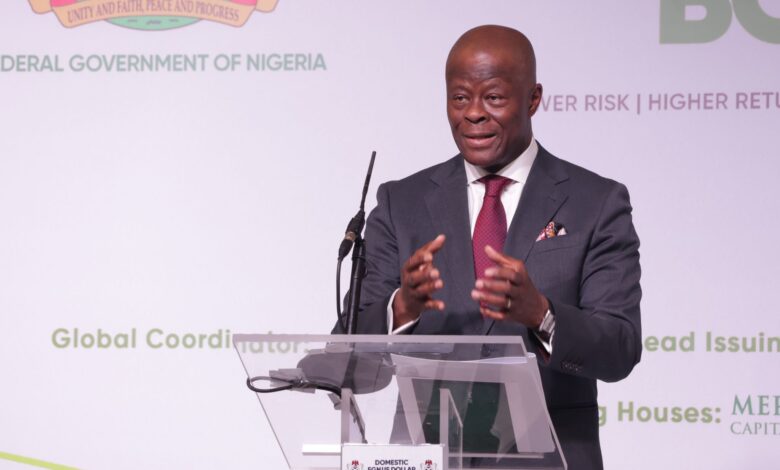
Nigeria’s Minister of Finance, Wale Edun, is intensifying efforts to rally international support as the country grapples with the mixed impact of rising oil revenues and persistent inflation pressures triggered by the ongoing Middle East conflict.
Ahead of the IMF/World Bank Spring Meetings 2026 in Washington, DC, the Federal Ministry of Finance outlined three core priorities that will guide Nigeria’s engagements with global financial stakeholders. These include restoring macroeconomic stability, easing tightening global financing conditions and strengthening social protection in the face of rising living costs.
Edun acknowledged that higher crude oil prices present a fiscal upside for Nigeria through improved foreign exchange earnings and increased government revenue. However, he warned that the gains are being partly offset by imported inflation, which is pushing up costs across key sectors of the economy.
Central to Nigeria’s pitch is a call for stronger international cooperation as the country navigates a delicate economic transition.
Authorities say Nigeria is simultaneously confronting external shocks and implementing sweeping domestic reforms aimed at stabilising the economy and restoring investor confidence.
Leading the Nigerian delegation, Edun said the country will advocate for lower cost of capital, fairer global financial conditions, and enhanced support for developing economies facing similar external shocks. He stressed that such interventions are vital to easing fiscal pressure, attracting long-term investment, and ensuring that ongoing reforms deliver tangible welfare gains.
He further noted that inflation driven by geopolitical tensions remains a major concern, particularly as it erodes household purchasing power and complicates efforts to reduce poverty.
Nigeria is also seeking continued backing from multilateral institutions, including the World Bank and the International Monetary Fund, as well as private investors, to sustain its reform agenda.
During the Spring Meetings, Edun is expected to engage global finance leaders, development partners, and institutional investors, positioning Nigeria within wider discussions on global liquidity, debt sustainability, and economic resilience amid rising geopolitical uncertainty.
Despite the upside from elevated crude prices, the government admitted that domestic pressures remain severe. Petrol prices have jumped by more than 50%, rising from about N890–N900 per litre to between N1,260 and N1,330, while diesel has surged over 70%, peaking at about N1,550 per litre.
The wider global fallout is also weighing on emerging markets. Investors are increasingly moving capital into safe-haven assets, tightening liquidity conditions for economies like Nigeria. At the same time, disruptions to global shipping routes are driving up freight and logistics costs, further fuelling import-driven inflation.
However, the government maintains that Nigeria is better positioned to absorb global shocks following a series of reforms introduced since 2023. These include fuel subsidy removal, exchange rate unification, adoption of a more market-reflective currency system and steps to strengthen fiscal governance and economic institutions.
Officials argue that while Nigeria remains exposed to external volatility, these reforms have significantly improved resilience and policy flexibility. The next phase of the economic strategy, they say, will focus on shifting from stabilisation to growth by unlocking private investment, deepening domestic capital markets, and promoting job-creating sectors.
Nigeria is also looking to leverage the African Continental Free Trade Area (AfCFTA) to expand regional trade, attract cross-border investment, and strengthen economic integration across Africa.
Meanwhile, the International Monetary Fund has warned of possible downward revisions to global growth forecasts, citing escalating tensions between the United States and Iran. IMF Managing Director Kristalina Georgieva noted that the global economy is experiencing uneven shocks and cautioned that prices are unlikely to return quickly to pre-conflict levels.
Against this backdrop, Nigeria’s engagement in Washington is focused on strengthening financial buffers, attracting investment inflows, and securing global backing to navigate an increasingly uncertain economic environment.














Leave a comment