



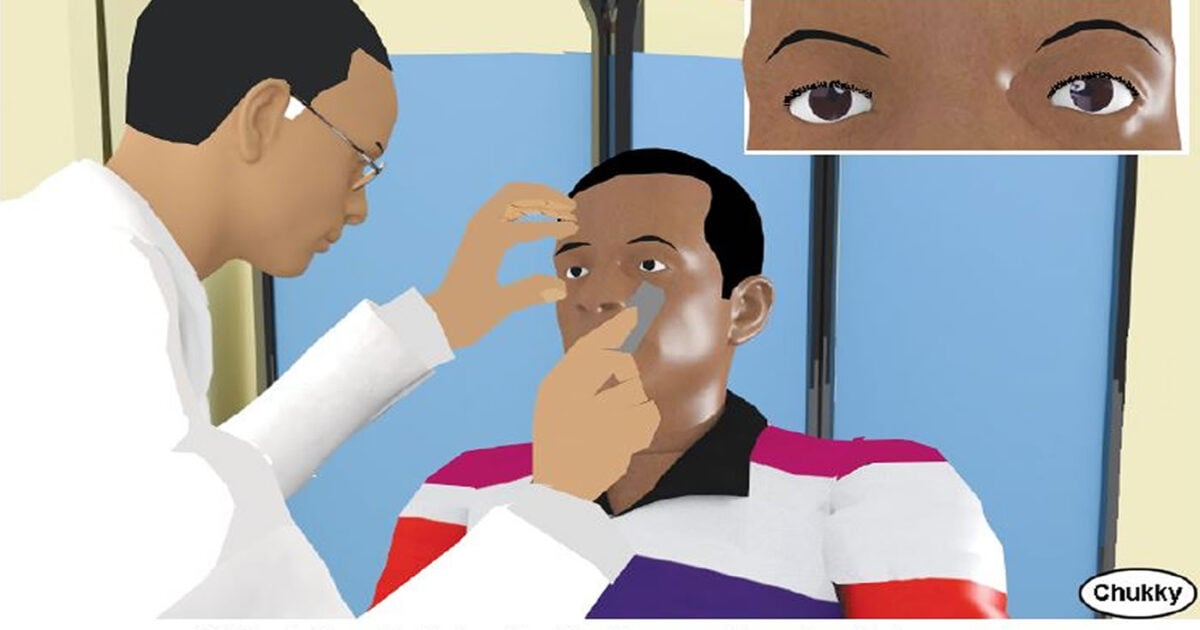

The eye has long been metaphorically described as the “light of the body” in a religious and philosophical sense.
Scientifically, the phrase is accurate, as the eye is the sensory organ that captures light from the surrounding environment and converts it into a form the brain can use to create vision.
However, the World Health Organisation estimates that globally, at least one billion people have near or distance vision impairments that could have been prevented or have yet to be addressed.
The global agency noted that without timely detection, reduced or absent eyesight can have long-term personal and economic consequences.
The impact of vision impairment is particularly profound in low- and middle-income countries, where access to essential eye care services is limited.
Experts have observed that certain habits common in modern life may negatively affect eye health.
For instance, the digital and social media age has made prolonged screen time common. This requires the eye’s focusing muscles (ciliary muscles) to remain in a constant state of contraction to focus on near objects.
This sustained effort can lead to muscle fatigue and temporary spasms, resulting in eye strain and temporary blurred distance vision after looking away.
Additionally, focusing on digital screens reduces the natural blink rate by 50 per cent or more, from an average of 15–20 blinks per minute to just five to seven, causing the tear film to evaporate quickly, leading to dry eyes, irritation, and a gritty sensation.
Holding devices too close to the eyes, especially during critical developmental years, can elongate the eyeball, making distant objects appear blurry.
High-energy blue light from digital screens can scatter more easily in the eye, reducing visual contrast and forcing the eyes to work harder.
In October last year, the Chairman of the Eye Health Committee of the Nigerian Medical Association, Prof Afekhide Omoti, urged Nigerians to adopt healthier lifestyle habits to protect their vision and prevent avoidable blindness.
He emphasised that eye health should be regarded as a human right and a cornerstone of national development, noting that poor vision limits education, work, and social inclusion.
Fortunately, half of all eyesight issues and even vision loss can be prevented through early diagnosis, treatment, and maintaining a healthy lifestyle.
Here are some tips to help improve your vision:
Eat eye-healthy foods
”Eat fruit rich in vitamins A and C, such as carrots and watermelons. Vitamin A helps with corneal re-epithelisation and also the production of retinal pigment epithelium. Vitamin A and Vitamin C are also antioxidants that help mop up free radicals that can damage the eyes,” advised a medical practitioner, Dr Babatunde Akande.
Nuts and dried fruits have also been found to contain important nutrients that support eye health in various ways.
Take screen breaks
“Staring at screens of phones and laptops for long periods can cause digital eye strain,” Akande noted. He recommended that people practice the 20-20-20 rule for their eyes.
“For every 20 minutes you look at your phone or system, look at an object 20 feet away or far away for 20 seconds.
“This reduces strain on your eye muscles, reduces too much convergence for accommodation on near objects and helps redistribute tears to moisten the eyes.”
Wear protective eyewear
“Wear protective eyewear if you use a laptop or smartphone regularly. The same applies if you are a biker or ride commercial bikes occasionally.
“Also, protect your eyes from UV rays with sunglasses, and use safety glasses for sports or hazardous activities to prevent damage,” advised an eye-care professional, Ayokunle Dauda.
Avoid smoking
Dauda explained that smoking increases the risk of serious, sight-threatening conditions like Age-Related Macular Degeneration, which destroys central vision, and cataracts, which cause blurry vision.
“Quitting smoking benefits overall health, including the tiny blood vessels in your eyes, reducing risks for conditions like diabetic retinopathy,” he added.
Get regular eye examinations
”Regular eye check every year for early diagnosis and management of eye conditions like glaucoma, which could cause irreversible loss of vision,” Akande advised.
He also warned against the danger of self-medication. “Don’t put dangerous substances in your eyes like salt water, urine, breast milk, kerosene, battery water, paw paw water, etc.,” Akande added.
















Leave a comment