



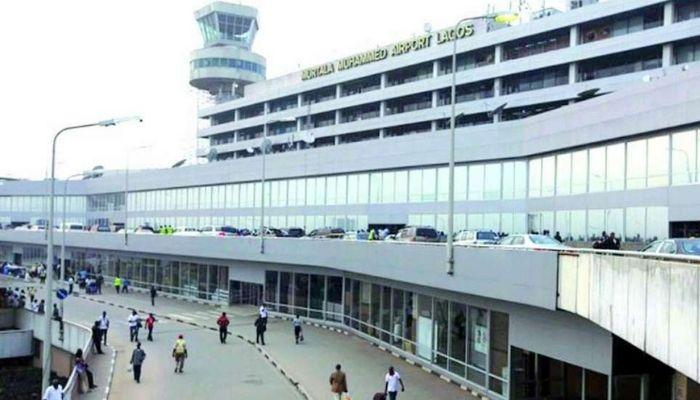
FACTFILE with Lanre Alfred
There is a particular kind of humiliation that belies drama. It slips in quietly, somewhere between boarding gate announcements and the stale chill of recycled cabin air. It is the humiliation of realising, yet again, that the rules change when the flight departs from Lagos, Abuja or Port Harcourt. That the same airline which treats you like a valued global citizen in London, Dubai, Morocco, or Atlanta suddenly regards you as excess baggage the moment your journey originates from Nigeria.
I have flown enough to know the difference between turbulence and turbulence of attitude. I have experienced the polished charm of airline hospitality abroad and then braced myself for the subtle downgrade that seems to occur on the return leg home. And before anyone accuses me of exaggeration, let me say this: this is not an isolated complaint from one disgruntled passenger nursing a bruised ego. This is a pattern whispered in lounges, dissected at dinner tables in Ikoyi and Maitama, and exchanged knowingly among frequent flyers who have memorised seat maps and aircraft codes like second languages.
Something shifts when the departure board reads Nigeria.
Let us begin with the obvious theatre of disparity. On flights inbound to Nigeria from global hubs, you are likely to find newer aircraft, cleaner cabins, crew members who smile with their eyes, and service that, while not extraordinary, is competent and courteous. The wine is poured without attitude. The requests are handled without sighs. You feel, if only briefly, like the fare you paid meant something.
Then comes the outbound experience. The plane is suddenly older, the cabin visibly tired. The seats recline with reluctance. The overhead bins look like they have survived a minor war. The entertainment screens blink with a nostalgia no one asked for. It is as if the airline rummaged through its fleet and decided that Nigeria could manage with the aircraft equivalent of a hand-me-down.
We notice these things. Nigerians are not naïve travellers dazzled by winged machinery. Many of us have flown extensively. We know what a well-maintained Boeing or Airbus feels like. We know when an aircraft has been rotated from prime routes to secondary ones. We know the difference between industry-standard service and what I can only describe as operational indifference.
And please, let us retire the convenient excuse about infrastructure. Yes, Nigeria may not accommodate the double-decker spectacle of the A380 in every airport, but that is hardly the issue. No one is demanding chandeliers at 35,000 feet. What we are asking for is parity. The inability to host a particular aircraft model does not justify assigning visibly older, poorly maintained planes to Nigerian routes when newer options exist within the same fleet category.
What stings most, however, is not the age of the aircraft but the atmosphere onboard. There is a subtle recalibration of tone once the manifest is predominantly Nigerian. Courtesy becomes conditional. Warmth becomes scarce. Economy class passengers in particular are treated like an inconvenience that must be endured rather than customers who have paid, often dearly, for the right to occupy their seats.
Let us talk about fares, because money has a way of clarifying hypocrisy. Nigerians frequently pay comparable, sometimes higher, prices for tickets than passengers departing from Europe or the Middle East on similar routes. Exchange rates are unforgiving. Taxes are layered. Demand is high. Yet the product delivered often feels discounted.
Why does the service shrink when the revenue does not?
There is a quiet hierarchy in the skies. Business and first-class passengers, regardless of nationality, tend to receive a baseline of respect because their tickets command it. Even then, I have heard stories of subtle shifts in attitude when the cabin is filled with Nigerians in premium seats. The surprise on some faces when a Nigerian passenger requests a particular wine or inquires about meal ingredients can be faint but detectable, as though sophistication were an imported trait rather than an indigenous reality.
In economy class, the disparity is harder to disguise. Announcements are barked rather than delivered. Questions are met with impatience. Requests for basic amenities are treated as bothersome interruptions. There is a performative politeness that barely conceals irritation. And while airline staff everywhere deal with difficult passengers, it is disingenuous to suggest that such challenges are unique to Nigeria.
Yes, let us address the elephant in the cabin. Some Nigerian travellers carry ambitious hand luggage. Some argue loudly on their phones until the aircraft door is practically closing. Some test the limits of baggage allowances with admirable creativity. These habits can frustrate crew members and disrupt boarding efficiency. I have seen it. I have winced at it.
Anyone who has flown out of New York during peak season or navigated a crowded European holiday route knows that entitlement and excess are global traits. Airlines train their staff precisely to manage such scenarios with professionalism. Operational challenges do not excuse collective disdain.
There is a difference between enforcing rules and wielding them as weapons. On certain outbound flights from Nigeria, the line blurs. Luggage is policed with a zeal that feels punitive. Tone becomes sharp. Smiles evaporate. The message, implicit but unmistakable, is that you are fortunate to be here at all.
And that is where the insult crystallises. Nigeria is not a charity case in global aviation. It is one of Africa’s largest travel markets. Our diaspora is vast and mobile. Our business class is robust. Our appetite for international travel is not a passing trend but an established fact. Airlines compete fiercely for Nigerian passengers because we fill seats consistently. We sustain routes. Yet the respect accorded to us does not always reflect this commercial reality.
I have often wondered whether this disparity is the result of internal route economics, where airlines assume that Nigerian demand is relatively inelastic and therefore less sensitive to service variations. If passengers will continue to fly regardless, the incentive to maintain premium standards weakens. It is a cold calculus, but corporations are not sentimental institutions.
There may also be unconscious bias at play, a residual cocktail of stereotypes about African travellers that quietly informs expectations and behaviours. The assumption that standards can be relaxed because complaints will be muted or fragmented. The belief that indignation will dissipate in private conversations rather than coalesce into sustained consumer pressure.
But Nigerians are not as passive as some airlines might hope.
Social media has become an unofficial tribunal. Stories of shoddy treatment travel faster than aircraft. Photographs of outdated cabins, screenshots of dismissive responses, and detailed accounts of poor service circulate widely. The brand damage is real, even if airlines prefer to measure impact in quarterly reports rather than reputational bruises.
What fascinates me is how inbound flights often tell a different story. When crew members board in Paris, Frankfurt, New York, Kigali, London or Doha for the leg to Lagos, the service frequently aligns with global norms. The same airline, the same corporate manual, the same brand promise. The contrast suggests that the problem is not structural incapacity but selective execution.
Which raises uncomfortable questions. Are the crews flying to and from Nigeria given the same training and oversight as their counterparts abroad? Are aircraft rotations to Nigeria influenced by internal hierarchies of route prestige? Is there an implicit ranking system in which certain destinations are deemed worthy of flagship service while others are assigned leftovers?
We deserve transparency on these issues.
This conversation is not about wounded pride; it is about consumer rights and market dignity. When you pay for a service, you are entitled to the standard advertised, not a diluted version calibrated to your passport. The global aviation industry prides itself on consistency. A brand that promises excellence cannot afford to deliver it selectively.
I also believe that part of the responsibility rests with us. Nigerians are quick to adapt to inconvenience. We shrug, laugh, and move on. We normalise what should be unacceptable. We tell ourselves that at least we arrived safely, as though safety and dignity are mutually exclusive luxuries. We do not escalate complaints systematically. We rarely demand accountability beyond fleeting outrage.
Airlines notice this tolerance.
Imagine if Nigerian passengers documented disparities meticulously, lodged formal complaints consistently, and leveraged consumer protection channels strategically. Imagine if corporate offices were inundated with structured feedback rather than sporadic rants. Markets respond to organised pressure.
There is also a role for regulators. Aviation authorities in Nigeria must be more assertive in monitoring not just safety compliance but service standards on international routes. Bilateral air service agreements are not merely about frequencies and landing rights; they are about reciprocal respect. A country that provides market access should expect fair treatment of its citizens.
Some will argue that this is an overreaction, that service variability is a global phenomenon and not uniquely Nigerian. To them I say: frequency matters. Patterns matter. When the same downgrade appears consistently on flights departing from one country, it ceases to be anecdotal.
I remember a particular journey from Lagos to a European capital. The aircraft felt weary before we even taxied. The cabin crew moved with a stiffness that suggested they were enduring rather than serving. A simple request for water was met with visible irritation. Yet on the connecting flight onward to North America, the atmosphere transformed. Smiles reappeared. Attentiveness returned. The difference was so stark it felt choreographed.
I found myself wondering whether respect, in aviation, is geographically assigned.
Let us be clear: this is not an indictment of every airline or every crew member. There are professionals who uphold standards regardless of route. There are flights departing Nigeria that meet expectations. But the inconsistency itself is the problem. A global brand should not feel like a lottery.
The tragedy of this disparity is psychological as much as practical. Travel is inherently vulnerable. We surrender control at airports. We trust strangers with our safety. We sit in confined spaces for hours, dependent on the competence and goodwill of others. In that suspended world above the clouds, dignity matters profoundly.
When an airline communicates, subtly or overtly, that your comfort is secondary because of where you began your journey, it chips away at something deeper than brand loyalty. It reinforces a hierarchy of worth that many Nigerians already battle in global spaces.
I am not asking for special treatment. I am asking for equal treatment. Airlines must confront this issue honestly by auditing aircraft allocations to Nigerian routes. They can evaluate crew performance metrics comparatively across departure points, solicit anonymous passenger feedback specifically on outbound experiences and publish commitments to service parity and track compliance.
The commercial logic is compelling. Nigeria’s travel market will only expand. A rising middle class, a dynamic diaspora, and increasing business connectivity make our skies lucrative. Airlines that treat Nigerian passengers with respect will not merely earn revenue; they will secure loyalty. And loyalty, in aviation, is gold. For Nigerian travellers, the task is to demand better without theatrics but with persistence. Travellers should document experiences, engage airlines formally and support carriers that demonstrate consistency. Nigerian travellers should, henceforth, refuse to internalise substandard treatment as inevitable.
We are not excess cargo. We are customers. The runway from Nigeria should not be a corridor of diminished expectations. It should be a departure point like any other in the global network, governed by the same standards, animated by the same professionalism, and infused with the same respect.
Until that parity becomes routine rather than exceptional, I will continue to raise this inconvenient conversation in drawing rooms and departure lounges alike. Because dignity at 35,000 feet is not a luxury add-on. It is part of the ticket price.
And Nigerians, whatever cabin we occupy, have paid in full.















Leave a comment