



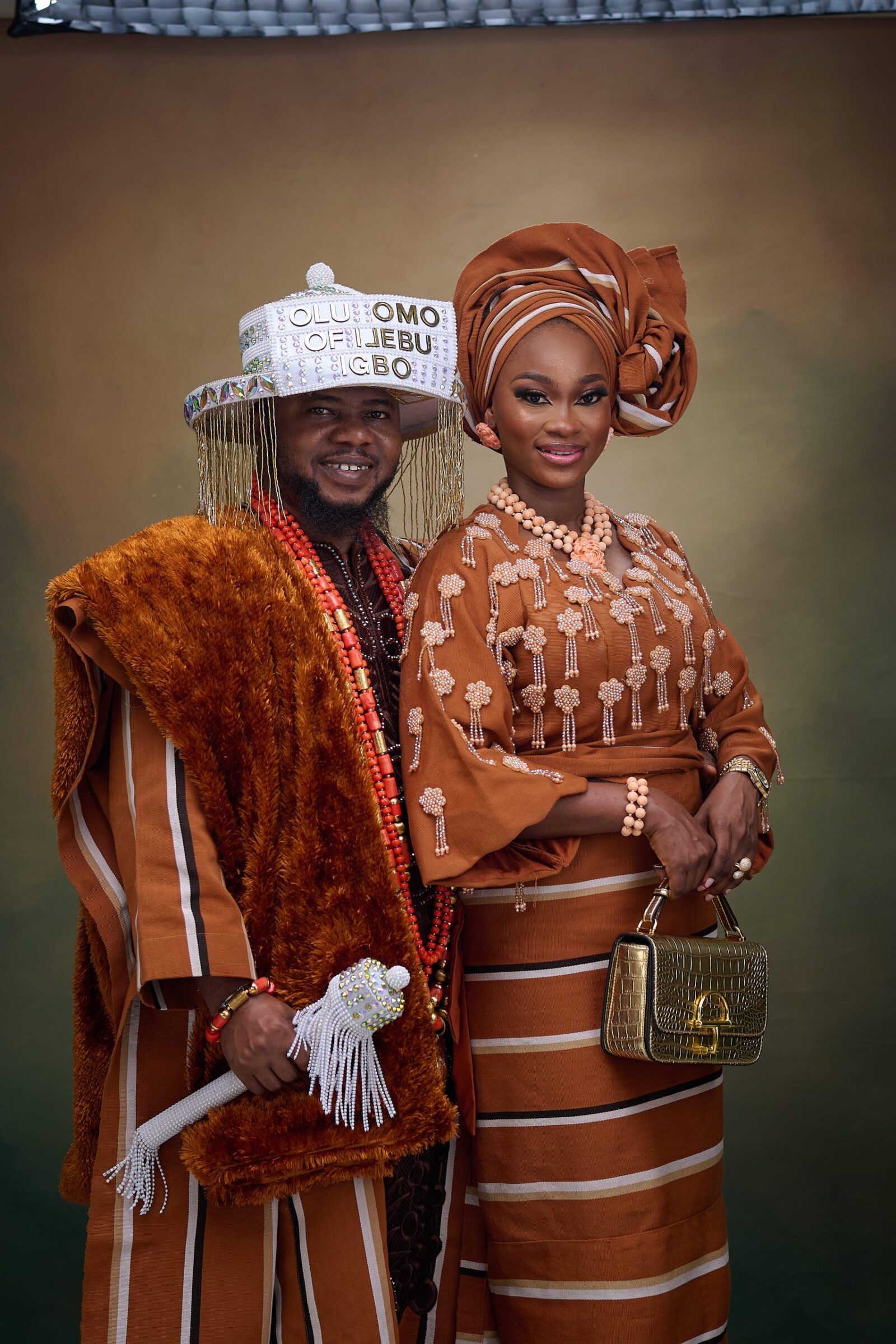
Nume Ekeghe writes on the journey to the stool of Olu Omo of Ijebu Igbo, examining how enterprise, integrity and community service shaped Alhaji Olawale Abiodun Lawal Abinugbola into a modern traditional leader
By any measure, the journey of Alhaji Olawale Abiodun Lawal Abinugbola is one of audacity, foresight and deep-rooted loyalty to community. It is the story of a young man who took an industry long dismissed as crude and unstructured and, with discipline and vision, turned it into a modern, globally connected enterprise, lifting an entire town along with him.
On February 5, 2026, when the Orimolusi of Ijebu Igbo installs him as the Olu Omo of Ijebu Igbo at the palace, the moment will not merely crown a businessman. It symbolised the recognition of a son who carried his people on his back, transformed their dominant trade, and returned prosperity and pride to its source.
Born Into Trade, Trained for Transformation
Abinugbola’s story begins not in boardrooms or foreign markets, but beside his mother, Alhaja Bello Olorunbunmi Rasheedat, in the hides and skins trade. From infancy, he watched, learned and absorbed the rhythms of the business—its negotiations, its risks, its resilience. Yet even then, he was clear about one thing: he never wanted paid employment.
That passion for enterprise was sharpened by formal education. Armed with a degree in Business Administration from Babcock University, he returned not to abandon the family trade, but to radically reimagine it. His mother operated at the lowest rung of the supply chain. His ambition was to scale it structurally, geographically and reputationally.
In 2015, in what would become a defining inflection point, Abinugbola made an intentional leap. He researched sourcing, pricing and global supply routes, obtained his first international passport, and travelled solely to understand how to take the business beyond local buying and selling. That decision marked the birth of a new era for the hides and skins industry in Ijebu Igbo.
Opening the World to Ijebu Igbo
Today, Abinugbola controls about 60 per cent of Nigeria’s hides and skins market, making him the dominant player in the sector. More significantly, he was the first in Ijebu Igbo to import hides and skins directly by container, bypassing middlemen and opening international channels previously thought inaccessible.
By sourcing superior-quality products from Kenya and Tanzania, markets known for their premium hides, he not only improved standards but also changed customer expectations across Nigeria. The ripple effect was profound. His bold move demystified international trade for local players and inspired over 100 entrepreneurs in Ijebu Igbo to scale up, professionalise and begin importing at larger volumes.
What was once regarded as a “dirty” trade became structured, respected and profitable. Offices replaced roadside sheds. Warehouses replaced makeshift storage. Trained staff replaced informal labour. For the first time, educated youths many of whom had once shunned the business began to see it as a viable legacy worth sustaining.
Leadership Anchored on Values
Despite his scale, those who work with Abinugbola describe a leader anchored in clear principles. Fairness, transparency and honesty guide his business decisions. Dishonesty, he insists, is non-negotiable something he totally loathes.
He describes his leadership style as autocratic, but attentive. He listens more than he speaks, weighs opinions carefully, but ultimately makes firm decisions, monitoring outcomes closely and holding people accountable. For senior colleagues, expectations are clear: honesty, responsibility and performance. “Business is business,” he says simply do the work and get paid for it.
Unsurprisingly, people frequently come to him to resolve supplier disputes and cases of fraud, trusting his reputation for fairness and decisive intervention.
Rewriting the Future of an Industry
Beyond personal success, Abinugbola sees himself as a custodian of the future. He believes the hides and skins industry is on course to become a N1 trillion annual market within the next decade, driven by better structure, increased education and the return of diaspora Nigerians eager to invest at home.
For him, “doing it right” means an industry that is organised, globally competitive and deeply rooted in community prosperity. It also means ensuring that Ijebu Igbo remains a strategic national hub serving the entire country.
His ultimate ambition is simple but profound: that his name be etched in history for advancing, structuring and elevating the hides and skins industry, and for positioning Ijebu Igbo as its undisputed heartbeat.
Wealth With a Purpose
If business defines his scale, philanthropy defines his soul. Inspired by his mother’s generosity, Abinugbola believes wealth has no meaning if it is not spent for good. That conviction gave birth to the Abinugbola Foundation, which he finances entirely on his own.
Through the foundation, 1,500 people are fed daily during Ramadan, while N150 million is disbursed annually in SME grants and empowerment for petty traders.
Looking ahead, plans are underway for a free vocational training centre, equipped with global faculty, where participants will be trained at no cost and empowered with tools upon graduation.
The vision is bold: to position Ijebu Igbo as a community driven by industrialisation, where being born underprivileged does not determine a child’s future.
A Crown Earned, Not Given
As the drums rolled at the palace on February 5, the installation of Alhaji Olawale Abiodun Lawal Abinugbola as Olu Omo of Ijebu Igbo stands as more than a ceremonial honour. It was a regal acknowledgment of service of a man who transformed an industry, unified a community, and proved that true royalty is earned through impact.
From the tutelage of his mother to the corridors of global trade, Abinugbola’s journey is a reminder that when vision meets discipline and compassion, a single individual can indeed carry an entire town and still return home to be crowned by it.














Leave a comment