



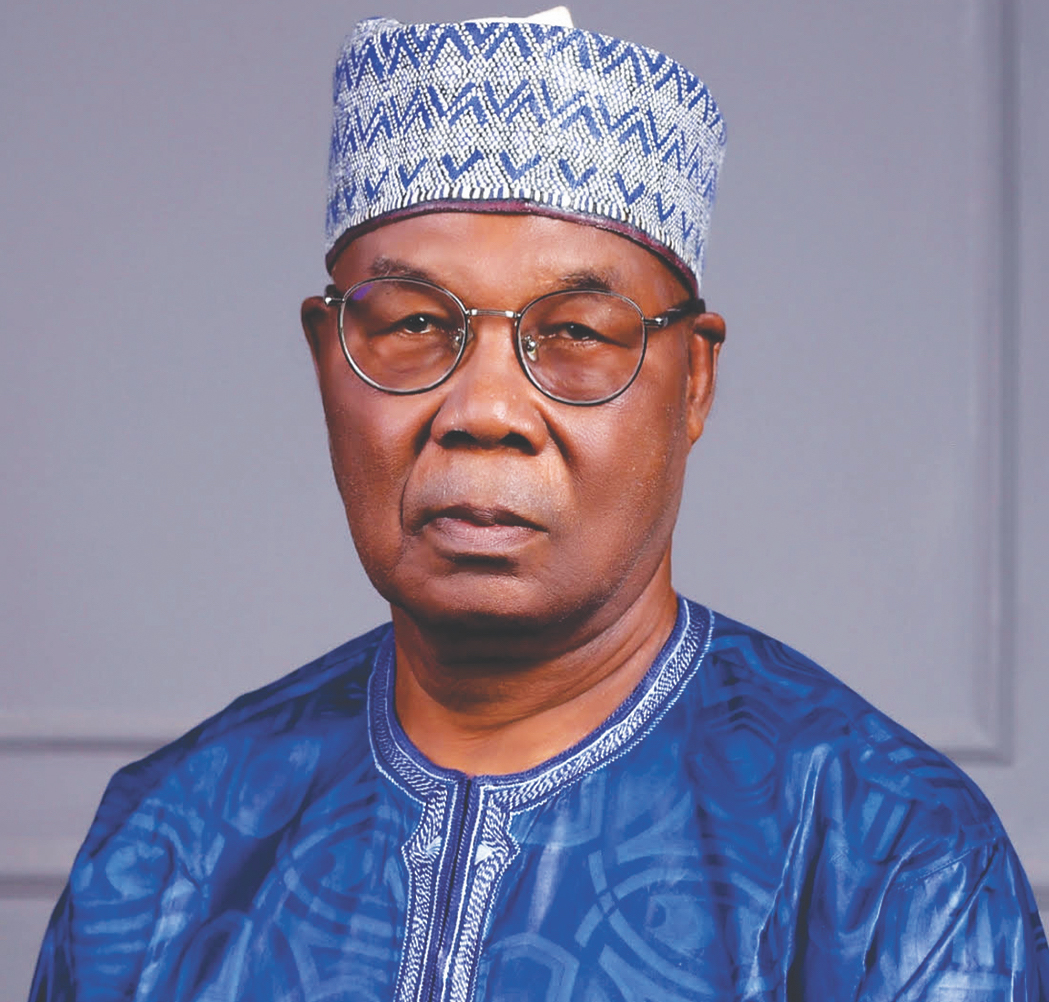
Okechukwu Uwaezuoke
Dr Bukar Usman turned 83 on December 10, 2025—by the grace of the Almighty, as he would readily acknowledge, and, no doubt, aided by the quiet discipline of long-honed habits. Anyone familiar with this prolific Borno State–born author would understand immediately why there was no fanfare: no flapping canopy in the harmattan breeze, no hired praise-singer inflating the apparent passage of years into achievement. Tradition, that vigilant old watchman of the household, held firm. In his world, birthdays are treated much like elders treat a sudden clap of thunder—with respect, restraint, and a mild discomfort at unnecessary noise.
As such important days do, this one began in the kitchen, Dr Usman narrated in a recent newspaper publication. Around 11 a.m., his spouse, Dupe, erupted into a spirited rendition of “Happy Birthday,” transforming a familiar tune into something approaching a full-blown prayer, petitioning heaven for health and long life. Ruth and Victoria, other members of the household, followed in their own measured fashion, kneeling in turn and performing that time-honoured choreography of respect—an art form that, fortunately, modernity has yet to banish from Nigerian homes.
The day’s visitors arrived in their quiet procession. The plumber, Afeez Bello, bore a neatly designed card; the carpenter, Abdulrazak Yusuf, brought an even larger and more ornate one. The celebrant was out briefly for a haircut—perhaps a gentle reminder that it was, after all, just another day. The television technician, Luka Yakubu, also came in his absence but left behind a black package crammed with thoughtful souvenirs: a diary, a teacup, a fountain pen, cufflinks, and a key holder—all meticulously inscribed with the name “Dr Bukar.”
Friends of longer standing followed soon after. Ambassador AY Shehu, Nigeria’s former envoy to Russia and Belarus, began with a prayer—earnest, lengthy, and rich with goodwill—asking that the celebrant be granted long life to continue “the worthy things” he had been doing. General LP Ngubane arrived next, carrying conversation rather than ceremony. As veterans do, they discussed current affairs, lingering on a communal conflict in Adamawa State that weighed heavily on the General’s mind. Only later did he realise that the day was a birthday celebration. He congratulated his host warmly, perhaps comforted by the thought that age, at least, had not yet become a national crisis. Sanda Galadima rounded off the visits with a bowl of masa and fried chicken.
Meanwhile, greetings poured in from everywhere: texts, emails, tributes—Damaturu to Lagos, Biu to Barcelona, Enugu to San Francisco. Names accumulated like footnotes to a life well annotated. Some sent poems, others essays; some sent theirs a week early, as though wary that time might misplace them. Daughters wrote from distant cities, compressing oceans of affection into digital words. Phone calls made to acknowledge these messages often triggered fresh choruses of “Happy Birthday,” proving that gratitude, once returned, has a way of multiplying.
By evening, the day took a lightly theatrical turn. Dr Usman went to the studio for photographs, chauffeured by Dupe and accompanied by Ruth, his daughter Hadizat, and Morayo—his one-year-old granddaughter, blissfully unaware of anniversaries, yet posing any way. One photograph captured them together: age and infancy sharing the frame.
Dinner was a casual affair of takeaway Chinese food—a gentle reminder that globalisation respects no tradition. Later, Dupe presented a neatly wrapped gift, enlisting Zara’s help to unwrap it. The package revealed cloth meant to be sewn into a jumper. Zara, just back from boarding school, spotted him before alighting from the car and called out, “Happy Birthday!” He replied, deadpan, “Won’t you first alight from the car?” Even at 83, one retains the right to timing and comedic timing at that.
The goodwill did not end with nightfall. It spilled into the following day, and the next: more messages, a ram from a reverend, a roll-up banner from a women’s association—salutations that refused to recognise calendar boundaries. Gratitude, like memory, seldom adheres to human timing.
All this might seem ironic for a man who once declared—at 70, no less—that he did not celebrate birthdays. He came from a background, he explained, where such things were not done. Yet this same man marked his 80th year by publishing two formidable volumes, together exceeding 2,000 pages, as if to say: if one must celebrate, one might as well do so with footnotes, indexes, and intellectual stamina.
My Literary Works and Conversations with Bukar Usman stand as quiet monuments to a life of letters: reviews, interventions, conversations, and the reflections of others upon his work.
They reveal not only the breadth of his output but the warmth with which it has been received. Awards followed, yet he remained characteristically reluctant to wear the label of “writer,” once remarking, even after 20 books, that he did not yet feel “there.”
What he did feel was the need to speak plainly—to talk to readers rather than at them. Somewhere along the way, his voice shifted: less official, more human, more attentive to people than pronouncements. Short stories followed, then more stories, in English and in Hausa—a language not his mother tongue, but one he embraced with the generosity of a guest determined to learn the house rules better than the host.
Retirement from the civil service in 1999, after rising to Permanent Secretary, merely freed him for what came next: a steady, almost tenacious devotion to writing, mentoring, supporting others, and refusing borrowed robes. If the 83rd birthday revealed anything, it was this: a life lived quietly, attentively, and in service tends to attract its own celebrations—whether one asks for them or not.
And so the day ended, not with fireworks, but with prayers, masa, messages from across the world, and the soft certainty that gratitude, once earned, has a way of turning even the most uncelebrated birthday into a small, dignified festival.









Leave a comment